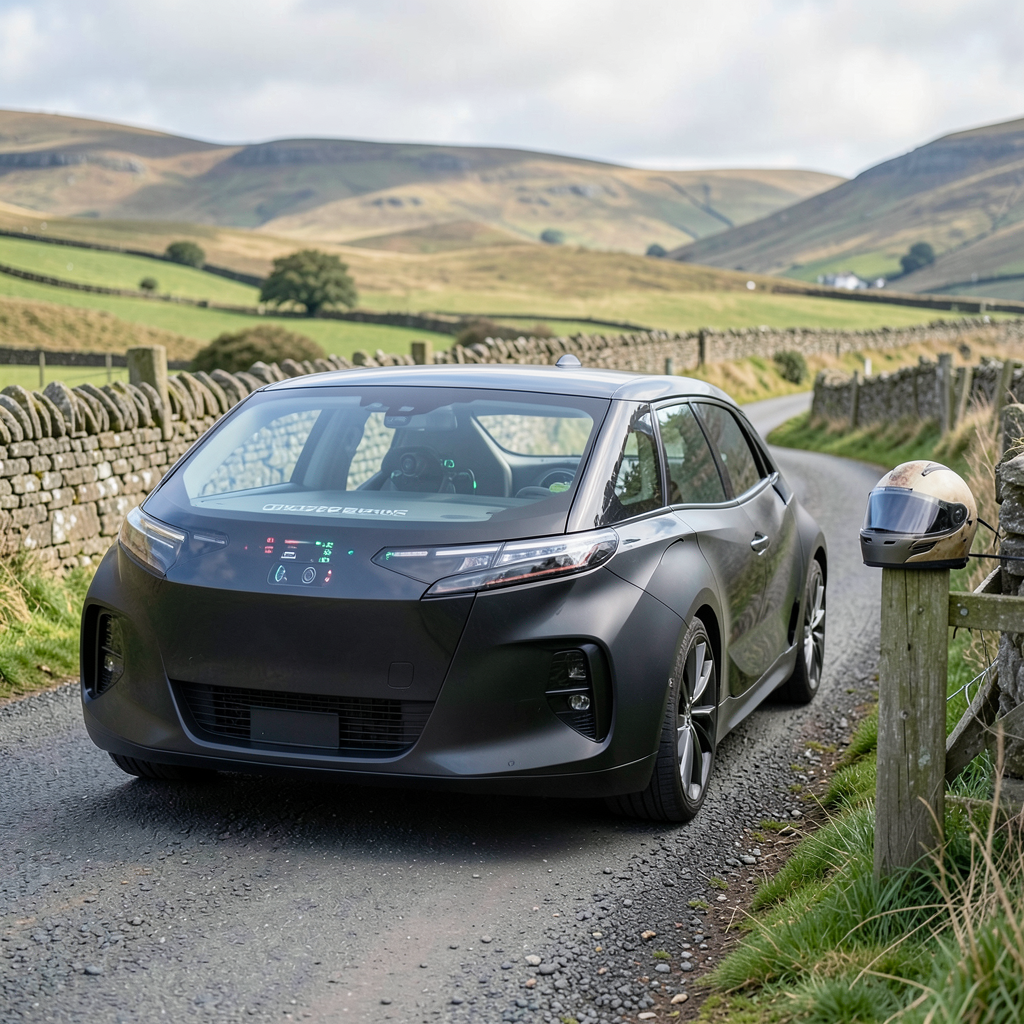

A motoring specialist based in Oxfordshire has dismissed claims that autonomous vehicles could revolutionise rural transportation, describing such proposals as unfounded.
Amanda Stretton, a journalist covering the automotive industry and former competitive racing driver residing in Oxfordshire, offered her critique in response to remarks delivered by Shadow Chancellor Andrew Griffith during the Conservative Party Conference.
Her objections centred on the notion that self-driving cars might transform mobility for residents of countryside communities, with Stretton asserting that current road networks remain unprepared for such technology.
At a supplementary event held in Birmingham, Griffith contended that driverless vehicles could deliver substantial advantages to elderly and disabled individuals residing in rural regions who can no longer operate traditional cars.
He proposed that autonomous transport might address connectivity issues affecting villages where regular bus services are sparse.
During an appearance on BBC Radio 4’s Today programme, Stretton stated that the suggestion reflected a fundamental misunderstanding of existing autonomous technology capabilities, characterising the proposal as unfounded.
She elaborated that automated systems depend critically upon physical road infrastructure, including visible lane markings, signage, and standardised road configurations to function safely.
Stretton remarked that roads in her Oxfordshire locality lacked the necessary physical characteristics required for autonomous operation.
She further noted that self-driving systems demand consistent road construction standards, including clearly painted lines and marked zones, elements frequently absent on winding rural carriageways.
The remarks emerged amid ongoing Government efforts to advance autonomous vehicle development within the United Kingdom, including initiatives involving London-headquartered technology enterprise Wayve.
Earlier in 2024, the company formalised a memorandum of understanding with authorities centred on collaborative research and facilitating responsible introduction of self-driving vehicles across Britain.
Business and Trade Secretary Peter Kyle commented at the time that the collaboration demonstrated official support for high-growth British technology firms.
Wayve has disclosed intentions to commence commercial robotaxi services in London, while transportation network company Uber launched a limited fleet of autonomous taxis in the capital during September, employing technology developed by Wayve.