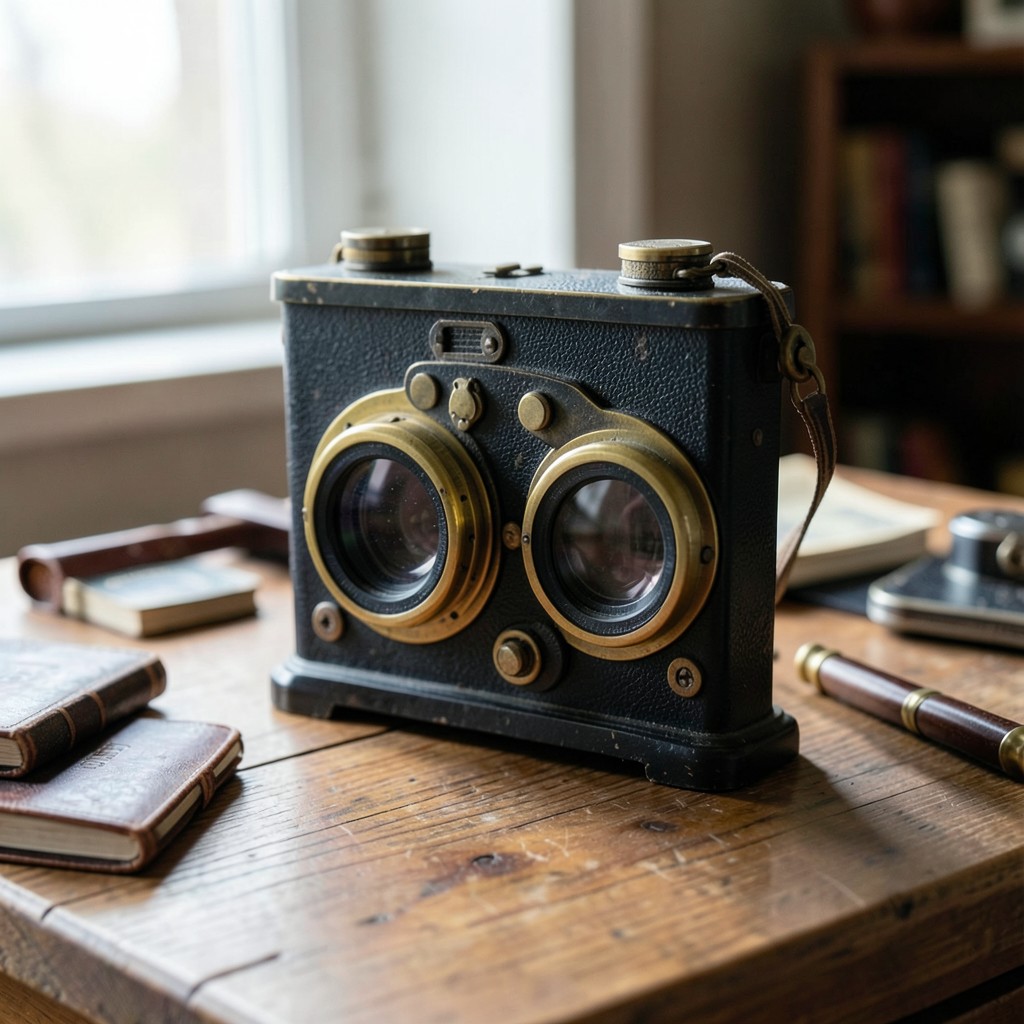

A 19th-century photographic instrument has fetched £18,000 at auction after being uncovered during a clear-out in Oxfordshire.
The antique stereoscopic binocular camera was located among belongings belonging to the vendor’s father at a property in Abingdon, Oxfordshire.
The device is estimated to be at least 165 years old and was produced by Horne & Thornthwaite, a company based in London that specialised in optical and photographic equipment.
Dating from 1858, the camera was offered for sale by Churchill Auctions in Thame, generating considerable interest from potential buyers, according to the auction house.
Records indicate the camera’s patent was filed on December 27, 1858, and it represents one of merely two recorded examples of the Powell Stereoscopic Binocular model to have appeared at public auction.
The sole other documented sale occurred during the 1970s, underscoring how uncommon such discoveries are for collectors.
A representative from Churchill Auctions observed that such finds illustrate why examining inherited items, old collections, and forgotten objects can prove worthwhile.
Storage spaces including garages, lofts, cupboards and boxes may hold articles whose importance and monetary value remain unclear at first glance.
Occasionally, an object that has remained within a family for many years turns out to be an exceptionally rare artifact that collectors are eager to obtain.
The camera formed part of a larger group of vintage photographic apparatus that the owner, who had previously used Churchill Auctions on multiple occasions, submitted for assessment.
Through examining these pieces, auction staff identified the rare Powell camera and conducted further research into its background.
The investigation by Churchill Auctions uncovered the camera’s significance, ultimately resulting in its successful sale.
According to the auction house representative, the item had belonged to the seller’s father and had remained stored for an extended period.
When the individual brought various pieces of vintage camera equipment to the auction house, the camera was found among the other objects.
The final selling price of £18,000 represents a significant rise compared to a comparable model that Christie’s auctioned during the 1980s, which realised approximately £6,000.
The Powell Stereoscopic Binocular Camera was an uncommon early photographic device conceived around 1859-60 during the expansion of stereoscopic photography in the Victorian era.
The instrument was engineered to capture two photographs at once, producing a three-dimensional effect when observed through a stereoscope.
Manufactured by Horne & Thornthwaite of London, the camera accommodated both wet- and dry-collodion photography methods.
Surviving specimens remain extremely difficult to locate today, rendering them highly desirable to collectors and photography historians.