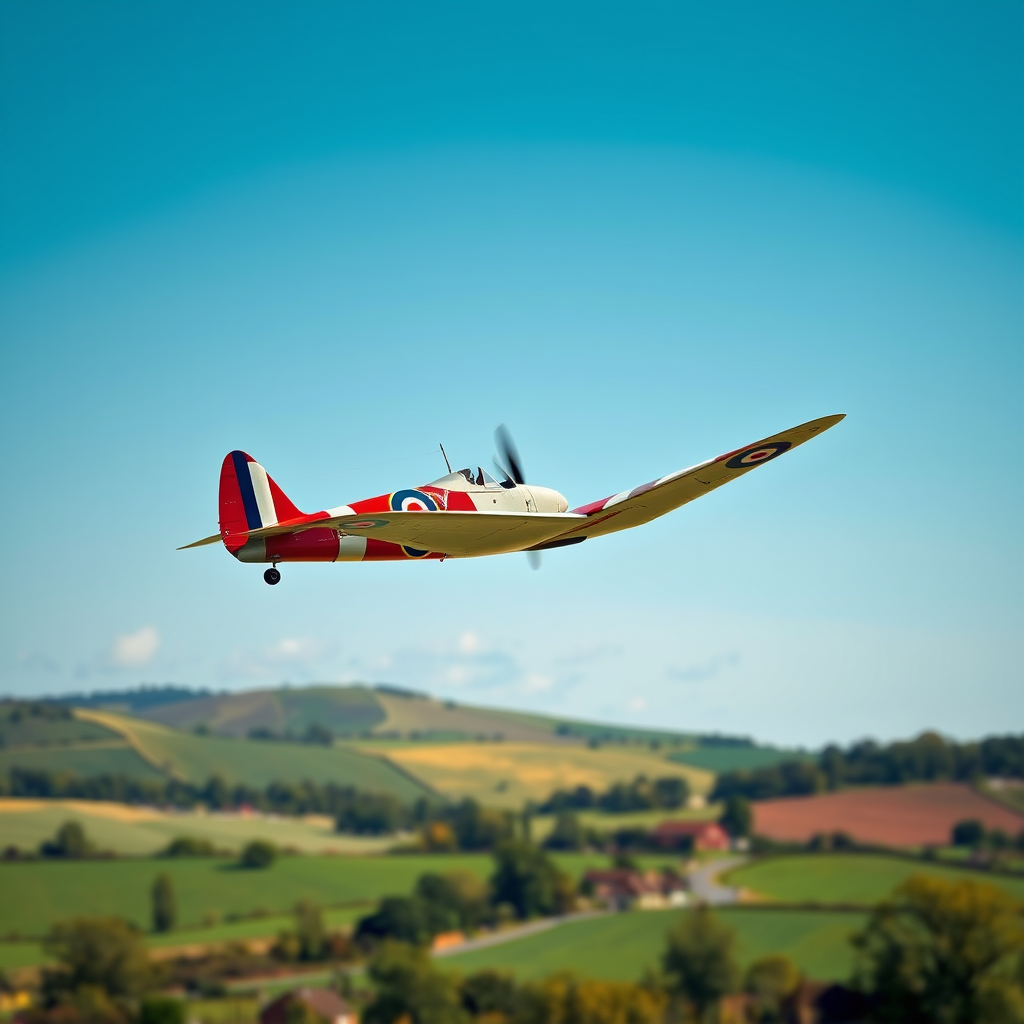

An inquest into the death of an Oxfordshire Spitfire pilot who perished in an aircraft incident is scheduled to take place next month.
The 71-year-old aviator, Peter Hughes, was killed when his plane crashed and burst into flames while departing from Enstone Airfield near Chipping Norton in July 2024.
This was the second fatal occurrence involving a replica Spitfire at the former World War Two base, after pilot Trevor Bailey, 68, lost his life the summer before.
Mr Hughes’s incident happened on July 28, 2024 at the West Oxfordshire airfield, where an air ambulance doctor pronounced him deceased at 2.43pm that afternoon.
The subsequent post-mortem recorded the pilot’s medical cause of death as burns and inhalation of products of combustion.
A coroner’s court jury will gather on May 12 commencing at 10am at Oxfordshire Coroner’s Court.
Following Mr Hughes’s death, his family described him as a devoted husband, father, grandfather and sibling who had a beloved family and countless friends who held him in high regard. They characterized him as an exceptionally decent man who showed great generosity in numerous ways through his affection, his time, his effort and his spirit, and who played a significant role in the many communities that mattered to him. They expressed their devastation and noted he would be deeply missed.
One unsigned message of condolence described Pete as an exceptionally lively individual who enjoyed assisting others and drawing the best from those around him, always with great wit and his cheerful grin. The message expressed that thoughts went out to his family who would find it hard to cope with their tremendous loss, as he was such a devoted family man who cherished them all. According to this tribute, he would be missed by many.
Another unsigned message simply described the situation as very sad.
Trevor Hyde commented that Pete Hughes was a highly experienced flyer and a genuine gentleman who would be greatly missed. He noted that Mr Hughes had been part of the Enstone Spitfire initiative from its earliest stages and was consistently a source of sound counsel drawing on years of knowledge and good spirits.
Last year, an Air Accidents Investigation Branch investigation concluded there was no indication of any fault or breakdown in the aircraft’s flight control mechanisms that would account for a loss of command. The investigation suggested Mr Hughes may have struggled to control the aircraft’s yaw during the takeoff sequence and executed a swift nose-up movement to become airborne before the plane veered off the runway edge. However, it also did not rule out the possibility of a medical problem or pilot incapacitation, though the medical findings did not allow for a conclusive determination.