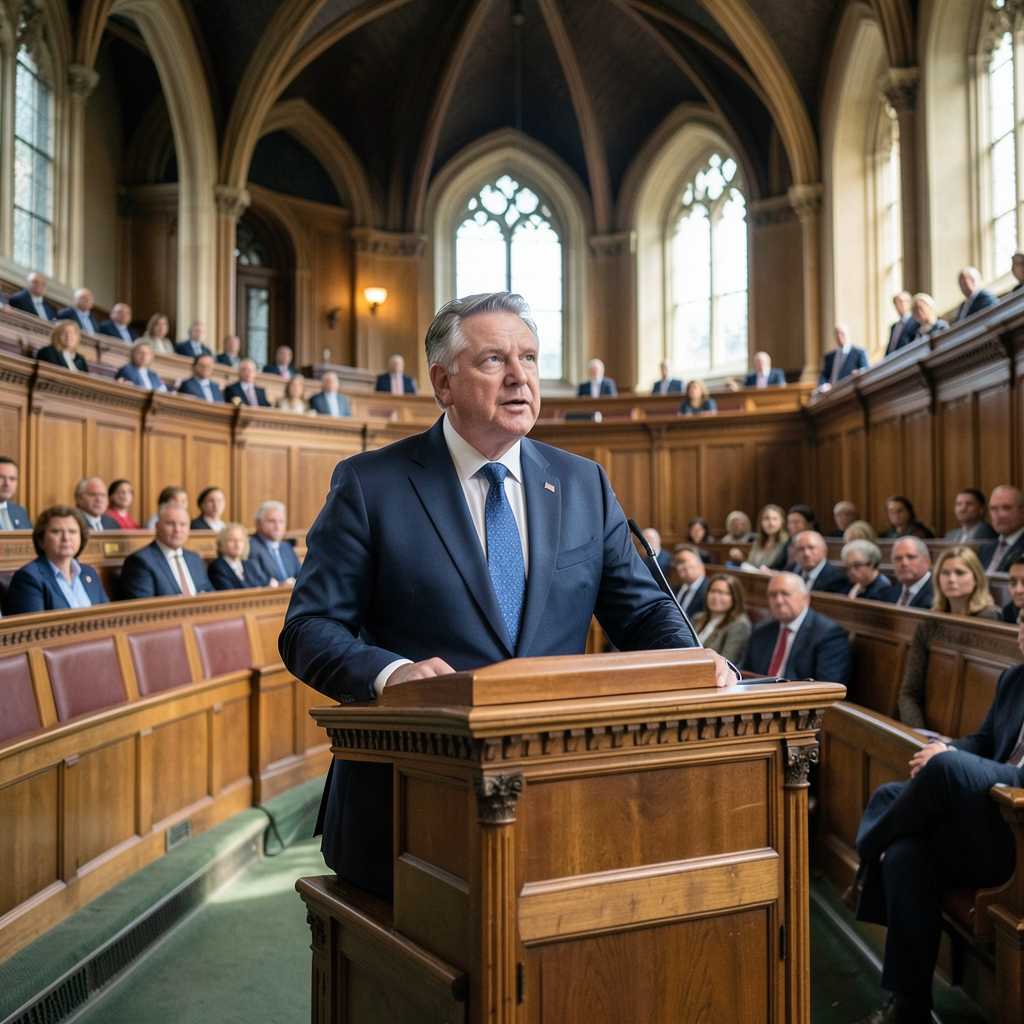

A political mandate is essential for leaders exercising significant authority because it strengthens both legitimacy and the perceived right to govern.
It also serves as an important measure of democratic support, since only the electorate can confer that authority.
However, mandates have become less reliable as political divisions have intensified and voting patterns have become increasingly fragmented.
Several prime ministers have entered office during the past 20 years without securing a mandate in their own name, and three subsequently called general elections to seek personal legitimacy.
Andy Burnham’s position as Labour prime minister brings these questions into particular focus.
Born in Lancashire and educated at Cambridge, Burnham’s working-class background represents a departure from the backgrounds of many recent prime ministers.
His reputation as the King of the North enhanced an image of a down-to-earth northern leader and made him more approachable to the public.
His premiership has also introduced greater diversity into the highest levels of government: he is the first Cambridge-educated prime minister in 16 years, following six prime ministers educated at Oxford.
Although a mandate can reinforce political legitimacy, the first-past-the-post system substantially weakens its value.
The system advantages larger parties with concentrated support in particular parts of the country, while parties drawing more dispersed or limited support are less likely to secure representation.
In a fragmented electoral environment, this produces volatile and disproportionate results.
Labour received 33.7% of the national vote in the 2024 general election but won 63% of the seats in the House of Commons.
The operation of general elections also complicates any claim that prime ministerial mandates represent direct popular support for the national leader.
Voters select a candidate for their local constituency rather than choosing the prime minister as an office-holder, leaving national elections to serve as an imperfect measure of endorsement for the head of government.
The mandate a prime minister obtains at such an election therefore does not necessarily indicate how capable that leader may be once in office.
Public confidence in the British government remains low.
A YouGov poll recorded an approval rating of 22% as of 5 October.
The electoral system is poorly suited to the current fragmented political landscape and can generate weak mandates despite comparatively low levels of support.
A personal mandate might strengthen Burnham’s authority, but a new general election in an increasingly divided Great Britain could heighten political instability and deepen existing divisions.
Burnham’s political project has been associated with a new approach to government.
His support for Manchesterism and his commitment to improving relations with the European Union mark a clear departure from the policies of previous prime ministers.
Long-standing neglect of the North, together with the handling of Brexit and its aftermath, further weakened public trust in established politics.
Burnham’s approach to these issues could offer an alternative to prevailing patterns within British government and help restore confidence in politicians.
The principal challenge is that Reform UK remains close to Labour in national opinion polls.
Ipsos found that 27% of the electorate would vote for Labour and 22% for Reform.
The growth of extremist trends has placed the major parties under additional pressure and presents Burnham with a significant electoral problem.
Burnham’s record as mayor of Manchester has attracted praise, although the responsibilities of governing a city differ substantially from those of governing a country.
His approachable public image may have contributed to his success in the by-election and his accession to the premiership, but personality alone cannot indicate how effectively a leader will perform in office.
Previous prime ministers with appealing public personas have failed to deliver on their commitments.
A mandate can provide a useful foundation, but credibility in government must be established through performance.
For Burnham, the absence of a personal mandate may therefore be less consequential than the challenges facing his administration.
His political credibility and the wider political environment will determine whether his premiership can overcome concerns about electoral authority, restore public confidence and provide stable government.