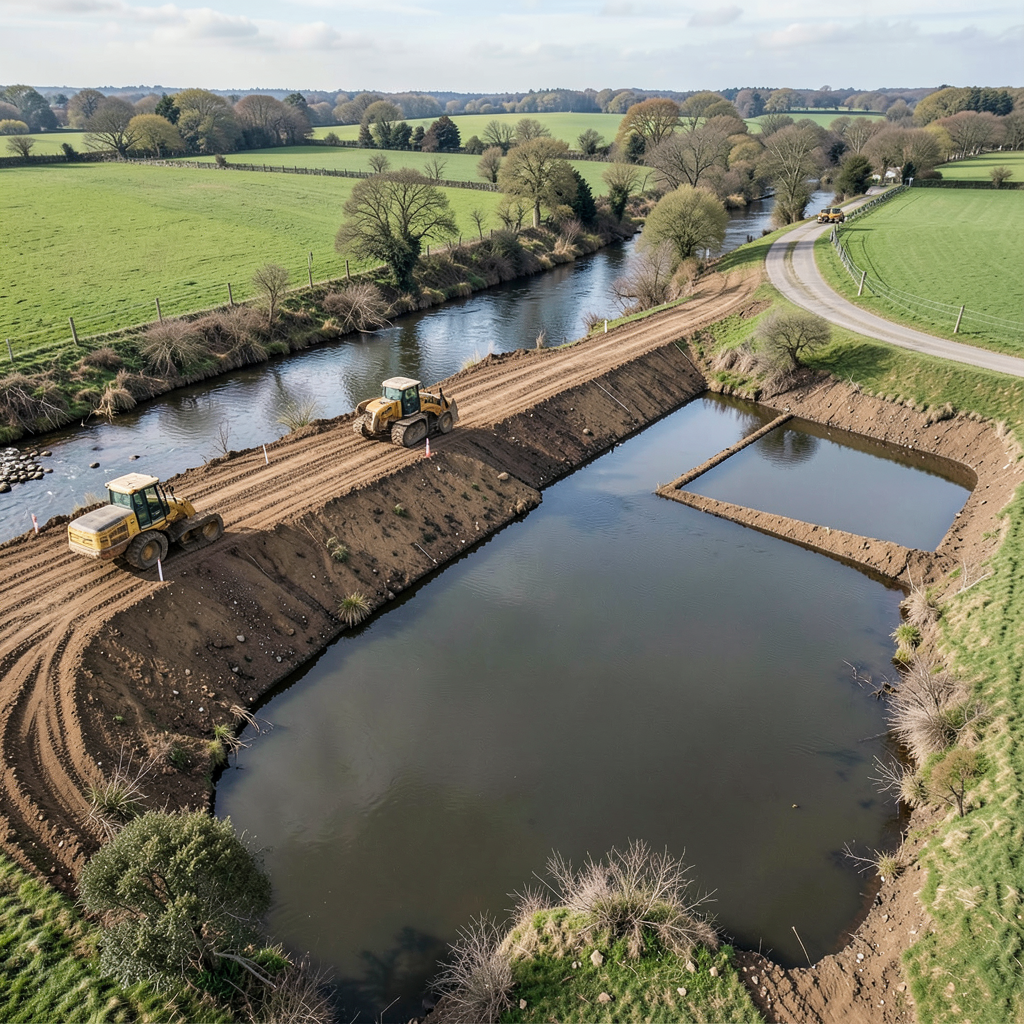

A scheme to restore a stretch of river in Oxfordshire to a more natural state has been submitted to the local planning authority as flooding conditions in the area have intensified.
The application to West Oxfordshire District Council outlines plans for a series of earthworks designed to slow and contain flood waters.
These include an artificially created landscape feature intended to hold runoff, along with purpose-built basins and channels positioned in a field at a distance from a Grade II listed structure situated beside the River Evenlode.
The scheme also proposes the removal of a weir to allow the river channel to return to a more natural condition.
A supporting document accompanying the application describes how water levels in the valley between two villages have risen more severely and with greater regularity in recent years.
During periods of high water, the River Evenlode exceeds its normal channel boundaries, causing the entire valley to function as a collection area for excess water.
The natural contours of the surrounding landscape and a railway embankment to the north together create a natural basin effect that directs flow toward a concentrated zone.
The topography of the area means water levels can escalate rapidly and with minimal advance indication.
The document states that the frequency and severity of these events now pose a risk to the structure and its inhabitants, with concerns expressed regarding both personal safety and potential property damage.
The structure referenced in the planning statement is Langley Mill.
Originally constructed as a working corn mill powered by water, the building ceased operations at the end of the twentieth century and was converted into a residential dwelling during the 1980s.
The property experienced flooding during 2020 and on two separate occasions throughout 2024.
The planning statement indicates that the property owner is making a substantial financial commitment and describes the proposal as an opportunity to safeguard the building against flood risk for an extended period exceeding a century, while also accounting for the anticipated effects of climate change on weather patterns.
The document suggests that such long-term investment in the preservation of a historic structure is uncommon and requests that the council recognise the durability of the proposed approach.
The planning authority has scheduled a decision on the application for January 2027.
The proposal arrives as broader environmental work continues along the river valley through the Evenlode project, which involves landowners and farmers in planning ecological improvements across a wide area spanning twenty years.
The initiative encompasses the creation of wetland habitats on farmland that has in some cases already been affected by flooding, with each participating agricultural holding contributing approximately ten to fifteen percent of its lower-yielding land to the programme.
The work is taking place within the Cotswolds National Landscape, the protected area that contains Langley Mill, and extends into the former royal hunting grounds of Wychwood and the vicinity of Blenheim Palace.