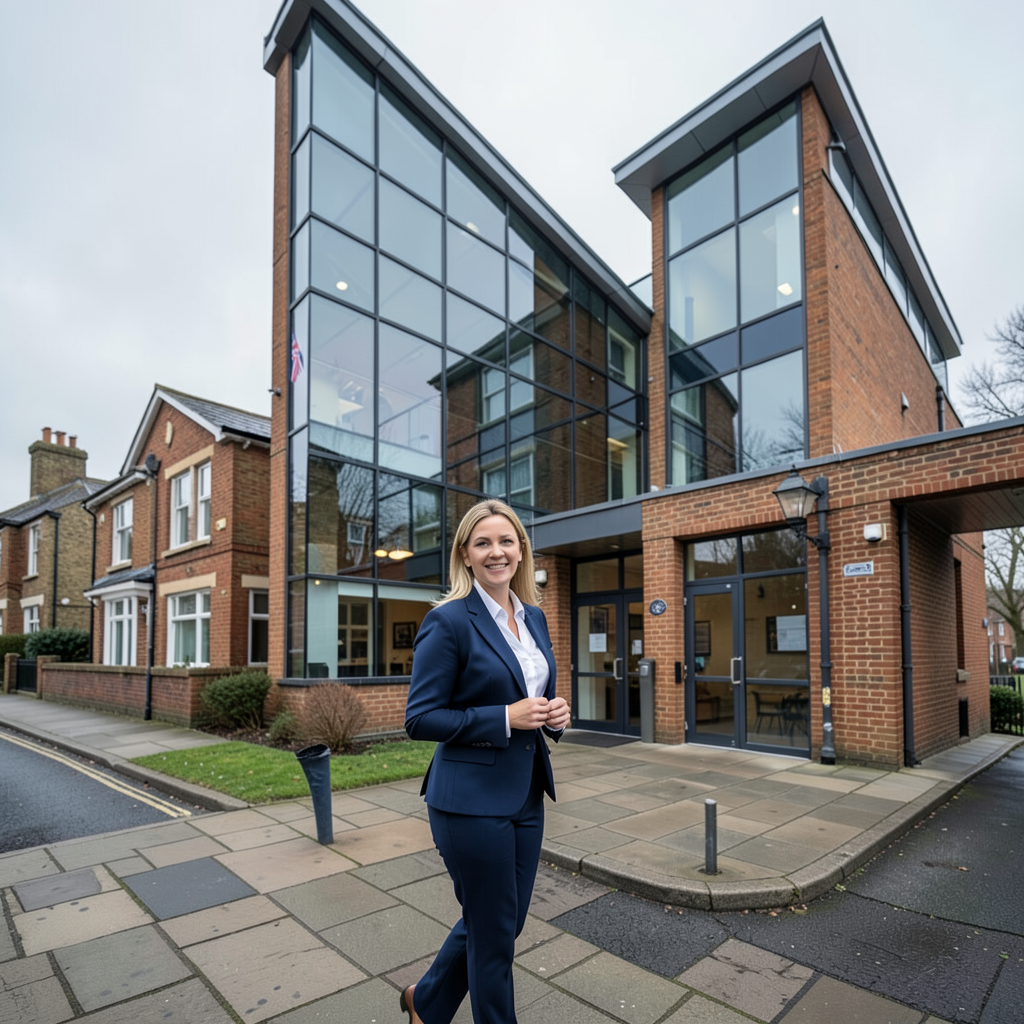

A Liberal Democrat politician has responded to criticism directed at her by the Oxfordshire Conservative group.
Toyah Overton has defended her position as county councillor for Brize Norton and Carterton East, stating that her professional commitments do not interfere with her representative duties.
She has clarified that recent periods of reduced visibility stemmed from health difficulties rather than any conflict with her political responsibilities.
The dispute originated from a public communication issued by Liam Walker, who leads the Oxfordshire Conservative group.
On Wednesday, October 14, Walker published an open letter requesting clarification regarding Overton’s status within the Pembrokeshire Liberal Democrats.
The Pembrokeshire Liberal Democrats’ official website identifies Overton as their office campaign organiser, prompting Walker to question whether she had relocated to Wales.
Walker stated that serving as a county councillor demands more than mere attendance at council meetings.
He explained that the role requires individuals to be actively engaged within the communities that elected them, to comprehend local concerns, to participate in community gatherings, to advocate for residents, and to serve as an approachable representative for those who placed their faith in them.
He noted that Overton’s increasingly visible participation with the Pembrokeshire Liberal Democrats, as demonstrated on their own digital platforms, raises legitimate concerns about where her focus and obligations now reside.
Walker also called upon Overton to confirm whether she had permanently relocated to Wales and, if such was the case, whether she intended to step down from her role as Oxfordshire County Councillor for Brize Norton and Carterton East, thereby necessitating a by-election to determine who would best represent local constituents.
Overton, who secured her seat during elections held in May 2025, responded by asserting that her professional employment operates entirely independently from her duties as an elected official.
She emphasised that, as Mr Walker was aware, nothing inherent to her position as a county councillor prevented her from undertaking remote, contract-based employment anywhere within the United Kingdom.
The electoral results from 2025 showed Overton secured 34 per cent of the approximately 2,000 votes cast in her ward.
The Conservative candidate received 29 per cent of the vote, while Reform obtained 26 per cent.
The Liberal Democrats presently hold a single-seat majority on Oxfordshire County Council.
Overton further addressed the financial aspect of councillor roles, noting that the allowance provided to county councillors could fall considerably below the National Minimum Wage.
She contended that expecting councillors to abandon other employment while receiving such insufficient remuneration was unreasonable.
She expressed concern that such demands would render local government inaccessible to individuals who cannot sustain themselves without additional income.
Overton advocated for encouraging participation from people across all socioeconomic backgrounds rather than creating additional obstacles for working individuals seeking to serve their communities.
Regarding her availability, Overton acknowledged that she had been less present than preferred but clarified this circumstance arose from recovering from a dislocated hip rather than from professional work pressures unrelated to her councillor position.
She expressed that this period had been personally challenging.
Overton stated her intention to persist in directing her efforts toward representing constituents, addressing matters of importance to them, and achieving constructive outcomes.
She concluded that an elected councillor ought to be evaluated based on this approach rather than the location where professional duties were performed.