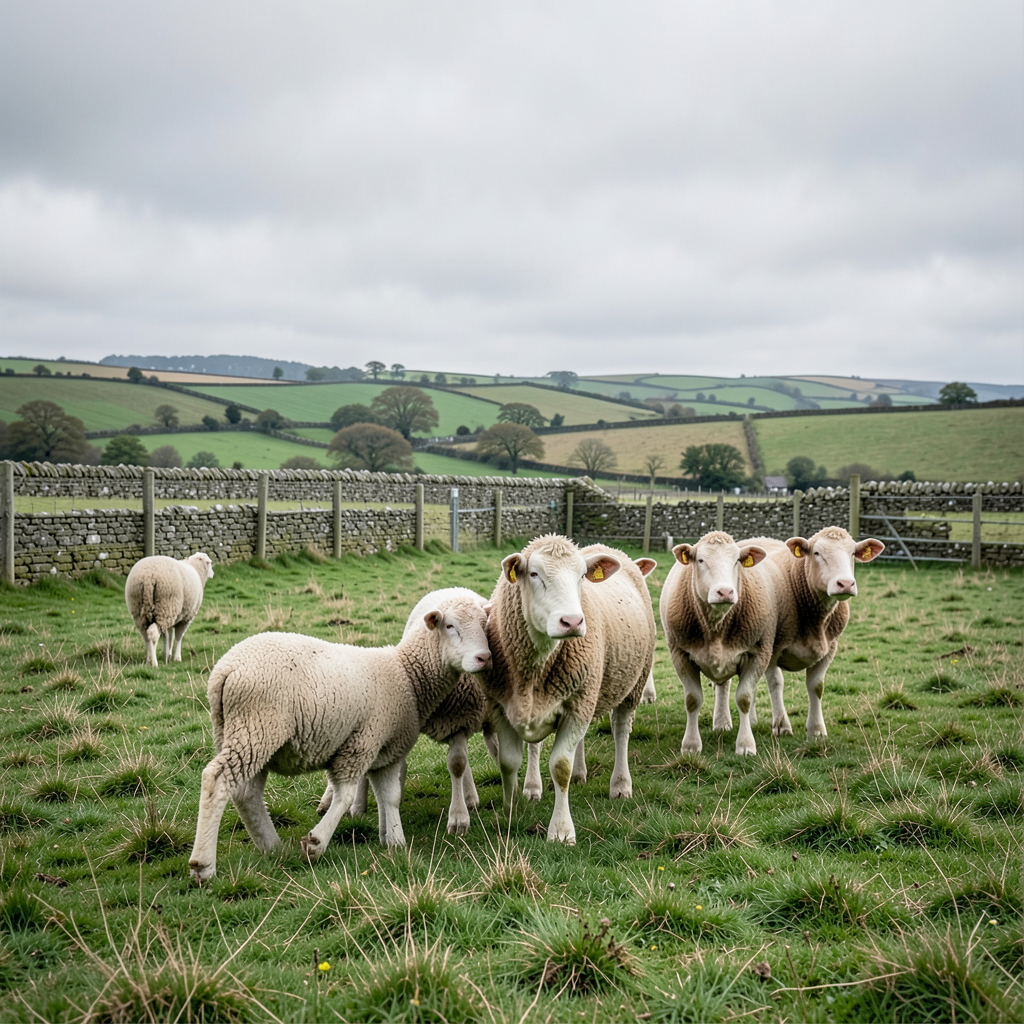

Government data has confirmed a single instance of bluetongue disease in Oxfordshire, affecting livestock such as sheep and cattle.
Bluetongue is classified as a notifiable animal disease and has been detected in more than 2,000 livestock across the United Kingdom since July.
An additional 1,112 possible infections are currently being examined.
The illness can result in severe health problems, reproductive issues including birth defects and unsuccessful pregnancies, and mortality in animals.
In cattle, the condition decreases milk output, although it does not impact meat or other animal-derived products.
Transmission occurs primarily through bites from contaminated midges, with no animal-to-animal spread occurring.
Fresh infections are being verified each day throughout England, with one case recently recorded in Oxfordshire.
Hook Norton Farm Vets reported confirming a case in the vicinity of Banbury after an animal was examined and tested on August 24 following initial suspicion of the disease.
According to the veterinary practice, the animal displayed no ulceration or lameness and achieved complete recovery within 48 hours after receiving treatment.
However, bluetongue serotype 3 was identified when laboratory results were received approximately one month subsequently.
A communication from Hook Norton Farm Vets indicated that while reported instances of bluetongue have decreased substantially, this particular case demonstrates that the disease continues to be present in the local area.
With warm and moist weather persisting, midge activity continues to pose a threat.
While symptoms in cattle may be subtle, the primary concern relates to potential consequences for fertility and gestation, encompassing miscarriages, stillbirths and congenital abnormalities.
Clinical presentation in sheep can also prove considerably more serious.
Vaccine adoption in the surrounding region has been strong and is probably contributing to limiting the spread of the disease.
Reporting suspected bluetongue cases to official authorities represents a legal obligation for farmers.
The entirety of England, Wales and the southwestern region of Scotland falls within the bluetongue restricted zone.