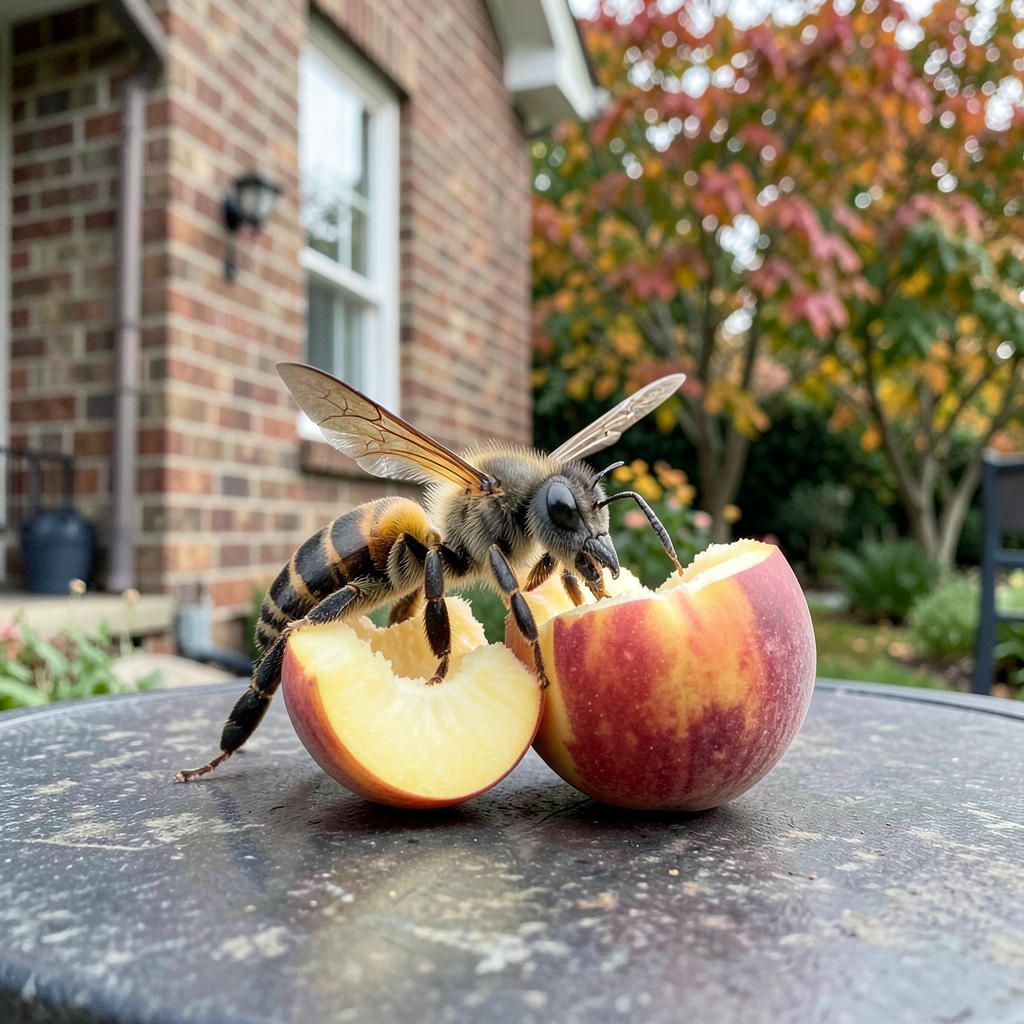

September sees a notable increase in wasp-related incidents as these insects display more hostile patterns of behaviour during this period.
Specialists in pest management explain that the heightened aggression stems from diminishing food sources combined with colonies reaching their maximum population density.
John Whiteley-Wilkson, who leads Acorn Environment Services, noted that September consistently ranks among the months generating the highest volume of wasp-related service requests.
At this stage, nest populations have expanded to their annual maximum, and worker wasps extend their foraging activities beyond the colony.
The common perception that wasps abruptly turn aggressive lacks accuracy, as this behavioural shift represents a natural phase of the insect’s developmental cycle.
With their typical food resources becoming scarce, these insects venture into new territories in search of sustenance, thereby increasing their proximity to human populations.
During the earlier summer months, worker wasps fulfil nutritional responsibilities for developing larvae within the nest, receiving sugary secretions as reciprocal nourishment.
As September arrives, the queen ceases egg production, causing larval numbers to decline substantially.
Consequently, thousands of worker wasps find themselves compelled to seek sugar-based food sources elsewhere.
This nutritional transition results in elevated wasp presence around waste containers, beverages, al fresco dining spaces, and decaying fruit, producing greater frequency of human-wasp encounters.
Professional intervention is strongly recommended for homeowners, as independent nest removal attempts frequently exacerbate the underlying problem.
Mr Whiteley-Wilkson identified two particularly prevalent errors: sealing the nest entrance and applying standard household aerosol products.
When standard exit routes become unavailable, wasps locate alternative escape paths that frequently lead into loft spaces, wall cavities, or interior rooms.
Provoking an inhabited nest can also trigger defensive responses from the colony, substantially elevating the potential for multiple stinging incidents.
Acorn Environment Services advises against several hazardous practices when a nest is identified.
These include obstructing or sealing the entry point, deploying domestic insecticides against substantial nests, using gardening implements to disturb nests, and attempting independent removal without qualified assistance.
Routine activities such as hedge trimming, strimming, and pressure washing generate vibrations capable of agitating active colonies.
Numerous service callouts have involved homeowners remaining unaware of nearby nest locations until provoked insect activity occurred.
Professional assessment determines whether immediate intervention proves necessary based on the nest’s positioning.
When situated in infrequently visited garden areas, waiting for natural colony decline during autumn represents a viable approach.
Conversely, proximity to doorways, terraces, children’s play zones, or regular pedestrian routes warrants professional evaluation to minimise potential hazards.
Extended mild conditions anticipated throughout September suggest elevated wasp activity will continue for several additional weeks.