
The secondary institution located on Marston Ferry Road in North Oxford admitted its first cohort of students during September 1963, establishing itself within a community landscape that included several allotment gardens.
One such plot had been tended by Stanley Bayliss, whose daughter would later contribute a historical photograph to local archives.
The initial enrolment comprised 323 students, supported by a teaching staff of twelve, alongside administrative personnel including a full-time secretary, a part-time support worker, and a groundskeeper.
Within months of the school’s establishment, educational excursions became part of the student experience.
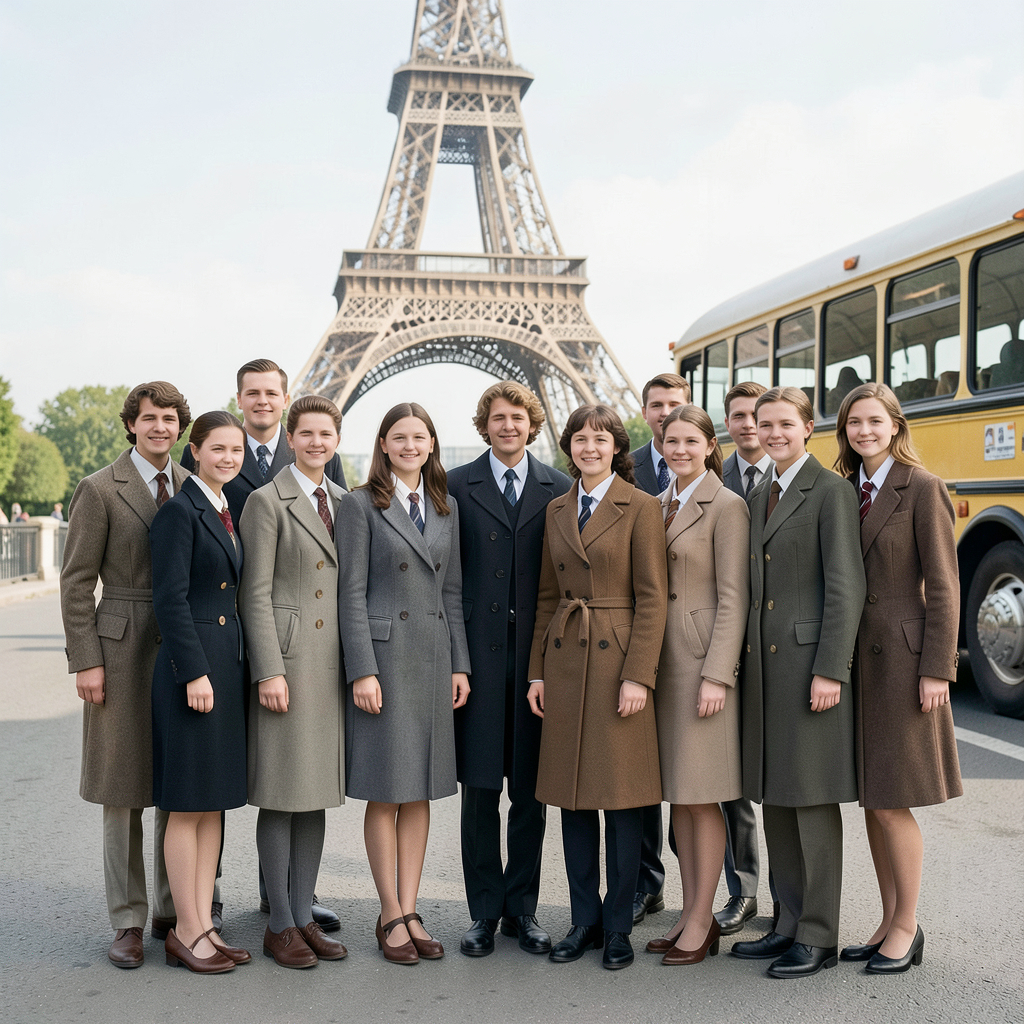
During the Easter period of 1964, a group of pupils embarked on a journey to the French capital.
The expedition followed a multi-modal itinerary: participants travelled by motorcoach to the Kent coastline, crossed the Channel via ferry to Dunkirk, and continued by rail to Paris, where accommodation was arranged at a residential educational facility.
The itinerary encompassed visits to prominent Parisian landmarks, with the Eiffel Tower among the destinations explored.
A surviving photograph from this expedition depicts the assembled group, with a young woman positioned prominently at the left edge of the image.
The individual, formerly identified as a pupil at the institution, confirmed her presence on the excursion and clarified that her apparent height resulted from standing on an elevated surface.
She was fifteen years old at the time and resided in Kidlington.
A comprehensive record of participants accompanies the photograph, documenting twenty-six names corresponding to the travelling party.
Over subsequent decades, the establishment underwent substantial transformation.
When Martin Roberts assumed leadership in 1981, the physical infrastructure presented considerable challenges.
Buildings were described as structurally inadequate, with deterioration affecting load-bearing elements and weatherproofing.
Remediation efforts implemented during his twenty-one-year tenure addressed these deficiencies comprehensively.
By 2013, when Roberts authored a commemorative publication covering the institution’s first half-century, the campus accommodated more than 1,800 students and employed 139 teaching professionals.
Academic performance metrics subsequently positioned the school consistently among leading secondary establishments regionally.
The alumni roster encompasses individuals who pursued varied professional paths.
Achievements in fashion, athletic competition, dramatic arts, dramatic writing, strategic board games, musical performance, and action sports have been attributed to former students.