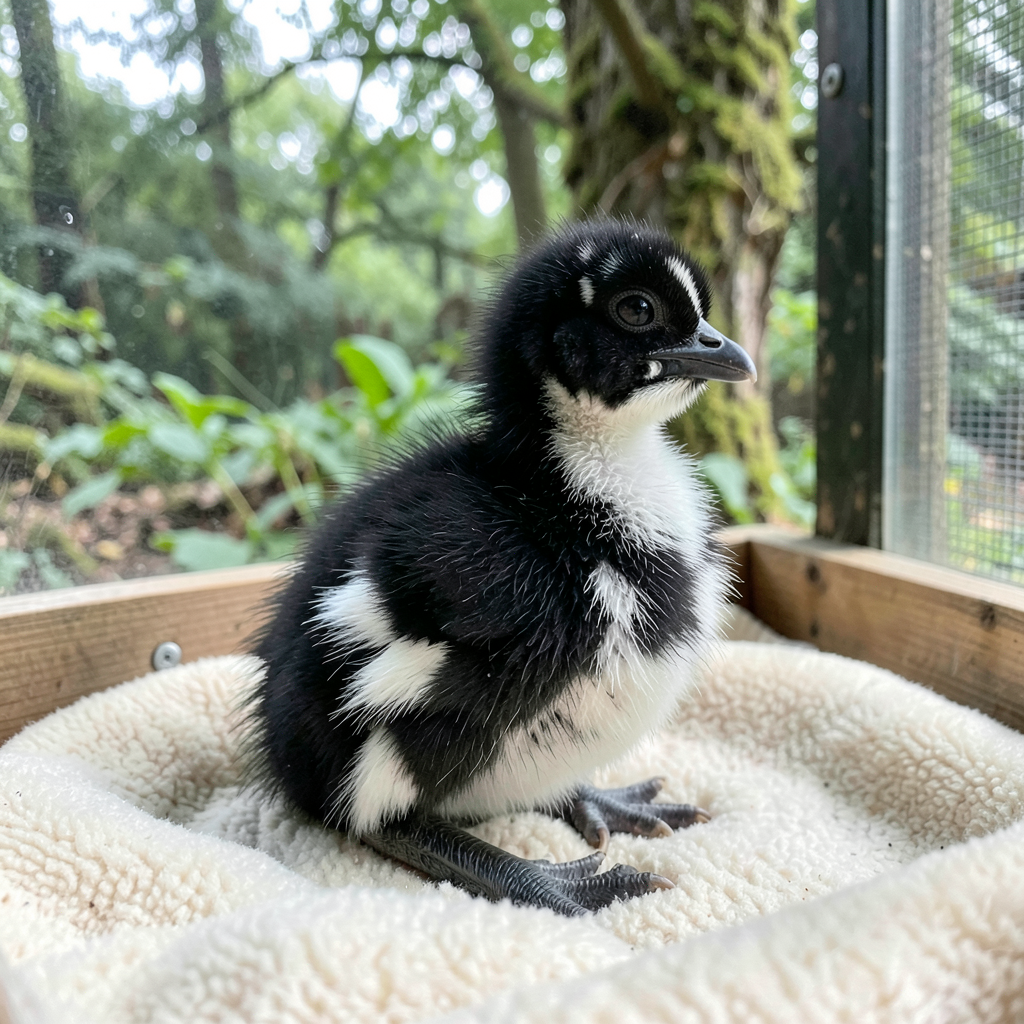

A distinctive greater coucal chick resembling a skunk has been successfully hand-reared at Cotswold Wildlife Park and Gardens in Oxfordshire, marking a first for zoological collections across the United Kingdom.
The unusual bird required intervention from keepers after its parents proved unable to raise it independently.
The newly hatched chick was transferred to the park’s specialised incubation facility, where staff provided round-the-clock care to maximise its survival prospects.
With an exceptionally hearty appetite, the youngster demanded nourishment every two hours throughout daylight hours.
Weighing just 10.9 grams upon hatching, the bird experienced rapid growth and reached 240 grams within weeks, attaining adult dimensions in approximately one month.
The greater coucal displayed its characteristic appearance from an early stage, possessing a predominantly black plumage complemented by distinctive white feathering along its crest.
Staff christened the chick Skunk, a name inspired by its dramatic black-and-white markings.
The successful outcome encouraged keepers to intervene when the same parents produced two additional eggs.
Both offspring were subsequently hand-reared and received the names Badger and Bodger.
All three juveniles have now outgrown their incubator accommodation and have been relocated to an off-display aviary within the park.
The trio continues to receive regular monitoring from the animal care team.
The achievement contributed to an exceptionally successful breeding season for the Oxfordshire collection.
Alongside the greater coucal success, the facility recorded first-time breeding for Blacksmith Plovers and Emerald Doves.
The plover pairs produced two clutches, each containing three chicks, all of which have fully fledged and been moved to independent aviaries away from public view.
Senior keeper Natalie Horner noted that the hatchlings emerged with remarkable feather development, presenting an exceptionally unusual appearance.
The pronounced black-and-white patterning of the young birds directly influenced their assigned names, with Horner describing them as among the most visually memorable chicks the team had ever raised through hand-rearing.