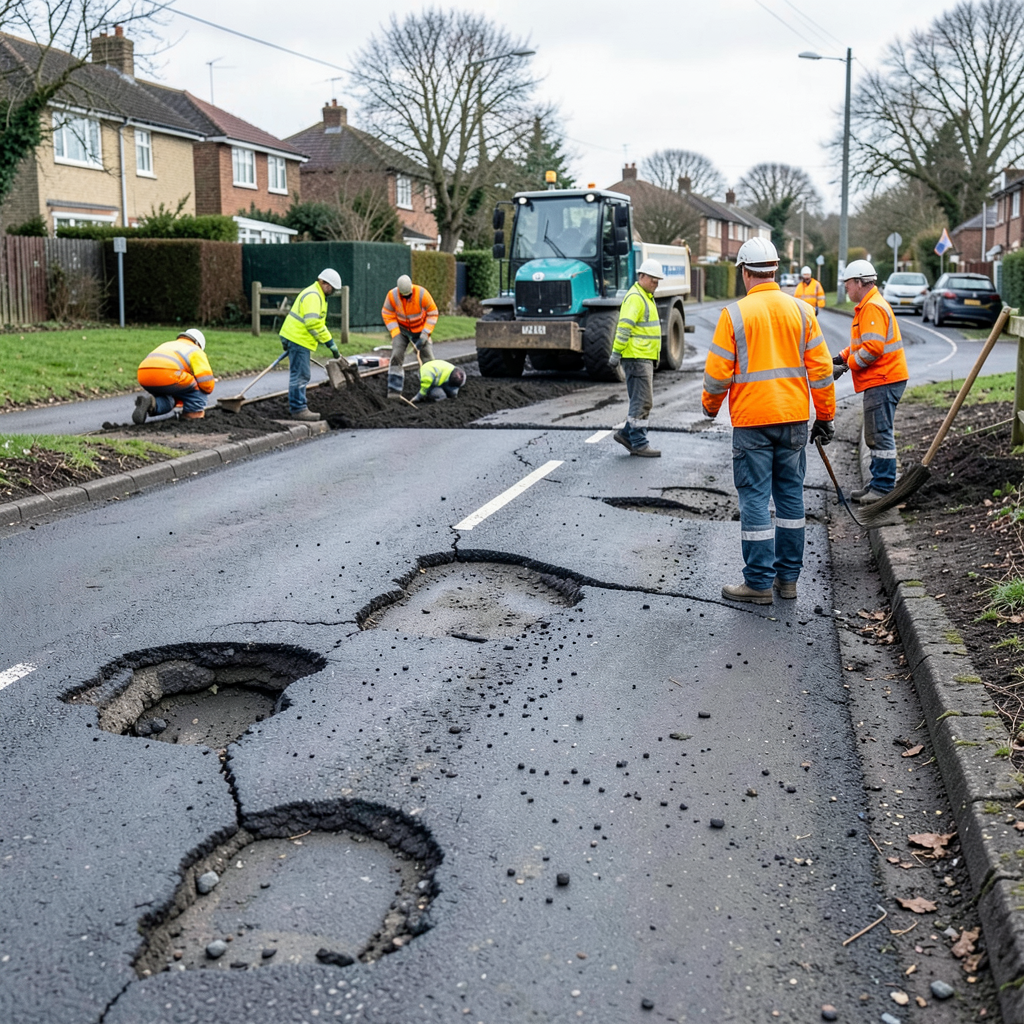

Oxfordshire’s elected officials should cease requests for additional funding and instead concentrate on enhancing the region’s road network, according to the opposition group’s leader.
The local authority has outlined how approximately £245.5 million in central government allocation will be deployed through to spring 2030.
A substantial segment of £167.9 million has been designated for highway preservation, though the responsible cabinet member Liz Leffman has acknowledged that resources remain insufficient.
Conservative group leader Liam Walker stated that the substantial sum represents considerable public investment and called on the Liberal Democrat administration to demonstrate prudent spending while delivering noticeable enhancements to the infrastructure.
He pointed out that the county’s road network continues to suffer from significant deterioration, with constituents frequently raising concerns about potholes and degrading road surfaces.
The available funding presents a genuine chance to begin tackling these long-standing issues.
Walker emphasised that residents rightfully anticipate a meaningful portion of this allocation being directed toward repairing and preserving the roads they utilise regularly, rather than being consumed by additional research, professional consultancy fees, and initiatives that fail to address fundamental network conditions.
The government has made available a considerable pool of resources, and the local authority’s responsibility now lies in abandoning justifications and clearly illustrating the tangible improvements being delivered to taxpayers.
Leffman responded that Walker’s assertions required factual verification, noting that the four-year highway maintenance allocation of £167.9 million translates to roughly £42 million annually to sustain more than 3,000 miles of carriageway.
She attributed the current poor state of many roads to decisions made during the preceding Conservative administration, which has not held executive authority since 2021, describing a period of deliberate decline.
Summer maintenance activities have seen more than one million square metres of highway surfaces resurfaced and treated, representing progress toward reversing previous neglect.
However, the government grant falls short of requirements, necessitating supplementary funding through local taxation.
Oxfordshire County Council’s maintenance proposals for 2026/27 encompass scheduled resurfacing operations extending across 17.4 miles of carriageway.
Surface treatment initiatives will address 131.7 miles, while footway preservation and preventative measures will cover 27.03 miles.
Additional allocations include £9 million during 2026/27 and £8.7 million the following year for bridge and structural works.
A council representative indicated that 12 schemes are currently scheduled for delivery in 2026/27, with preliminary design and preparatory work underway for approximately 25 schemes anticipated in subsequent years.
Investment in drainage systems has recently been strengthened, with a capital budget of £4.4 million allocated for 2026/27.
This programme encompasses roughly 50 individual schemes alongside investigation initiatives.
The representative explained that Oxfordshire prioritises preventative maintenance and appropriate treatment timing to maximise asset longevity, minimise emergency repairs, and optimise long-term value.
Programme planning extends across multiple years due to demand exceeding annual resources, with delivery adjusted as conditions, risk levels, available resources, and local requirements evolve.
Pothole management follows a risk-based methodology incorporating inspections, public reports, responsive repairs, and planned preventative maintenance.
During 2025-26, approximately 41,000 potholes were addressed.
The comprehensive funding package also supports enhancements to bus services, walking and cycling infrastructure, and charging facilities for electric vehicles.