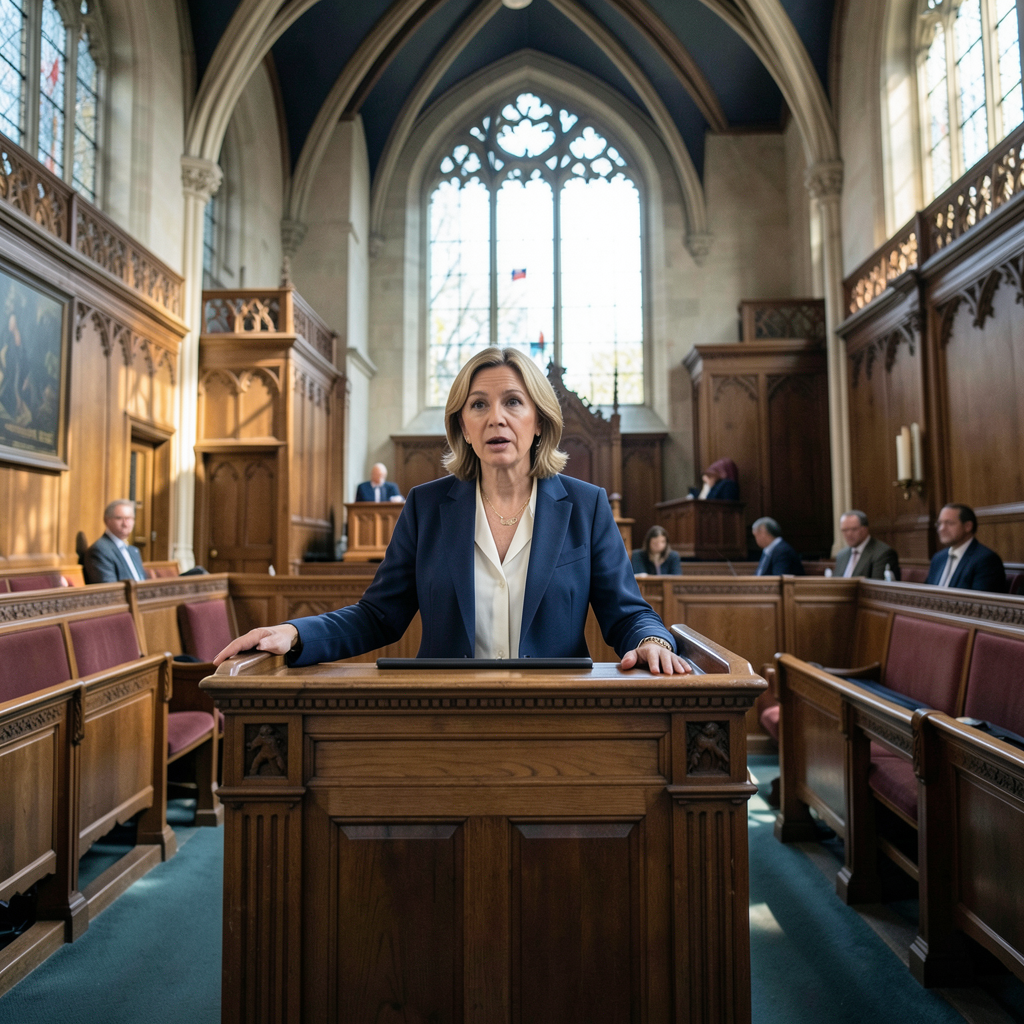

The Sudanese population represents the largest group of unaccompanied children seeking asylum in the United Kingdom, according to the Member of Parliament for Oxford East.
Anneliese Dodds informed Parliament that Sudanese nationals rank as the second most common nationality, following Eritreans, among those arriving via small boat crossings.
During her address to the House of Commons, the Labour parliamentarian drew attention to the devastating civil conflict afflicting the African nation.
The ongoing warfare has generated what observers describe as the most severe hunger and displacement emergency globally.
Both opposing forces have reportedly weaponised combat operations, including sieges, strikes targeting civilian areas, and restrictions on humanitarian assistance.
The Oxford East representative stated that a substantial population exodus is occurring as a direct consequence of the conflict targeting civilians in Sudan.
She referenced calculations indicating that 8.6 million individuals have been displaced throughout the country.
This figure corresponds to the combined populations of Scotland, Manchester and Bristol.
Those displaced have been compelled to abandon their residences due to extreme violence and must endeavour to rebuild their existence elsewhere.
Dodds noted that approximately four million individuals who fled Sudan have sought refuge in neighbouring nations.
She acknowledged that fellow parliamentarians encountered some of these displaced persons in Egypt, while she herself spoke with refugees in Chad.
The accounts shared by these individuals regarding their experiences were described as deeply troubling and enduring.
The MP reported that El Obeid, a Sudanese city, faces encirclement while conflict has not resumed in the Blue Nile region.
Health concerns persist across extensive areas of Sudan, with outbreaks of cholera and dengue fever documented.
The humanitarian circumstances have deteriorated according to multiple indicators.
Escalating drone operations have featured targeted strikes that subsequently struck emergency responders attending initial incidents.
Reference was made to an aerial assault in March against El-Daein teaching hospital in eastern Darfur, alongside a contemporaneous attack on electrical infrastructure in Al Dabbah.
Both incidents resulted in civilian casualties and damage to essential facilities.
Agricultural conditions have been affected by inadequate rainfall patterns, which projections indicate will intensify food insecurity concerns.
The parliamentarian observed that while the crisis may appear distant, constituents have shared accounts of family members experiencing hardship within Sudan.
The ramifications are also evident domestically, with Sudanese nationals now constituting the primary category of unaccompanied asylum-seeking children attempting to enter the country.
They additionally represent the second largest nationality among small boat arrivals following Eritreans.
In her previous capacity as development minister during August of the preceding year, Dodds travelled to South Sudan and committed £15 million in funding to assist those escaping violence in Sudan, including individuals displaced into South Sudan and Chad.