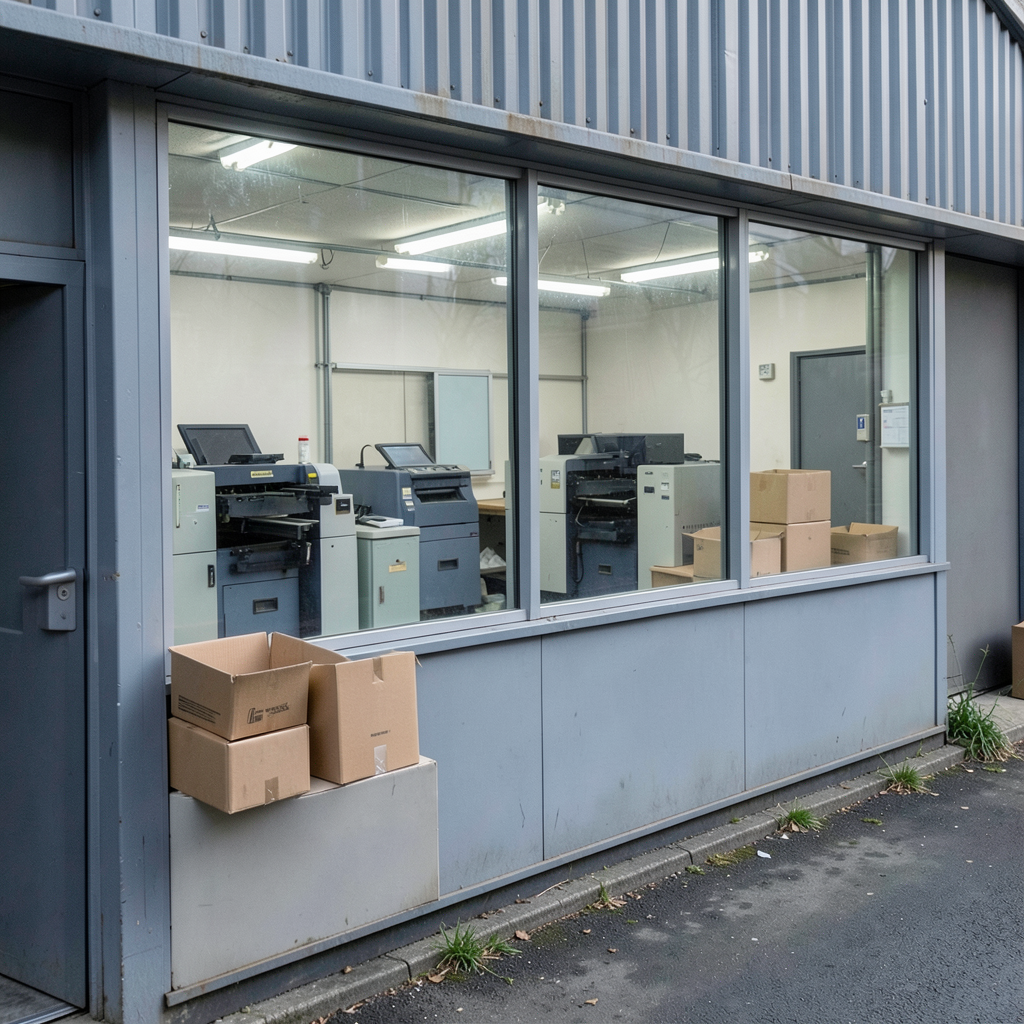

A long-established British textile business has ceased trading after more than four decades of operation following the appointment of administrators.
Fanela, which provided custom printing services to customers throughout Britain and continental Europe, has entered a formal insolvency process.
The company specialised in multiple printing methodologies, including direct-to-garment printing, transfer printing, sublimation, embroidery work, and large-scale volume production.
The business maintained a strong market reputation, earning a 4.4-star average rating from Google users.
Previous clients highlighted the company’s product quality and service standards in their assessments.
According to customer feedback, the company demonstrated particular expertise in producing embroidered workwear and uniforms, with finished items described as excellent by those who had placed orders.
Adam Price and Lane Bednash from CMB Partners UK Limited were named as administrators in an official notice published in The Gazette, with their appointment taking effect on September 2.
The administration process represents a formal legal mechanism under the Insolvency Act 1986, triggered when an organisation can no longer meet its financial commitments.
A licensed insolvency practitioner assumes control to pursue one of several statutory objectives, which may involve rescuing a financially viable company that faces temporary cashflow difficulties.
Upon entering administration, a statutory moratorium provides the business with protection from creditor actions, enabling management to develop restructuring strategies.
Trading may continue during this period, though operational oversight transfers to the appointed administrators.
Within eight weeks, administrators must present their proposals for creditor consideration.
Creditors subsequently participate in a formal voting procedure to accept or reject these proposals.
Should the process involve selling business assets, proceeds are distributed according to a legally defined priority order after deducting administration costs.
The process concludes automatically after twelve months unless an extension is formally requested.
The Fanela case forms part of a broader pattern of retail sector difficulties across Britain.
Several prominent high street names have collapsed into administration or liquidation during 2026.
LK Bennett, Claire’s, and Quiz all closed their remaining outlets after entering administration.
Fashion retailer Leading Labels entered liquidation in May and is shutting its final fifteen stores.
Whitbread announced the closure of numerous restaurant chains, including 89 Brewers Fayre sites, 106 Beefeater locations, 32 Table Table establishments, 20 Bar and Block venues, and 14 Cookhouse and Pub restaurants.
TG Jones and the British Heart Foundation each plan to shutter approximately 150 outlets.
Additional retailers including River Island, Primark, Poundland, Revolution, BrewDog, and Franco Manca have also reduced their store portfolios.
Accell Group, the parent company of the historic British bicycle manufacturer Raleigh, entered administration, threatening the future of the 139-year-old brand.
The travel sector has experienced significant disruption with multiple operators ceasing activities.
Businesses including Regen Central, Gold Crest Holidays, Asiara UK, Simply Florida Travel, Trav Expert, Strachan Travel, Travel Bespoke, Groupia, Global Vision International, Ski Yodl, TS Travels Group, Yourtravelshop, TS Travel Realisations, Firefly Holidays, Fraser Travel, and Golf Villa Rentals have all ceased trading or entered administration.
Wayfairer Travel suspended operations indefinitely while seeking administrator appointment.
Four British airlines entered administration or liquidation proceedings: Ascend Airways and EcoJet Airlines entered liquidation, while Zenith Aviation Limited and European Cargo entered administration.
In the delivery sector, Yodel is being phased out following its acquisition by InPost.
Supermarket chain Morrisons is reportedly exploring the sale of certain in-store pharmacy operations as part of ongoing cost reduction measures.