
The milestone marks advancement toward addressing a form of Ebola for which no authorised immunisation currently exists.
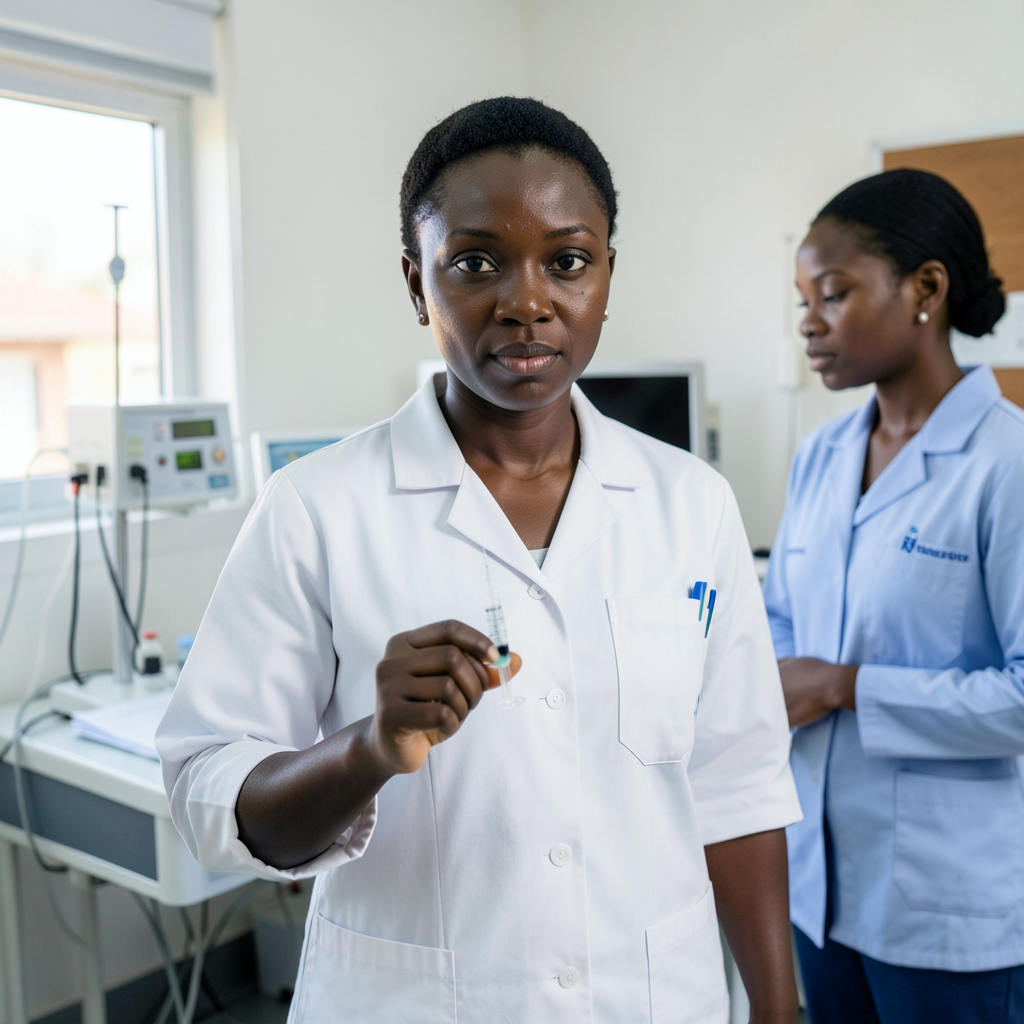
Initial vaccinations were administered to participants in Masaka City using the ChAdOx1 BDBV formulation.
The immunisation approach employs the same platform technology as the Oxford-AstraZeneca coronavirus vaccine, reconfigured to provoke immune defence against Bundibugyo virus.
Both preparations utilise a modified chimpanzee adenovirus as a vector, introducing genetic material encoding a viral protein into recipients.
The existing coronavirus vaccine targeted the spike protein, whereas this new candidate incorporates a Bundibugyo glycoprotein instead.
This Uganda-based investigation follows preliminary first-in-human assessment conducted previously in Oxford, with financing provided through the Coalition for Epidemic Preparedness Innovations as part of broader initiatives to progress vaccine development.
Standard clinical evaluation proceeds through sequential phases, beginning with initial safety assessment.
Phase II involves expanded cohorts, frequently comprising several hundred subjects, enabling more comprehensive safety profiling and identification of optimal dosage levels.
The investigation in Uganda is being carried out by the MRC/UVRI and LSHTM Uganda Research Unit in coordination with Oxford’s Vaccine Group and Pandemic Sciences Institute.
One group will receive either the active immunisation or a control substance, a second will obtain two administrations separated by a six-month interval, and the third will comprise individuals with prior Ebola vaccination who will receive a single dose.
Comprehensive monitoring will continue for twelve months, encompassing observation for side effects and laboratory analysis of blood specimens to establish immune response generation.
The advancement comes at a significant juncture as regional nations confront an active Bundibugyo virus disease epidemic.
The outbreak underscores the need for immunisations targeting this Ebola variant, which claims approximately one-third of those it infects.
The outbreak in the Democratic Republic of Congo has emerged as the most rapidly expanding Ebola epidemic recorded and the most lethal the country has faced.
A vaccine could play a role in controlling the emergency.
Bundibugyo virus was originally characterised following an epidemic in western Uganda in 2007, where it produced severe Ebola disease manifestations, resulting in 149 suspected infections and 37 fatalities.
This occurrence led to recognition of Bundibugyo virus as a separate ebolavirus species.
Although Uganda has since eliminated local transmission through swift detection and intervention measures, Ugandan researchers and public health specialists continue supporting regional operations to suppress the epidemic in the Democratic Republic of Congo.
Persistent unrest, population movement, and restricted healthcare access have complicated containment efforts, hindering surveillance and contact identification activities.
The Serum Institute of India, headquartered in Pune, has partnered with the programme to produce and stockpile roughly 620,000 doses of the ChAdOx1 BDBV candidate within a fortnight for prospective deployment.
The institute has dispatched 300 vials to the United Kingdom and approximately 3,000 investigational doses for the Uganda trial.
Should preliminary trials demonstrate promise, CEPI expects to collaborate with the University of Oxford and the Serum Institute to facilitate advanced evaluation capable of generating evidence supporting potential emergency use authorisation.
Later-stage investigation encompasses Phase III and Phase IV.
Phase III typically involves hundreds or thousands of participants, evaluating efficacy while maintaining safety surveillance.
Subjects may be distributed across groups enabling comparison against placebo or established interventions.
Following regulatory approval, Phase IV monitors safety and effectiveness across broader populations over extended durations.
Development of the ChAdOx1 BDBV candidate could represent a significant development in protecting communities from Bundibugyo virus disease and enhancing preparedness for subsequent outbreaks.