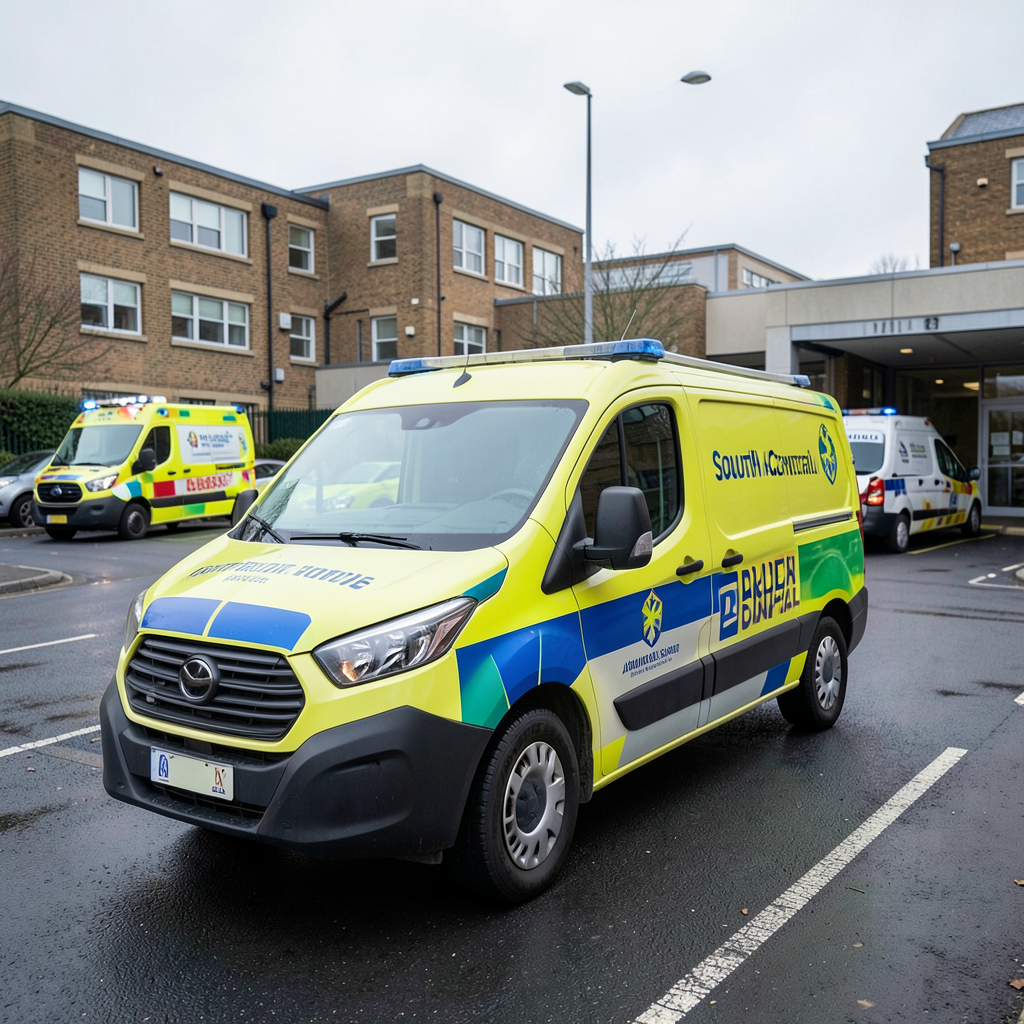

New data obtained through Freedom of Information legislation has exposed substantial shortfalls in emergency response performance across Oxfordshire, with some patients facing waits exceeding 24 hours for ambulance assistance.
The figures, supplied by South Central Ambulance Service NHS Foundation Trust, cover a 12-month period from September 2025 through August 2026.
During this timeframe, the county recorded 80,321 separate ambulance incidents.
Performance against national benchmarks fell short across all priority levels.
Category one incidents, representing the most immediately life-threatening emergencies, numbered more than 7,000.
These calls attracted an average response time of 10 minutes and 13 seconds, whereas national guidelines stipulate a seven-minute threshold.
For category two emergencies involving potentially serious conditions, 51,409 callouts were logged.
The average arrival time stretched to 34 minutes and 35 seconds, substantially above the 18-minute national requirement.
The most pronounced failures occurred in the category three tier.
Of 20,827 urgent but non-life-threatening calls, 9,957 failed to meet the two-hour national target.
The mean wait for these incidents reached two hours, 39 minutes and 44 seconds.
Extremely prolonged delays were documented throughout the county.
The worst recorded instance occurred within the Vale of White Horse district, where a category three caller waited 30 hours, five minutes and one second before receiving a response.
Cherwell experienced the second-longest delay at 23 hours, 25 minutes and seven seconds.
Response time disparities were evident across each local authority area.
Oxford city recorded a maximum wait of 20 hours, 55 minutes and 54 seconds.
South Oxfordshire saw callers wait 29 hours, 14 minutes and 47 seconds at the extreme end.
West Oxfordshire’s longest delay reached 21 hours, 49 minutes and 34 seconds.
Analysis by postcode revealed particular pressure in certain localities.
Areas bearing postcodes OX2, OX29, OX49, OX10 and OX15 were identified among those experiencing the most severe delays.
Additional affected zones included OX18, OX25, OX33 and SN7.
Calum Miller, the Liberal Democrat MP representing Bicester and Woodstock, expressed concern regarding the extent of delays.
According to Miller, the prolonged waits reflected systemic strain accumulated over years of insufficient funding, placing intolerable pressure on NHS personnel and patients alike.
Miller called upon the current administration to prioritise investment in hospital capacity and formulate immediate solutions for social care to alleviate demand on emergency services.
The ambulance trust responded to enquiries by acknowledging that response time measurements applied across its entire operational region rather than to individual calls in isolation.
A spokesperson indicated that performance fell short of expectations and that a comprehensive programme addressing the multiple underlying factors was underway.
The spokesperson clarified that category three incidents were clinically assessed as non-emergency presentations where no immediate threat to life exists, necessitating prioritisation of more critical cases.
The trust noted that rural geography contributed to extended response windows, as emergency crews were necessarily based in population centres where demand concentrations were greatest.
Efforts to mitigate delays included deployment of community first responders to initiate care while ambulance vehicles completed journeys.
Call handling staff provided guidance regarding symptom management and alternative treatment pathways where clinically appropriate, with mechanisms in place to escalate priority should a patient’s condition deteriorate.
Improvement initiatives encompassed expansion of clinical expertise within emergency control rooms, acceleration of recruitment activities, replacement of ageing vehicles, and partnership working with acute hospitals to expedite handover processes.
Jane Hanna, chairing Oxfordshire’s Joint Health Overview and Scrutiny Committee, observed that demand for urgent treatment had intensified year-on-year since the public health emergency, reflecting population growth and changing healthcare needs within the county.
Hanna emphasised that the volume of critical emergencies necessarily affected capacity to respond to lower-priority calls and that meaningful progress required action beyond the ambulance service itself.
The committee had recently concluded a review resulting in four recommendations directed towards both the trust and partner organisations, with particular emphasis on escalating staffing concerns at national level.
Dr Veronica Barry, executive director of Healthwatch Oxfordshire, characterised the documented delays as worrying.
Barry highlighted the distress experienced by patients and relatives uncertain when assistance would arrive, a situation particularly acute for residents in remote communities where travel distances compounded access difficulties.
Barry advocated for improved public communication explaining available alternatives to dialling 999, suggesting that clearer guidance would enable individuals to obtain appropriate care more efficiently.