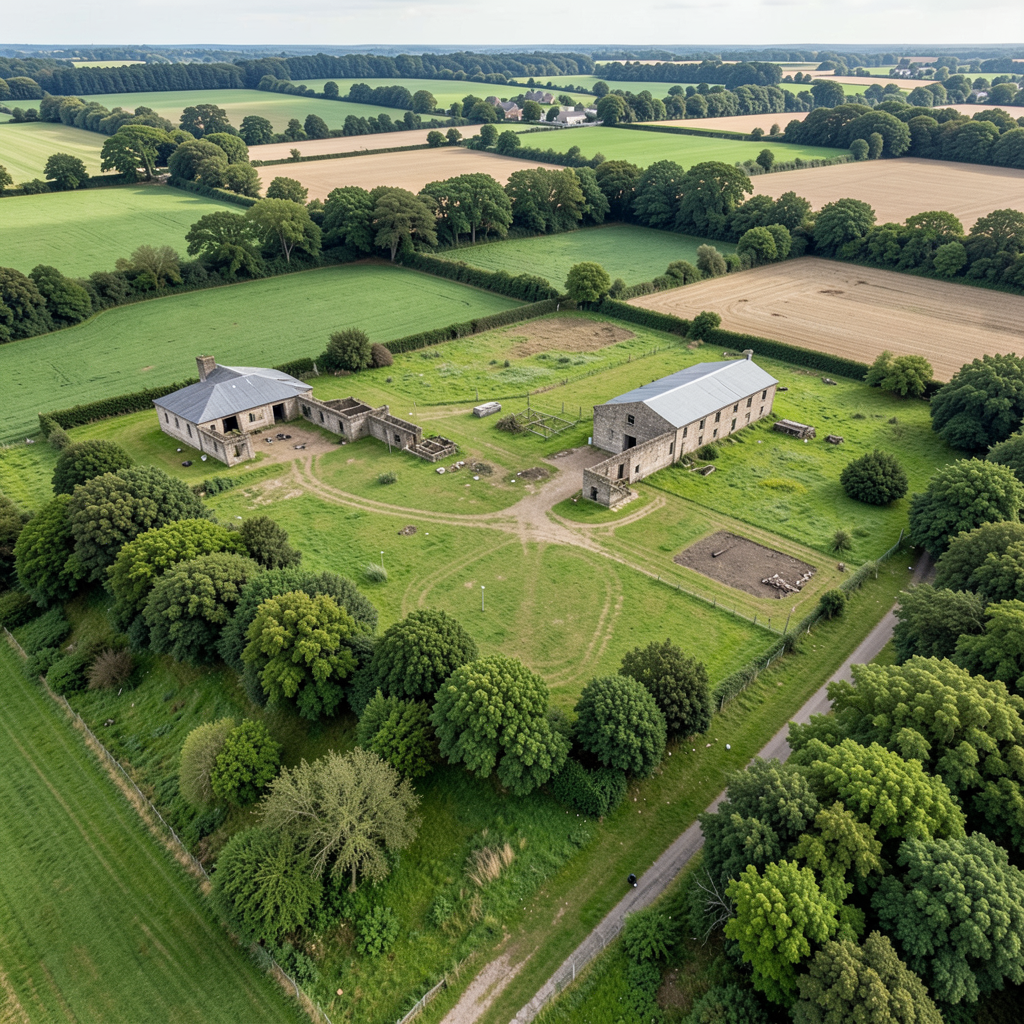

Authorities have cautioned that a proposed facility for asylum seekers could be unlawful if constructed without proper authorisations safeguarding endangered species and their habitats.
The Home Office initiative concerns a location adjacent to Piddington in Oxfordshire, situated on the former Bicester Ministry of Defence grounds, with capacity to accommodate up to 1,256 individuals seeking asylum.
Opposition has emerged regarding possible consequences for scarce and legally protected fauna, particularly barbastelle bats, with local residents submitting objections concerning potential violations of environmental legislation.
Thames Valley Police confirmed that no violations have been identified at present, though the force endorsed assertions that significant construction at the location would necessitate approvals from Natural England, the governmental nature agency.
Dr Claire Brenner, an ecological specialist compiling environmental documentation for campaigners, indicated that recordings of barbastelle specimens, among Britain’s most uncommon bat varieties, alongside Natterer’s and brown long-eared species, were obtained this month directly adjacent to the MoD facility’s perimeter.
According to Dr Brenner, all three species demonstrate sensitivity to illumination and acoustic disturbance, relying upon unlit passages such as hedgerows and woodland edges to traverse terrain.
She noted that the boundary surrounding the development represents one such passage, and its severance could have broader implications for bat populations across the region.
Dr Brenner emphasised that thorough surveys of the area must be conducted before any work commences.
Reports suggest some environmental specialists have proposed that construction might not commence until 2028, contingent upon ecological assessments being undertaken during periods when species are active rather than dormant.
For bat populations, this period extends from April through October.
Protected species documented in the vicinity additionally encompass great crested newts, otters, and the black hairstreak butterfly.
These creatures receive protection under the Conservation of Habitats and Species Regulations 2017, which stipulate that authorisation from Natural England must be secured prior to any activities that might cause disruption.
Such approvals mandate that developers implement strategies to prevent injury, including the transfer of wildlife to alternative habitats.
Barbastelle bats exist in such limited numbers that Norfolk local authority abandoned a road project valued at £274 million after discovering a colony along the intended route.
A Home Office representative stated that environmental evaluations and planning procedures remain ongoing, with any developments intended to prevent detrimental effects upon the natural surroundings, and that necessary licences would be obtained in accordance with statutory requirements.
Thames Valley Police verified receipt of concerns regarding possible wildlife offences at the location.
An official explained that while allegations concerning wildlife in the vicinity of MoD Bicester Site A had been received and examined by the rural crime unit, no wildlife offences had been established as having occurred.
The force continues to maintain dialogue with interested parties, including the Home Office, the Ministry of Defence, and community members as the planning process advances.