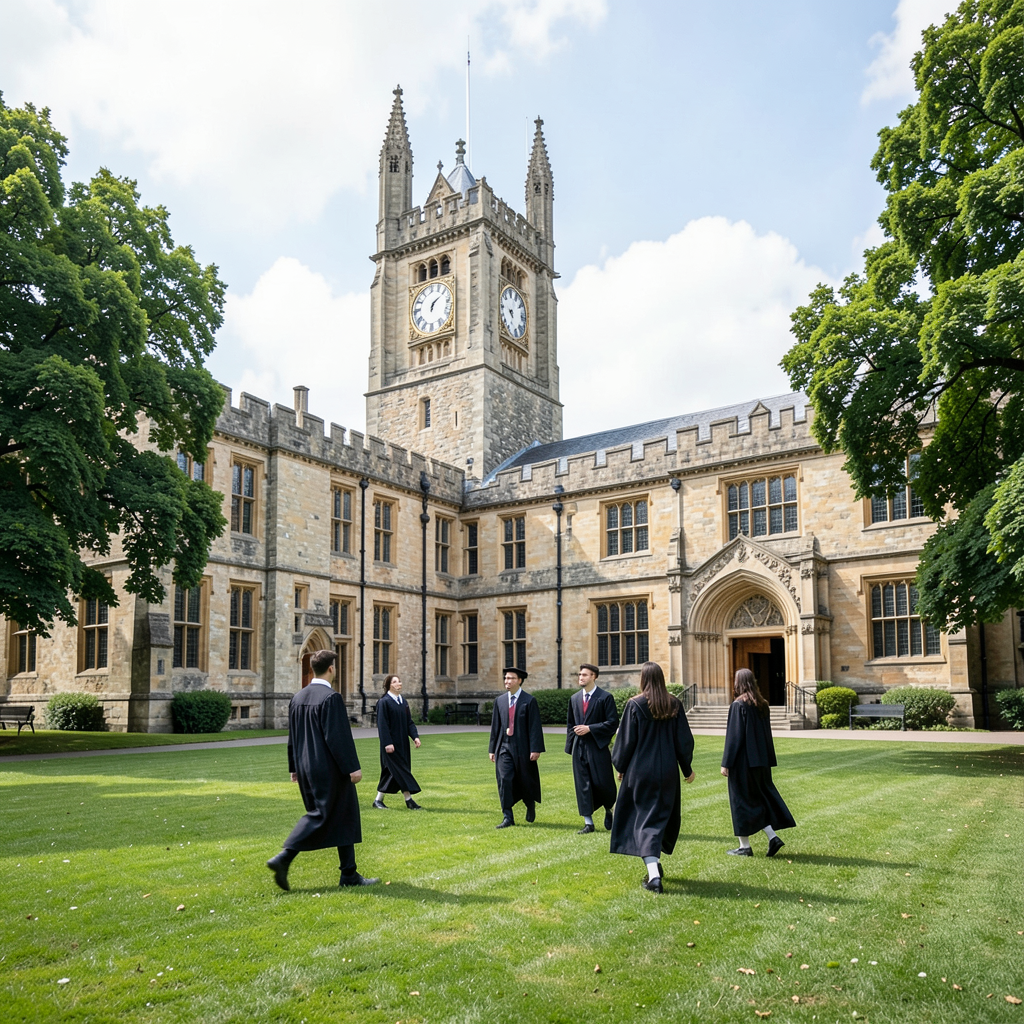

The organisation responsible for one of Oxford’s most distinguished awards has implemented significant cuts to its funding mechanisms for professional qualifications and tightened regulations surrounding doctoral research, while simultaneously reducing expenditure on social activities for current scholars.
These measures have been introduced as the Trust faces considerable financial strain.
Candidates enrolled on programmes including Public Policy, Business Administration, and Financial Economics now receive support restricted to a single year, effectively preventing any combination of these degrees with additional academic qualifications.
Those awarded the scholarship who intend to pursue doctoral-level research encounter similar constraints.
Guidelines released in September explicitly caution scholars against undertaking courses extending beyond two years.
Any scholar seeking to begin doctoral studies following their selection must obtain clearance from the Academic Review Board and prepare a contingency plan comprising a two-year postgraduate programme.
Opportunities to sequence a one-year master’s degree with a doctorate are described in official documentation as strictly limited.
Research at doctoral level is characterised as atypical and reserved for individuals for whom beginning such a programme at Oxford represents an essential progression toward their longer-term objectives.
Earlier provisions permitted scholars to incorporate professional qualifications into two-year arrangements alongside another master’s degree and imposed no limitations on direct entry to doctoral programmes.
The alterations also extend to recreational provision at the scholarship’s central residence.
Several newly appointed scholars have reported a marked reduction in introductory gatherings.
Sources indicate that alcoholic refreshments will no longer be available at functions hosted at the property.
The changes narrow the academic pathways accessible through this historic award.
The scholarship was founded in 1902 under the terms of Cecil Rhodes’s will and maintains its position among the world’s most esteemed academic bursaries.
In excess of one hundred recipients receive support annually.
Former beneficiaries encompass notable figures from politics, science, and the arts.
The programme has faced persistent examination due to concerns regarding its founder’s colonial associations.
The cutbacks coincide with mounting pressure on the Trust’s financial resources.
Financial disclosures for the twelve-month period concluding in June 2025 documented £27.7 million in scholarship-related expenditure, with the average yearly expense per scholar reaching approximately £85,000 once administrative costs are factored in.
The Trust highlighted escalating costs across tuition, living allowances, and personnel as contributing factors, with trustees signalling intentions to diminish withdrawals from endowed funds.
Escalating charges for overseas students represent a particularly acute burden on the organisation’s finances.
An investigation uncovered that international postgraduate fees had climbed by 37% since 2022, with certain programmes seeing increases exceeding 60%.
The financial pressures follow extensive renovation work at Rhodes House, concluded in 2023 at a cost of £38 million.
Annual interest payments on borrowing utilised to fund the construction amount to roughly £800,000, while revenue from events and accommodation supplements operational expenditure.
Investment performance has fallen below the Trust’s targets.
The majority of the endowment is overseen by Oxford University Endowment Management, which delivered returns of 3.6% for the year ending June 2025, substantially beneath the objective of inflation plus five percentage points.
This entity has repeatedly fallen short of this benchmark over recent periods.
The present limitations follow the suspension of the Global Scholarships initiative in April 2026.
This initiative had offered a pathway for candidates unable to apply through established regional categories, encompassing numerous nations across Africa.
The Trust’s public statement cited alterations to strategic direction as the reason for discontinuation.
The Rhodes scheme is not the sole international bursary to implement reductions recently.
The Jardine Foundation declared in August that it would conclude its undergraduate scholarship provision for students from Southeast Asian nations to study at either Oxford or Cambridge after forty-four years, instead prioritising regional educational establishments.
In communications, the Trust maintained that it occupies a stable financial situation.
However, it acknowledged that the University of Oxford has substantially raised international postgraduate charges in recent years with further increases anticipated, which would inevitably influence future possibilities.
The organisation confirmed that study proposals previously sanctioned would be upheld.