
As autumn approaches, most students find their extended summer break nearing its conclusion.
However, for Oxford University members, September represents merely another month within an extended vacation period.
Yet this seasonal transition provides an opportunity to reflect upon formative school holidays and the experiences that shaped adolescent summers.
Contemporary cinema and streaming platforms continue to offer narratives exploring youth experiences, with two particularly notable British productions emerging during the recent holiday season.
The Enola Holmes series presents its third instalment, transporting audiences back to the Victorian period.
Having exhausted domestic adventures for its protagonist, the franchise adopts a time-honoured sequel strategy by situating the narrative within a holiday setting.
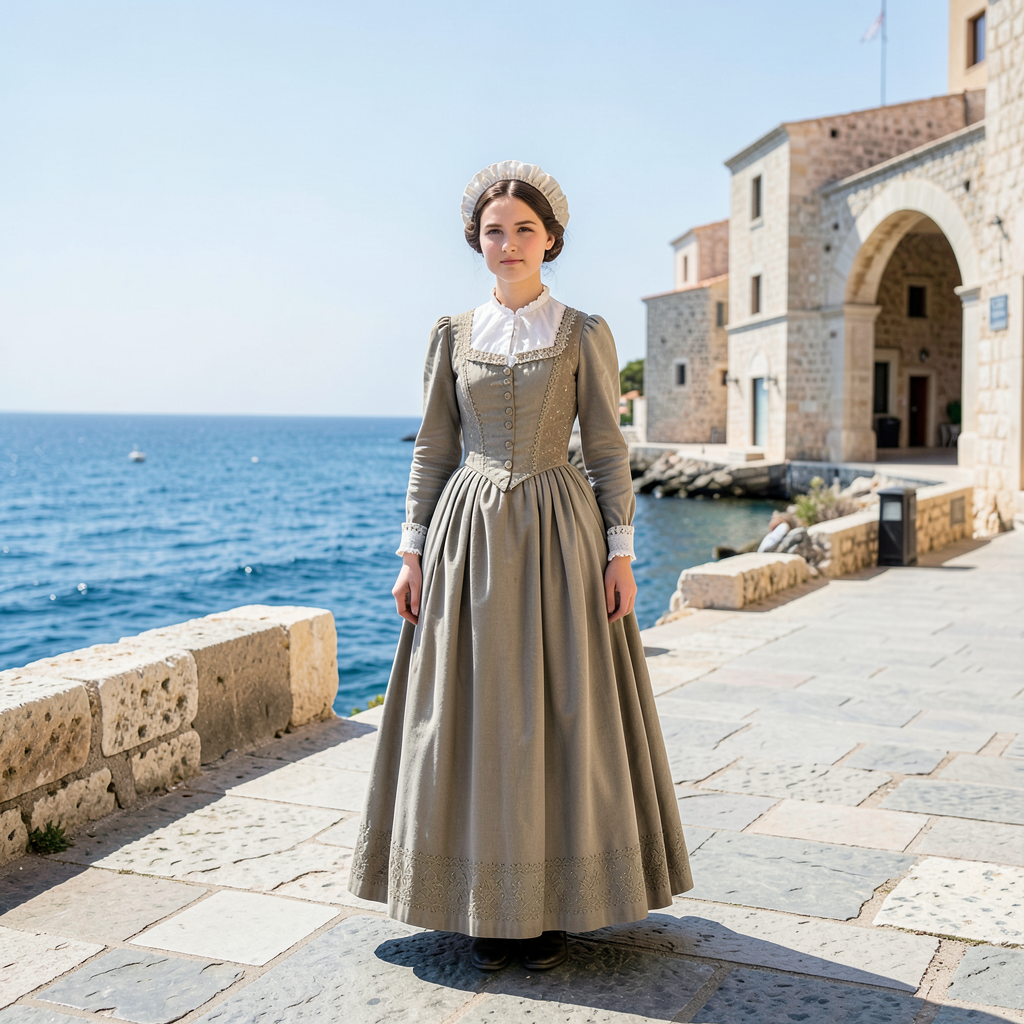
The production utilises Maltese locations, particularly views of Valletta, though critics have suggested the picturesque Mediterranean scenery compensates for narrative shortcomings.
Millie Bobby Brown portrays the title character, whose perpetually concerned expression and mature appearance challenge historical authenticity.
Beneath the obligatory opening chase sequence and developing mystery surrounding her brother’s disappearance, the film engages meaningfully with the societal constraints imposed upon young women of that era.
This approach offers a more nuanced perspective on feminine agency than typically found in contemporary mainstream productions.
The plot finds Enola neglecting her betrothed, Lord Tewkesbury, while investigating her sibling’s fate.
Prior to this abandonment at their engagement celebration, it is actually Sherlock who challenges Enola regarding her intention to adopt the Tewkesbury surname.
Her response suggests a willingness to embrace certain social conventions, representing perhaps the film’s most significant statement on female emancipation within what remains fundamentally a young adult franchise.
The narrative construct deliberately presents Enola’s failure with Tewkesbury as arising from her own choices, while her acceptance of his name appears voluntary.
These elements indicate a refined approach to characterisation: Enola emerges as compelling not through perpetual resistance to patriarchal structures, but through her complex humanity, including flaws and inconsistencies.
The third instalment ventures beyond the series’ established themes, confronting the British Empire directly.
This imperial legacy casts a shadow over any British narrative set before the mid-twentieth century, particularly when ignored.
Modern audiences might find such silence conspicuous, and period productions increasingly acknowledge colonial history even when set exclusively within Britain.
The selection of Malta proves deliberate, providing a vehicle to introduce younger viewers to uncomfortable British history in a manner conveying injustice without exposing fourteen-year-old audiences to the full brutality experienced in other colonial territories.
A conversation between the grief-stricken Tewkesbury and Dr Watson addresses the latter’s recruitment into the Raj’s military forces.
As a Victorian protagonist, genuine narrative authenticity demands that Enola confront her nation’s historical transgressions.
The third Enola Holmes film temporarily abandons the franchise’s established feminine strength themes in favour of educational content.
The result resembles an incomplete renovation, with the production attempting to align with contemporary discourse.
Nevertheless, when that discourse concerns centuries of historical injustice frequently marginalised within school curricula, dedicating substantial runtime to examining such matters represents commendable ambition.
Though this instalment may appear to deviate from the action-oriented approach distinguishing the previous two films, future entries stand to benefit from this maturation, should production financing continue.
Operating on considerably smaller scope yet equally attuned to current cultural concerns, the Heartstopper series presents its concluding feature-length chapter.
Unlike the expansive Victorian production of Enola Holmes 3, Heartstopper has consistently excelled at depicting authentic teenage experiences in their full complexity and uncertainty.
While the screenplay functions as a guidebook for adolescent conduct, with dialogue addressing viewers directly regarding appropriate behaviour, the frequent complications preceding resolutions and subsequent obstacles ensure plausibility.
The show merits genuine recognition for its specificity.
Criticism regarding the awkward exchanges between Nick Nelson and Charlie Spring has persisted throughout the series, yet as Heartstopper has developed and its subject matter deepened, so too has the characters’ emotional delivery.
Given the programme’s target demographic of thirteen to sixteen-year-olds, the comparatively straightforward performances prove adequate when addressing challenging themes such as eating disorders, depression, anxiety, homophobia and transphobia.
A teenage programme whose moral positions remain unambiguous throughout dialogue and performance offers refreshing clarity within a landscape where productions frequently romanticise substance abuse, mental health struggles, reckless sexual behaviour and mistreatment under the pretext of authentic teenage chaos.
Though series such as Skins, Euphoria, Baby and Elite serve purposes, their tendency to amplify and inspire adolescent insecurities warrants acknowledgment.
Heartstopper unfolds in parks, at school entrances, within domestic settings and ultimately at social gatherings.
It represents the everyday teenage experience far more accurately than most comparable programmes.
The absolute authenticity of its scenarios amplifies both conflict and resolution.
This domestic ordinariness constitutes the programme’s enchantment: while familiar to the archetypal teenager, to young queer viewers it represents aspirational possibility.
The series combines what performer Yasmin Finney terms queer escapism with recognition of broader adolescent turbulence and the increasingly hostile environment facing queer communities, establishing genuine cultural significance for years ahead.
This feature-length conclusion aligns perfectly with the series’ established quality.
The production neither abandons its roots in favour of adult themes nor remains confined to the teenage simplicity of earlier seasons.
The most apparent development involves Nick and Charlie’s initiation of sexual activity, depicted with appropriate tenderness and restraint for those expecting explicit content from a teenage programme.
However, Heartstopper addresses psychological struggles affecting its ensemble while introducing external threats beyond the programme’s seemingly protected world.
With characteristic gentleness, the film examines alcohol misuse, identifying an issue frequently overlooked in adolescent narratives.
Nick’s struggle with his evolving identity and anticipatory grief regarding his protective role for Charlie resonates with the elusive yet widespread emotional journeys of young men whose emotional development has occurred primarily through romantic relationships rather than peer friendships.
As with all elements of this carefully crafted universe, the emotional difficulty finds resolution, concluding on a hopeful note.
The conclusion of school-based innocence need not signal an absence of future promise.
Both these British productions addressing youthful transition acknowledge the darker realities underlying their fantastical settings while demonstrating that political and social consciousness need not inevitably lead to despair.
Contemporary challenges may yield future achievements; the conclusion of carefree school years opens rather than closes possibilities for personal growth.