
Spain’s World Cup campaign reached a significant point on the evening of 26th June, when the national team faced Uruguay during the group stage of the tournament.
Across the Atlantic, the match drew attention from supporters worldwide.
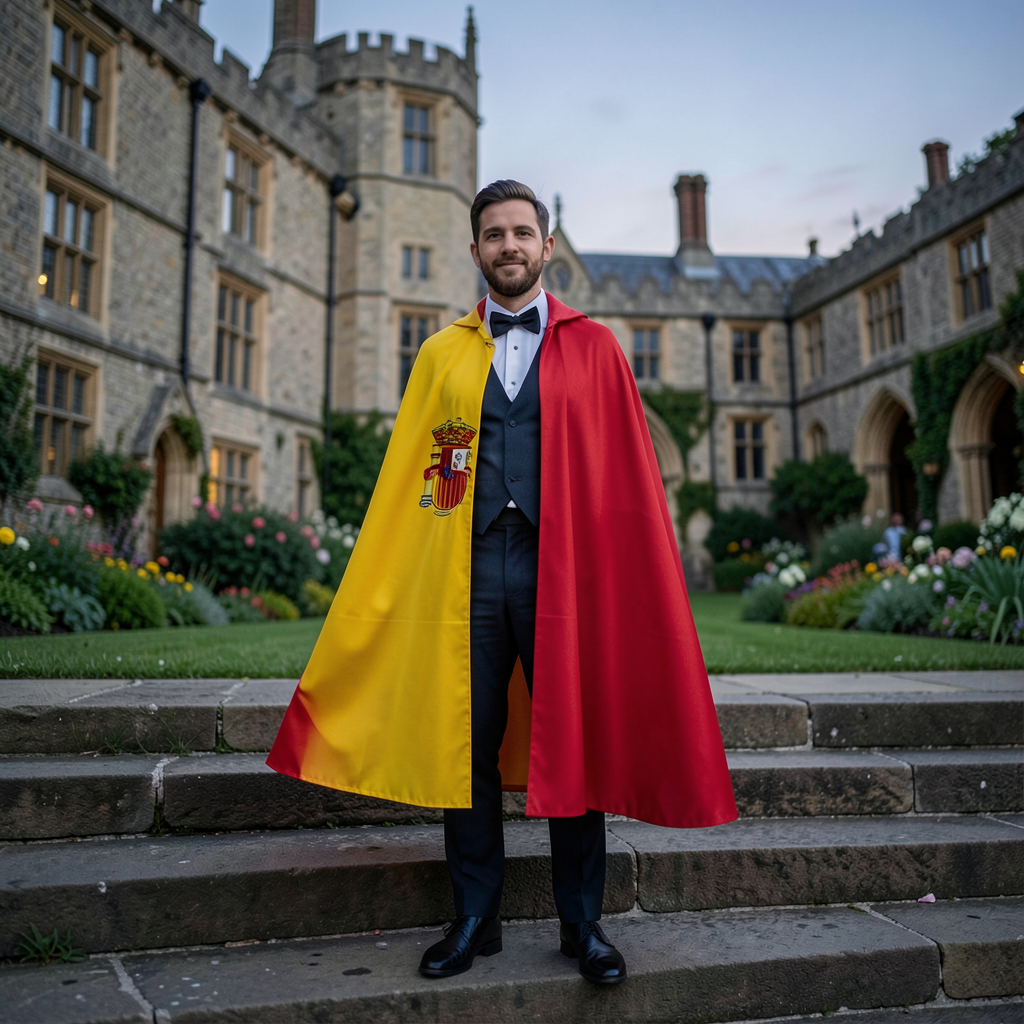
A person attending a summer ball at their Oxford college chose to mark the occasion by wearing a Spanish flag as a cape.
The Oxford setting held particular significance for this individual, whose earliest memories in the city dated back to starting school at age four.
The urban environment of Oxford, with its historic architecture and atmospheric streets, had served as a childhood backdrop long before any association with the university.
The author’s parents walked with them along what is now Cornmarket Street during those early years.
A Spanish heritage played a defining role in shaping the author’s identity.
The mother, of Spanish origin, implemented deliberate strategies to maintain cultural connections despite residence in England.
Throughout the author’s childhood, she communicated exclusively in Spanish within the home environment.
A playgroup was established for Spanish-speaking children in the local area, providing opportunities for shared activities and cultural exchange.
Certain childhood experiences reflected the Spanish influence.
The individual encountered the animated character SpongeBob under the title Bob Esponja rather than its English-language name, with the mother having configured the language setting to Spanish without the child’s awareness.
This detail illustrated the extent of Spanish cultural immersion during those formative years.
At age ten, the family relocated to Spain, intensifying the connection to the mother’s homeland.
The teenage years in Spain encompassed visits to notable locations including L’Albufera near Valencia, a freshwater lagoon in the region.
Weekend excursions to Madrid with companions and attendance at Fallas, the Valencian festival held each March, formed part of the lived experience during this period.
The transition proved transformative for the individual’s personal development.
A previously reserved child emerged as a more outgoing person by the time of school graduation, characteristics attributed in part to the influence of Spanish social culture.
The experience of different national environments shaped the author’s understanding of identity and belonging.
Upon returning to Oxford, the individual noticed changes in the familiar surroundings.
The pandemic period had altered the local commercial landscape, with independent shops having closed.
Established social connections had shifted as acquaintances relocated.
Personal characteristics associated with Spanish influence persisted, including certain behavioural patterns and communication styles that distinguished the individual from typical British social expectations.
International students at Oxford represented a community with whom the author developed a sense of shared experience.
Those arriving from distant countries while maintaining connections to their places of origin provided perspective on navigating cultural identity in an academic setting.
The match between Spain and Uruguay represented an opportunity to demonstrate cultural allegiance through visible symbolism.
The decision to wear the national colours at the event carried deeper significance related to the author’s formation across two national contexts.
The World Cup concluded with Spain securing victory in the final against Argentina.
The decisive moment arrived during extra time, with a goal by Ferran Torres securing a one-nil win.
Torres, a native of Valencia, delivered the crucial contribution that decided the championship match.