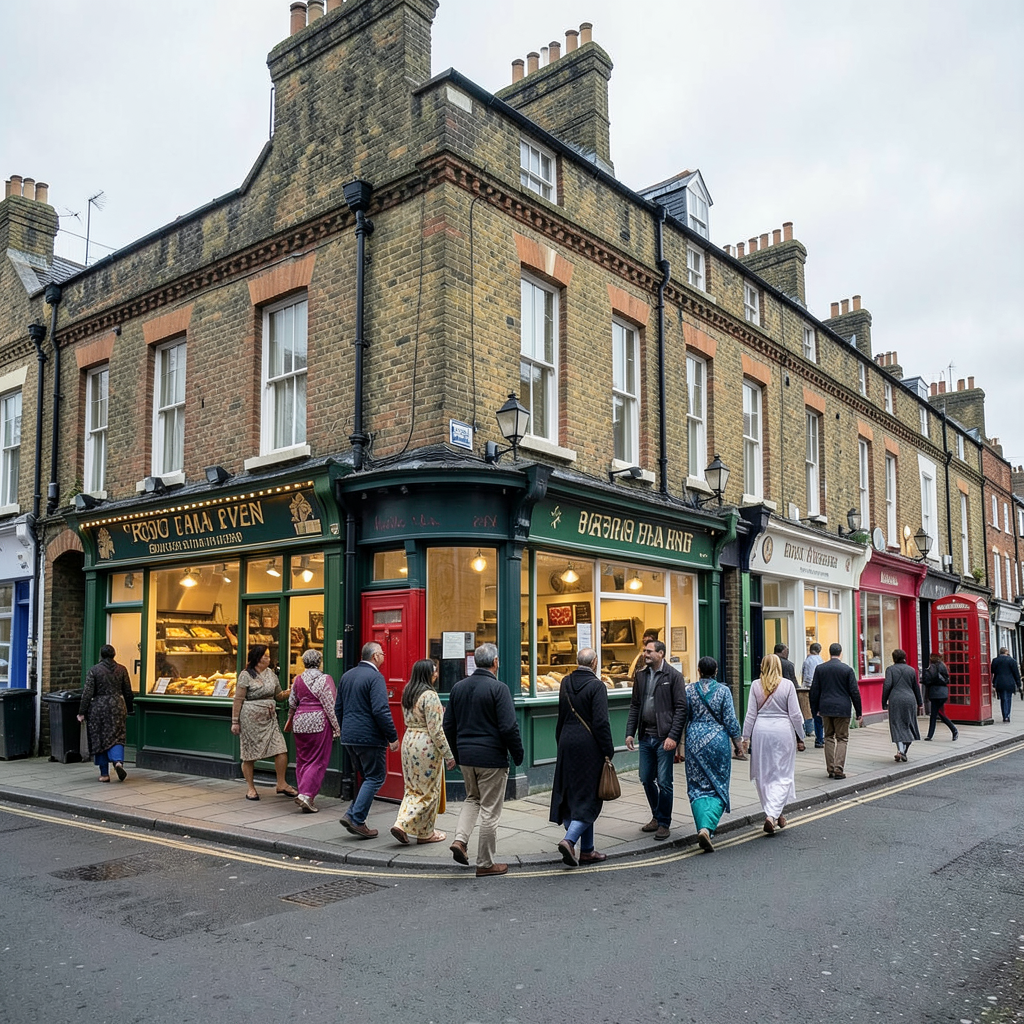

The East End of London represents a significant chapter in the history of British immigration and cultural transformation.
This historically industrial district, situated in the eastern part of the capital, served as a landing point for successive waves of migrants who each contributed to the area’s distinctive character.
During the 17th century, French Huguenot refugees established themselves in what would become the Brick Lane area, fleeing religious persecution in their homeland.
In the early decades of the 1900s, Irish settlers and Ashkenazi Jewish communities arrived, adding their own cultural imprints to the neighbourhood.
The latter part of the 20th century witnessed a significant influx of Bengali Muslims, predominantly originating from the North-Eastern Sylhet region of what became Bangladesh in 1971.
This final wave of immigration occurred after the area ceased to be designated as East Pakistan.
The migration patterns were closely tied to economic opportunities generated by the British Empire’s operations originating from Bengal.
Workers travelling from colonial territories required food establishments, prompting the emergence of curry houses throughout the East End.
The development of Anglo-Indian cuisine within England was substantially influenced by these Bangladeshi families, whose establishments became integral to the local dining culture.
The geographical context of the area includes locations such as the East India Docks and the wider Tower Hamlets borough.
An arch bearing the designation Banglatown commemorated the concentrated Bengali presence in the district.
By the late 1990s, the neighbourhood had gained literary recognition through Monica Ali’s 2003 novel, a work completed during her studies at Wadham College, Oxford.
The fictional narrative explored the experiences of a young Bengali woman navigating the complexities of marriage within the community.
The adaptation of Ali’s novel into a feature film prompted protests from community activists, who contended that the source material failed to represent the authentic character of residents originating from the Sylhet division.
Critics suggested the narrative relied upon derogatory characterisations that did not reflect the community’s true nature.
The subsequent decades brought substantial economic transformation to the area.
Traditional curry establishments, once thriving as commercial anchors, experienced significant decline as the neighbourhood underwent gentrification.
New arrivals included vintage retail outlets, contemporary gallery spaces and fashionable café operations.
The culinary landscape that had defined the district for generations faced considerable disruption.
The question of national cuisine brought attention to Chicken tikka masala, which was publicly identified as Britain’s national dish by Robin Cook during his tenure as foreign secretary.
The dish’s origins symbolised the fusion of culinary traditions within British society.
Despite these transformations, Brick Lane continues to function as a commercial centre and a gathering place for diverse communities.
The demographic composition of the area has shifted repeatedly throughout its history, with successive groups establishing temporary yet meaningful presences before moving on.
However, the fundamental character of the district as a space for immigrant communities and cultural exchange persists.