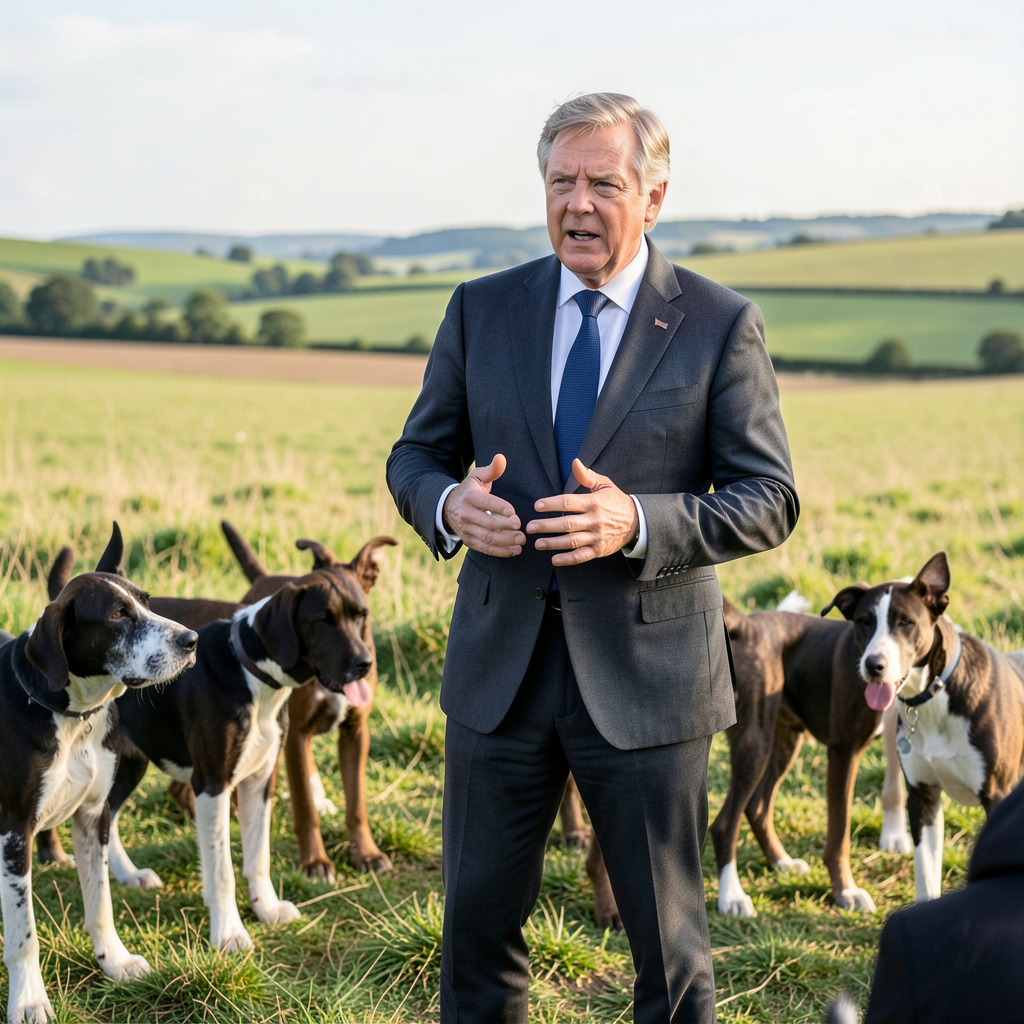

David Cameron has spoken out against plans to outlaw trail hunting, calling the proposed legislation fundamentally misguided.
The former prime minister, who is related by marriage to Viscount Astor, the chairman of the British Hound Sports Association, voiced his opposition during a Westminster gathering focused on countryside concerns.
A government consultation on banning trail hunting in England and Wales attracted an unprecedented 184,000 submissions from members of the public.
The Countryside Alliance has catalogued 27 government policies implemented or proposed since the beginning of last year that the organisation contends have disadvantaged rural areas.
Among the measures identified are modifications to inheritance taxation, requirements for affordability assessments affecting both horse and greyhound racing, elevated fees for firearms licensing, and the current proposals to prohibit trail hunting.
Research conducted by polling organisation ORB on behalf of the Countryside Alliance revealed that merely 15 percent of respondents living in countryside areas believed the Labour party cared about those residing and working in rural communities.
The same survey indicated that 28 percent of rural inhabitants would be more inclined to support Labour if the party rebuilt its connections with countryside constituencies, whereas 24 percent of respondents across the country held this view.
Government representatives have offered an alternative assessment of their track record on rural affairs, maintaining that their strategy aims to incorporate countryside communities into policy development at earlier stages and to tackle challenges spanning economic expansion, residential development, transport infrastructure, workforce skills, medical services, and digital connectivity.
Following the Westminster event, the Countryside Alliance announced its intention to correspond with the prime minister to press for additional modifications to government policy towards rural Britain.
Cameron additionally flagged worries regarding the government’s request for information about gamebird breeding, liberation, and shooting activities in England.
His contention was that additional regulatory measures might generate broader problems for countryside enterprises, encompassing public houses and nearby amenities.