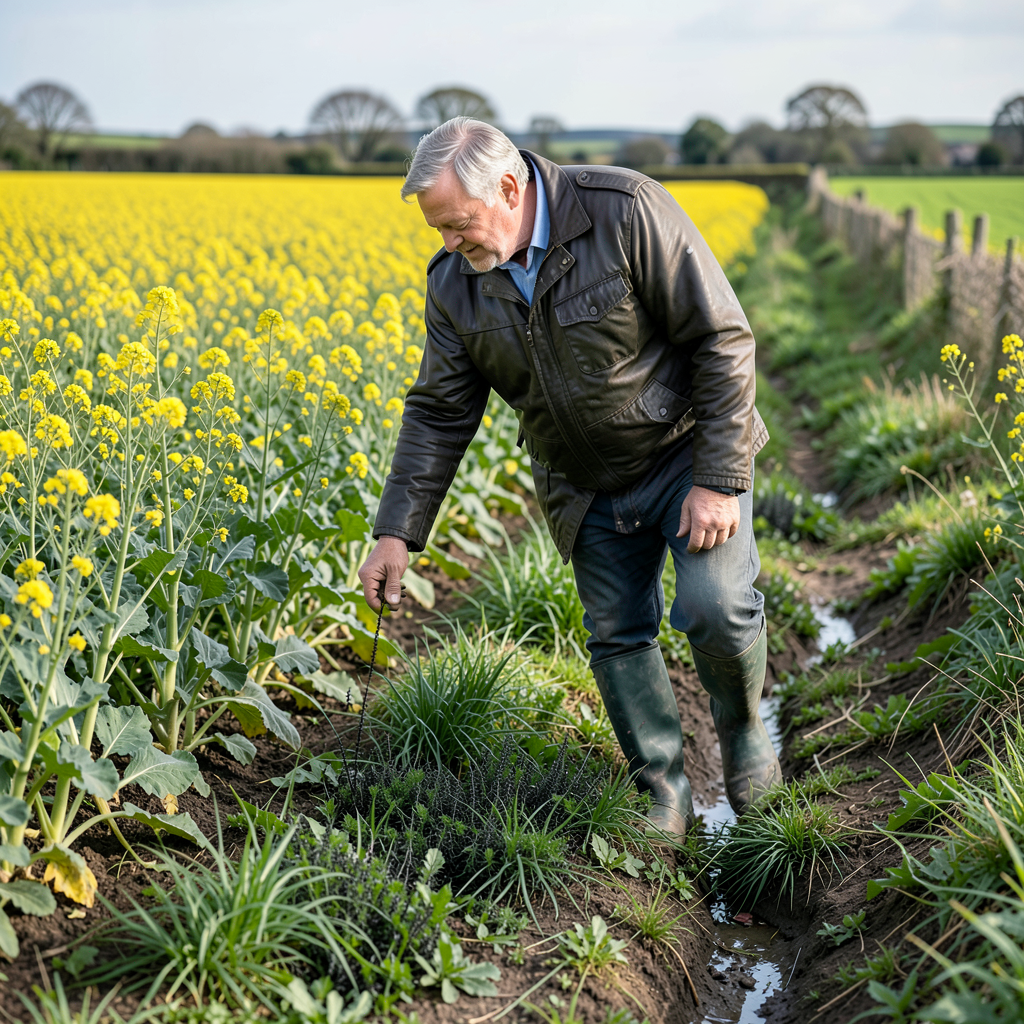

The agricultural consultant featured on the hit rural reality programme has announced disappointing developments regarding crop cultivation.
Charlie Ireland, who serves as Jeremy Clarkson’s agricultural land agent, discovered blackgrass growing among a parcel designated for oilseed rape production.
Blackgrass represents a problematic annual grass weed prevalent throughout arable farmland.
The invasive plant rivals cultivated crops for essential resources including sunlight, water and soil nutrients while generating substantial seed quantities.
Residing in the vicinity of Blenheim Palace, Mr Ireland confirmed during filming that oilseed rape redrilling operations were underway following an unwelcome discovery.
Holding a specimen, he explained that the plant in question constituted blackgrass, which he colourfully described as resembling artificial intelligence among weeds.
The problematic grass had germinated approximately seven days prior to the inspection.
Its root system had developed to nearly match the length of its leaf structure.
The cultivation strategy employed focuses on minimising soil movement during drilling operations, thereby reducing disturbance to dormant blackgrass seeds and limiting germination opportunities.
This weed species has developed characteristics enabling survival despite standard farming techniques encompassing drilling methods, cultivation practices and herbicide applications.
Its remarkable adaptability allows emergence and growth patterns that facilitate successful competition against commercial crops.
Farmers cultivating oilseed rape encounter numerous obstacles throughout the growing process.
Some producers have been forced to undertake secondary drilling operations after initial crops were devastated by flea beetle infestations.
Once established, oilseed rape plantations offer valuable opportunities for managing blackgrass populations.
Blackgrass demonstrates competitive behaviour within combinable crops, modifying its growth characteristics to flourish alongside cereal varieties and oilseed rape alike.
Its ability to adapt has led to comparisons with an autonomous internal system governing its survival.