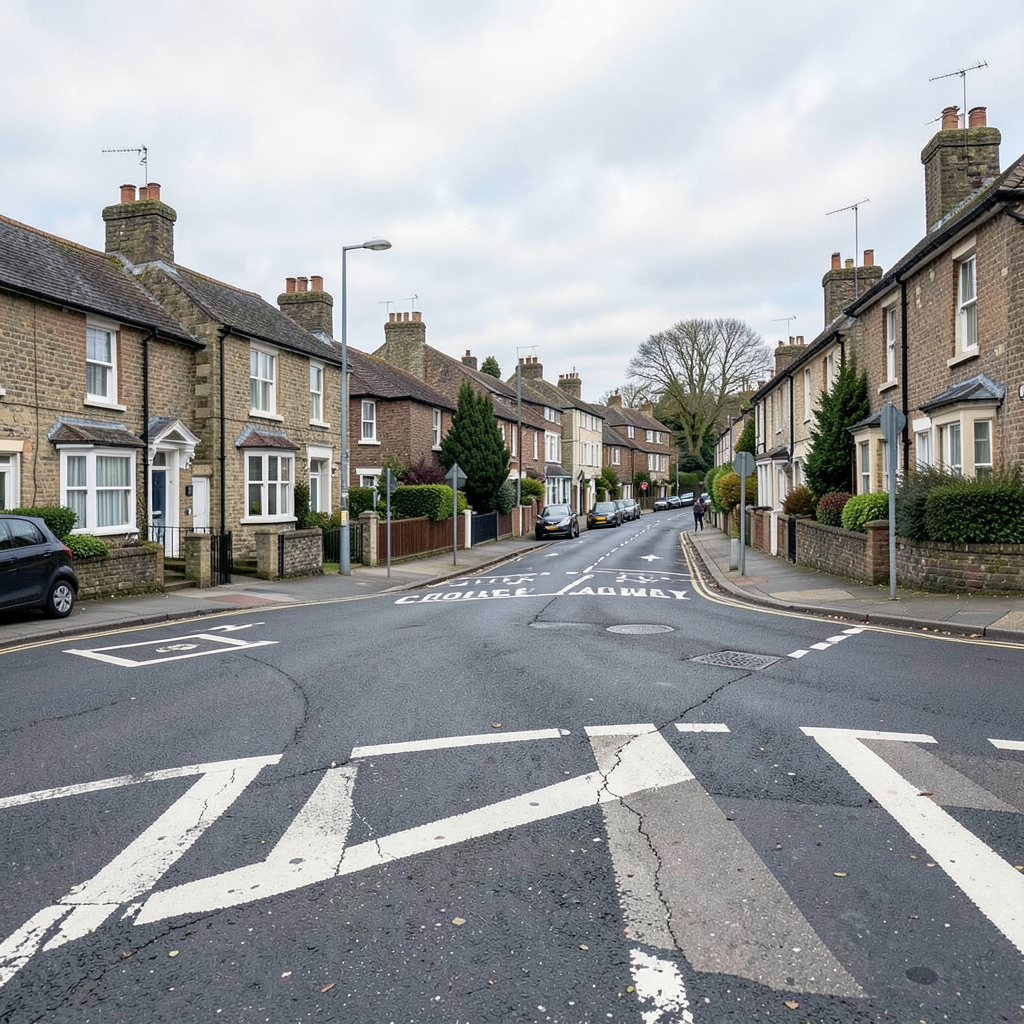

A group of approximately 40 local residents has been advocating for improvements to a hazardous junction in Oxford’s Rose Hill area, where Henley Avenue meets Church Cowley Road.
The initiative began in May and has included a digital petition circulated through the 38Degrees website, along with direct representation to Oxfordshire County Council.
A recent transport assessment published by the county council acknowledges that drivers have been utilizing the service road to circumvent traffic signals, a pattern identified as contributing to road traffic collisions.
According to the report, seven injury collisions were recorded at the southern service-road junction over a three-year period, comprising two serious incidents and five more minor ones.
When the matter was raised at a transport committee meeting, County Councillor Gareth Epps, who holds the transport portfolio, pointed to financial constraints as a major obstacle.
In his initial response to the residents’ concerns, he indicated that significant modifications to a junction of this scale would likely involve substantial costs and that no dedicated funding had been allocated for such work at that time.
He clarified that additional resources typically become available based on Department for Transport criteria concerning killed or seriously injured collisions.
This situation prompted expressions of concern from residents regarding council spending priorities, with arguments advanced that road safety measures ought to prevent accidents from happening rather than merely responding to the most severe outcomes.
The campaign, coordinated by Matt Jerwood, has identified the installation of a minimum of two pedestrian crossings as a primary objective, alongside initiatives to address excessive speed and violations of traffic signals.
Among the proposals examined were the deployment of temporary traffic lights incorporating pedestrian crossing facilities, provisional zebra crossings positioned near the junction, measures to decrease traffic flow at the location, enhanced traffic surveillance systems, speed enforcement cameras and appropriate signage, the reopening of certain blocked routes, and considerations regarding parking provision alongside safe access arrangements for nearby schools, medical facilities, retail establishments, residences, and additional local services.
Campaigners have also drawn attention to the introduction of low traffic neighbourhoods as a factor potentially contributing to increased traffic volumes and heightened risk in the vicinity.
On the campaign’s online platform, one community member described observing families, older residents, wheelchair users, and individuals with disabilities experiencing difficulty crossing the junction safely, while motorists were forced to execute risky reversing manoeuvres to rejoin the main road while monitoring traffic approaching from three separate directions.
The resident maintained that the proposed measures could substantially mitigate these risks.
A second contributor observed that implementing a right-turn filter lane for traffic descending from Rose Hill represented an obvious solution that should have been implemented previously.
According to the council, bypass traffic levels had increased once more by the latter part of 2025, with additional collisions being reported in October 2024 and March 2026, necessitating intervention.
The Director of Environment and Highways has recommended that the council implement an experimental traffic prohibition preventing motorists from travelling in a northbound direction through a section of the service road.
Automatic number plate recognition enforcement could be deployed subsequently should circumstances require it.