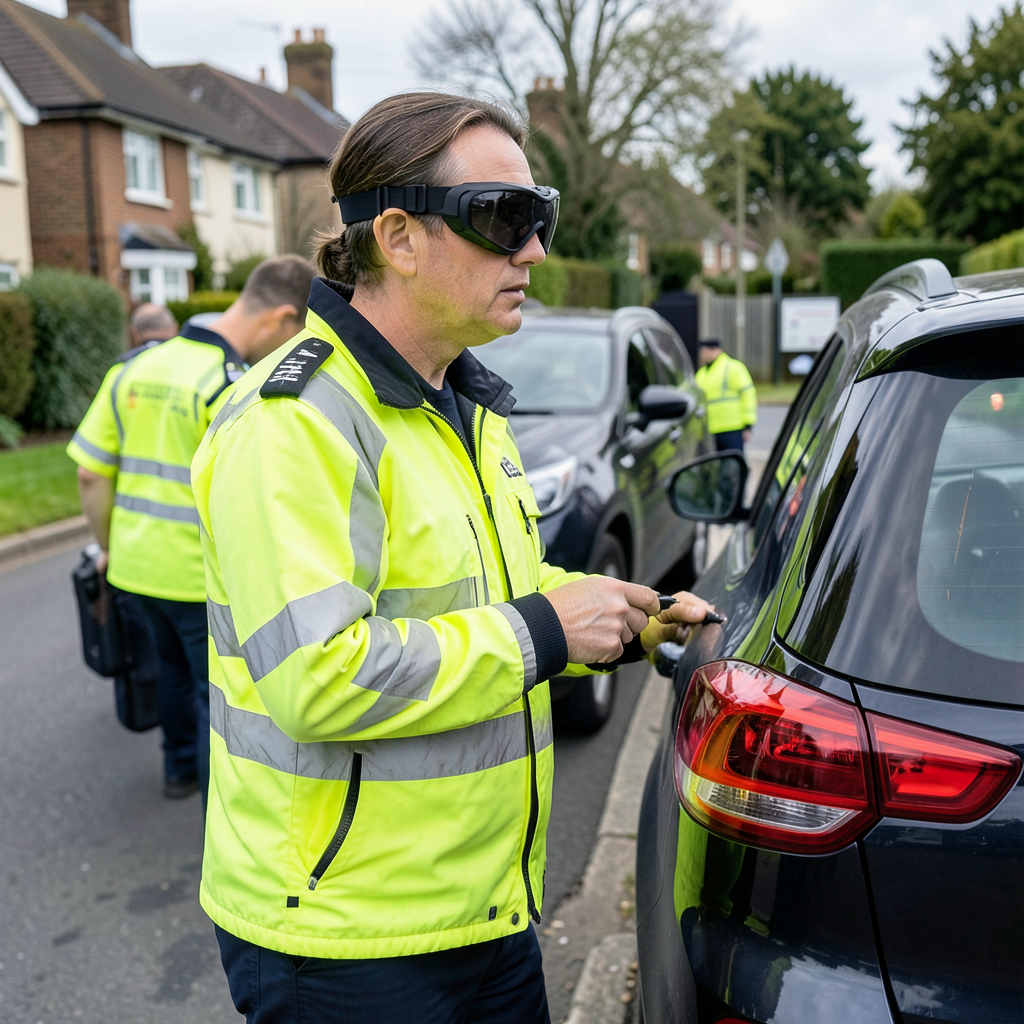

A fresh initiative has been unveiled to combat the use of unlawful vehicle registrations across Britain, with the primary objectives of disrupting organised criminal activity and enhancing driver protection.
Funding from the Department for Transport is supporting this programme, which will establish a specialist unit dedicated to identifying drivers employing fraudulent registration marks to bypass financial penalties, facilitate smuggling operations, and circumvent law enforcement identification systems.
The National Roads Policing Coordination Centre will coordinate efforts among police services throughout England to exchange information, strengthen joint working arrangements, and leverage data more effectively in targeting offenders.
Roads Minister Justin Madders indicated that enforcement authorities are intensifying efforts to address the issue through additional policing capacity and advanced technological tools.
He noted that improper vehicle markings enable criminal operations ranging from circumventing parking fees to distributing narcotics, and that authorities are taking action to safeguard legitimate road users.
Madders suggested this represents a clear message to those employing fraudulent registrations that regulatory measures will identify and apprehend them, ultimately creating safer environments for all road users.
The coordination centre will implement new detection systems, including purpose-built optical equipment capable of identifying tampered registration markings designed to circumvent camera recognition systems.
Improperly displayed registration marks are routinely employed by drivers seeking to avoid financial penalties for traffic violations, parking breaches, and low-emission zone charges, while also frequently serving organised criminal networks.
These deceptive practices significantly complicate investigative efforts when vehicles are used in theft incidents or other serious violations.
Enhanced identification capabilities would enable law enforcement to locate and prosecute offenders more swiftly, thereby improving public safety and reducing overall criminal activity.
The Department’s inaugural Road Safety Strategy in over ten years includes provisions to prevent thousands of fatalities through stricter enforcement mechanisms targeting fraudulent vehicle markings.
Proposed measures encompass elevated financial penalties, stricter standards for registration documentation, and more robust compliance verification procedures.
Three main categories of non-compliant registrations have been identified: duplicate markings matching those on registered vehicles, concealed markings rendered invisible to monitoring equipment, and vehicles operating without visible registration.
Offenders displaying improperly mounted registrations face penalties reaching one thousand pounds.
Chief Superintendent Marc Clothier, serving as the centre’s deputy national coordinator, outlined the organisation’s commitment to addressing critical road safety vulnerabilities and strengthening law enforcement’s capacity to address criminal activity affecting transportation networks.
He emphasised that collaborative operations across multiple jurisdictions have demonstrated the effectiveness of strategic, intelligence-driven methods in identifying violators and helping vehicle owners maintain proper registration compliance.
Clothier highlighted the importance of experimenting with novel techniques and exchanging successful methodologies to drive continued progress toward enhanced road safety outcomes.
Government funding presents a significant chance to strengthen road safety and enforcement efforts through improved coordination, standardised practices, and shared communication between law enforcement agencies, government bodies, and safety organisations.
Policing and Crime Minister Sarah Jones emphasised that improper vehicle registrations create serious risks by enabling criminal operations to evade detection and transport prohibited materials.
She stated that authorities are committed to equipping police forces with every available resource to combat organised criminal networks while ensuring road safety for all users.
The enforcement campaign complements existing work conducted by vehicle licensing and standards agencies, which are collaborating closely with police services to enhance detection of fraudulent registrations, investigate commercial suppliers of illegal plates, and support officers conducting roadside operations.