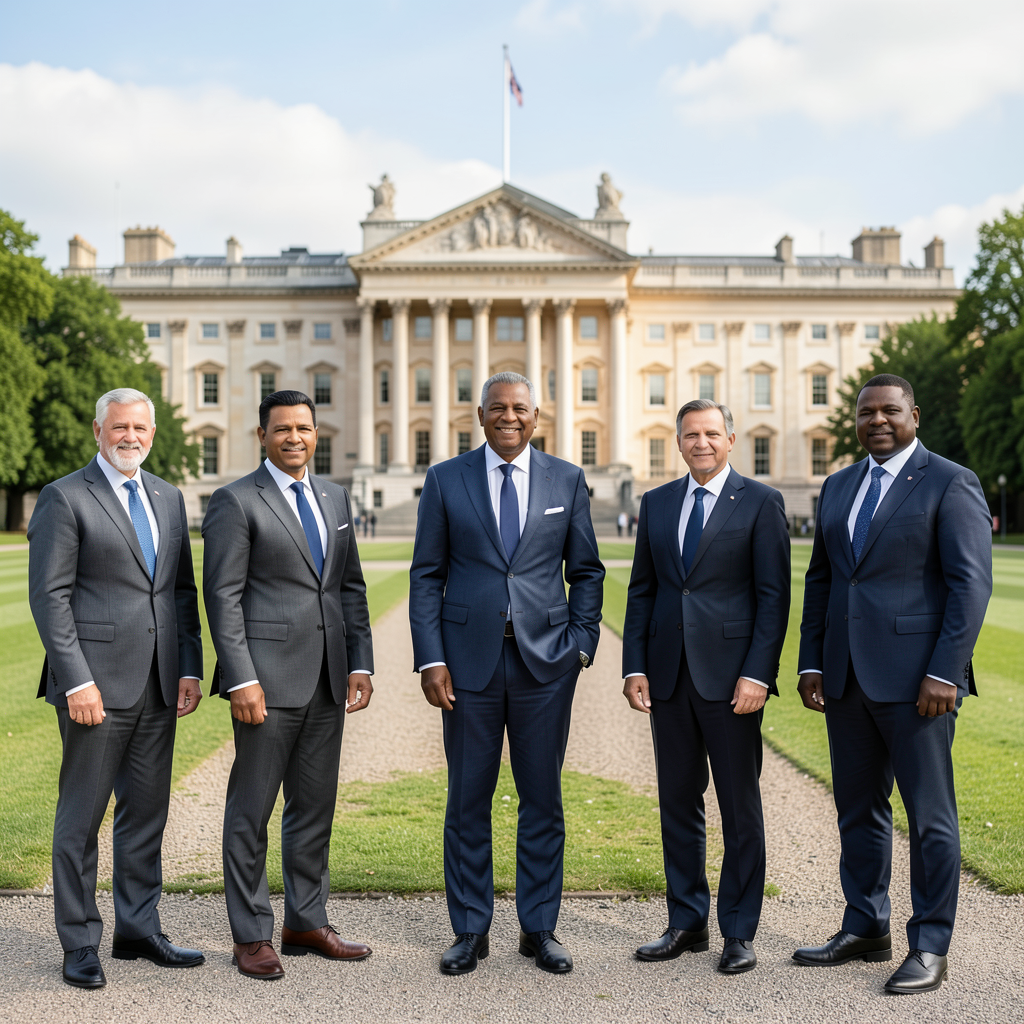

A Jamaican ministerial delegation is preparing to lodge a formal request for slavery reparations with King Charles during an official visit to the United Kingdom.
The filing on Monday will mark the inaugural instance of a Commonwealth nation pursuing this specific judicial avenue for reparatory justice, according to the delegation.
The petition, submitted to the monarch in his capacity as Jamaica’s head of state, will request that three substantive questions concerning the transatlantic chattel slavery system be directed to the Judicial Committee of the Privy Council for advisory consideration.
The Caribbean island’s highest appellate tribunal operates through this London-based body under provisions established by the Judicial Committee Act of 1833, legislation that grants the British sovereign authority to refer legal matters for expert opinion.
Separately, representatives indicated that discussions with the British Museum would address the return of cultural objects acquired from Jamaica under colonial-era circumstances.
A sequence of engagements has been arranged to coincide with the submission.
An interfaith religious gathering centred on remembrance, justice and reparation will take place at a south London chapel on Sunday.
Subsequent proceedings include a governmental discussion at Westminster on the petition date and an occasion hosted by a museum documenting the Windrush generation’s history on the following day.
The group will be headed by Olivia Grange, Jamaica’s minister responsible for culture, gender, entertainment and sport.
Statements attributed to the minister characterised the petition submission as a pivotal development in the nation’s trajectory.
She outlined that Commonwealth citizens were exercising their prerogative to petition the sovereign, requesting intervention to escalate the reparations question to the Privy Council, and expressed anticipation for constructive dialogue surrounding the matter.
During July, a collective of Caribbean heads of government conducted discussions with senior ecclesiastical figures from the Church of England as campaigning for slavery reparations gained momentum across the region.
In related political developments, the leader of Reform UK recently defended his party’s proposal to impose visa restrictions on individuals from a British Overseas Territory should that jurisdiction’s administration persist in demanding financial redress from London for involvement in the transatlantic slave trade.
The minor political organisation identified Montserrat among the territories against which such measures would be directed if their governments continued advancing reparatory claims.
The petition’s submission occurs against a backdrop of unresolved historical grievances.
European colonial powers transported an estimated 12.5 million African people between the sixteenth and nineteenth centuries.
Those who survived the oceanic crossing endured severe exploitation within plantation economies across the Caribbean basin and other territories.
Successive British administrations have maintained that financial compensation for slavery will not be forthcoming.
Conversely, governmental representatives from Caribbean states have advocated for a formal acknowledgment of historical wrongs alongside practical measures such as the elimination of sovereign debt obligations.