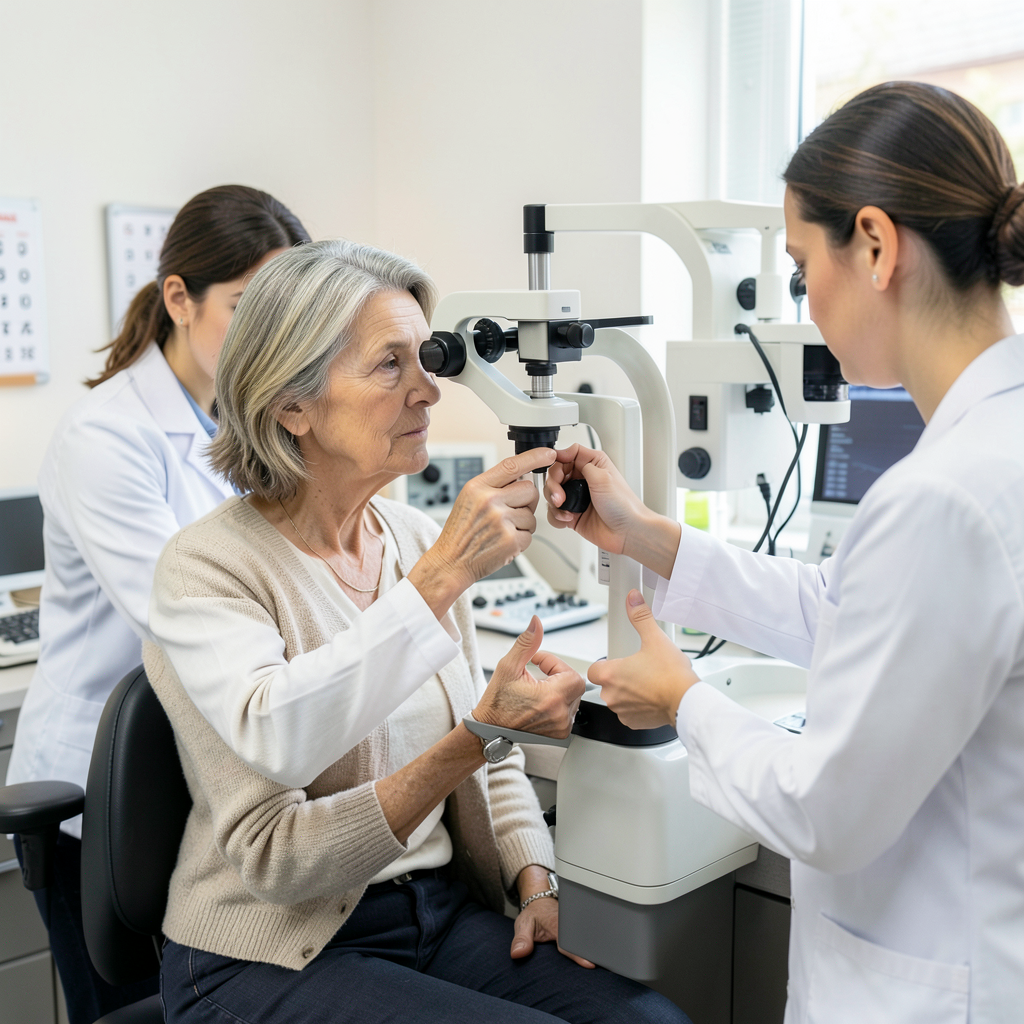

A standard eye examination resulted in the detection of a brain tumour that saved a woman’s life.
Alison Bartlett, a 44-year-old graphic designer, received a diagnosis of a tumour approximately the size of a lemon after attending an appointment at Specsavers on Sheep Street in Bicester during October 2022.
Since the beginning of the pandemic, she had been suffering from persistent migraines, visual disturbances including dark spots, and episodes of dizziness, though she postponed seeking additional medical advice until her partner and father urged her to do so.
Following a recommendation from a private doctor, she scheduled an eye test at Specsavers, where optician Mathangy Jeyabalan conducted an optical coherence tomography examination.
Ms Jeyabalan observed that while Alison’s vision tested normally, a review of the ocular health and OCT imagery revealed swelling in both optic nerves, indicating the need for immediate hospital assessment.
She was subsequently referred to the John Radcliffe Hospital for additional testing.
Subsequent hospital examinations, including a magnetic resonance imaging scan performed at St Mary’s Hospital in London, verified the presence of a tumour exerting pressure on the pituitary gland.
Ms Bartlett underwent a surgical procedure at Charing Cross Hospital a fortnight later to excise the growth.
She remained in hospital for nine days during recovery and continues to attend annual MRI examinations, as a small fragment of the tumour persists.
Ms Jeyabalan noted that Alison’s scan results combined with her described symptoms triggered immediate concern, necessitating urgent hospital referral.
She emphasised the value of OCT technology both as a diagnostic instrument and as a means of tracking ocular changes over time through archived imaging.