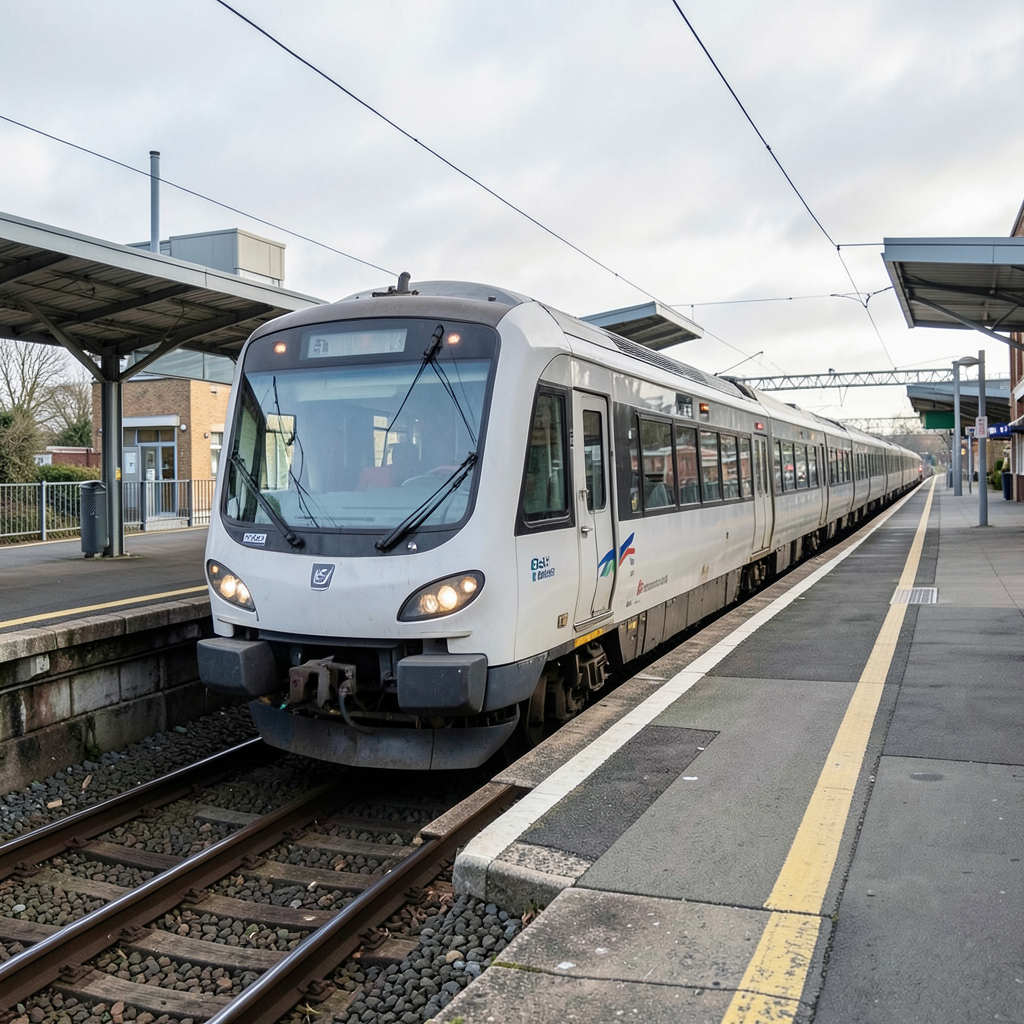

Potential industrial action has emerged as a new obstacle in the long-running controversy surrounding East West Rail services, leaving commuters facing further delays despite infrastructure completion.
The dispute centres on staffing arrangements that have prevented the launch of passenger services along the Oxford to Milton Keynes corridor, which has been physically finished for almost two years.
Instead of celebrating the imminent introduction of trains, passengers now confront the prospect of strike disruption.
A formal ballot on industrial action is scheduled to commence on September 3 and conclude on September 29.
Should the vote support industrial action, services on multiple Chiltern Railways routes could be affected, including the Chiltern Main Line and connections between Stratford and Leamington, both of which rely on train managers.
Diana Blamires, who co-founded the East West Rail Action Group, expressed disappointment that industrial action might occur before services even commence.
She noted that Chiltern Railways was appointed to operate the route in March of the previous year and questioned why the situation had not been resolved earlier.
Blamires pointed out that residents who purchased properties along the proposed route specifically to access employment opportunities were being subjected to unreasonable delays.
The disagreement stems from concerns about staffing levels on the new services.
Forty-five drivers have been appointed for the forthcoming operation, yet no guards have been hired.
The guard role encompasses responsibilities for the safe, legal, and efficient functioning of passenger services.
The National Union of Rail Maritime and Transport Workers has maintained a prolonged disagreement with Chiltern Railways regarding the introduction of driver-only operation, which the union maintains presents safety concerns and remains controversial.
In an effort to resolve the deadlock, Chiltern Railways put forward plans to employ customer service inspectors, positions that mirror many traditional guard responsibilities.
However, the union contends that the company has not offered adequate assurances regarding safe operational procedures or the safety-critical position of a second crew member aboard each service.
The ongoing uncertainty has left workers dependent on rail connections and homeowners who invested in properties near the line without viable transport options.
Those seeking to commute between Oxford and Cambridge have highlighted the considerable difficulties of travelling between the two cities.
One employee at Carter Jonas, who divides time between offices in both locations, described the prospect of reaching Oxford by the required time as necessitating an unacceptably early departure involving a lengthy car journey on substandard rural roads.
The alternative of routing through London was cited as comparably time-consuming.