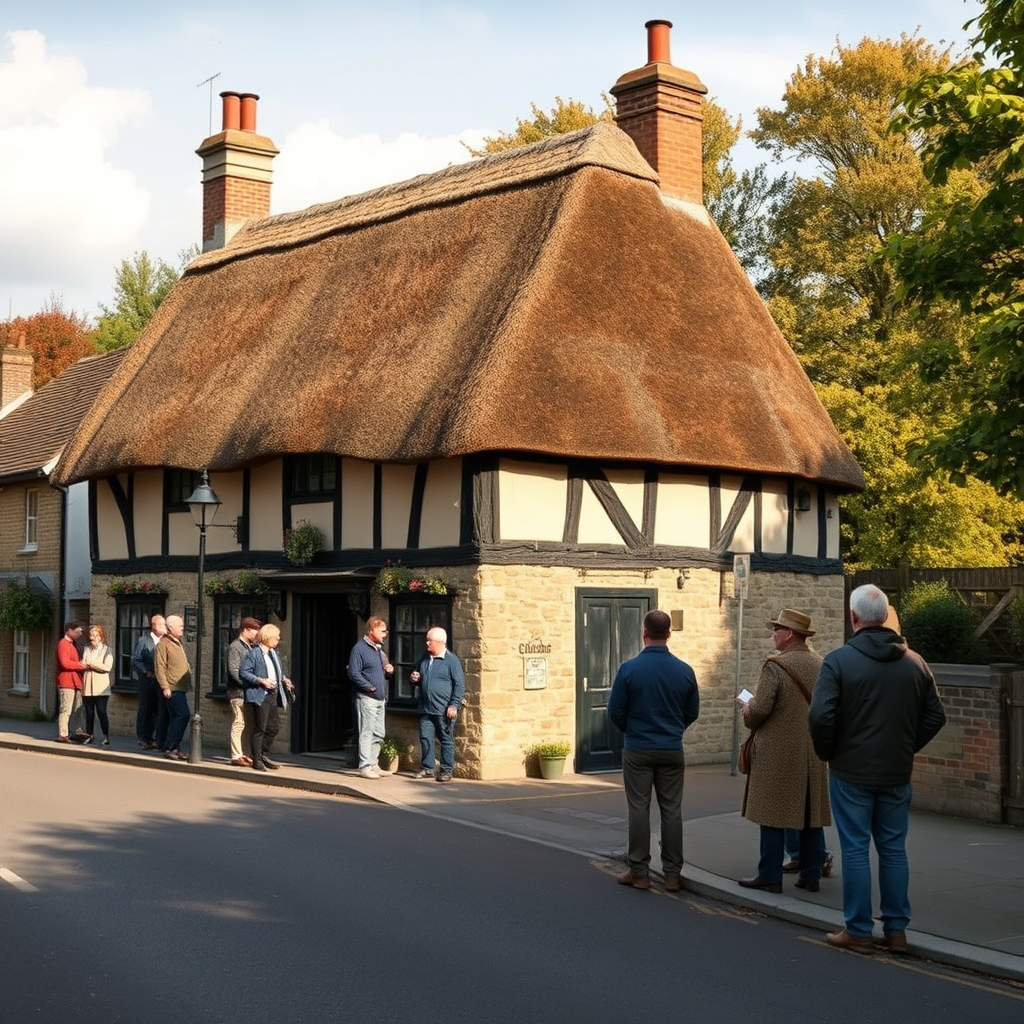

An iconic performer from the 1980s music scene has received acclaim for attempting to rescue a centuries-old public house situated on the edge of Oxfordshire.
The Rose & Thistle establishment in Haddenham, close to Thame, is at the centre of an initiative seeking to collect £750,000.
Local residents are working towards reviving this historic coaching inn, which originated in the 1700s, after it shut its doors in 2019.
As of now, the Rose & Thistle Reborn effort has gathered more than £65,000, representing approximately one-tenth of the target amount.
Spandau Ballet vocalist Tony Hadley has thrown his weight behind the mission, encouraging supporters to purchase shares as part of the fundraising drive.
The chart-topping artist, responsible for hits such as Gold, True, Communication, and Lifeline with the band, expressed his full commitment to helping the Haddenham community restore the venue.
He described it as a wonderful local establishment he had visited numerous times previously, emphasising the importance of protecting pubs in villages and smaller towns.
The reaction to the campaign and Hadley’s participation has been predominantly favourable, with internet users praising the musician’s involvement.
Following a GB News segment about the band’s push to resurrect the venue, one commenter wrote words of encouragement. Another suggested Baron Hadley of Haddenham had a pleasant sound to it.
A third individual noted that they believed Hadley was not as financially comfortable as some might assume, making his efforts particularly admirable.
Additional messages of support included well-wishes for the fundraising’s success.
Some declared it positive news while others posted playful wordplay referencing the band across social platforms.
The crowdfunding page explains that the venue occupies a prominent position within Haddenham’s conservation zone, adjacent to the village green and facing St Mary’s Church, having been the setting for countless gatherings, festivities, discussions and spontaneous meetings over generations.
The property ceased trading in 2019 and although those currently owning it had intended to relaunch operations, it has now been listed for sale and faces the possibility of being purchased by property developers and transformed into dwellings.
Once such a business is converted to residential use, restoring it becomes nearly unfeasible.
The campaign emphasises this is not meant to cause undue concern but rather to be transparent: the situation represents a limited window. Without intervention, the venue could disappear permanently. Contributions are needed to prevent this from becoming the final chapter for the establishment.