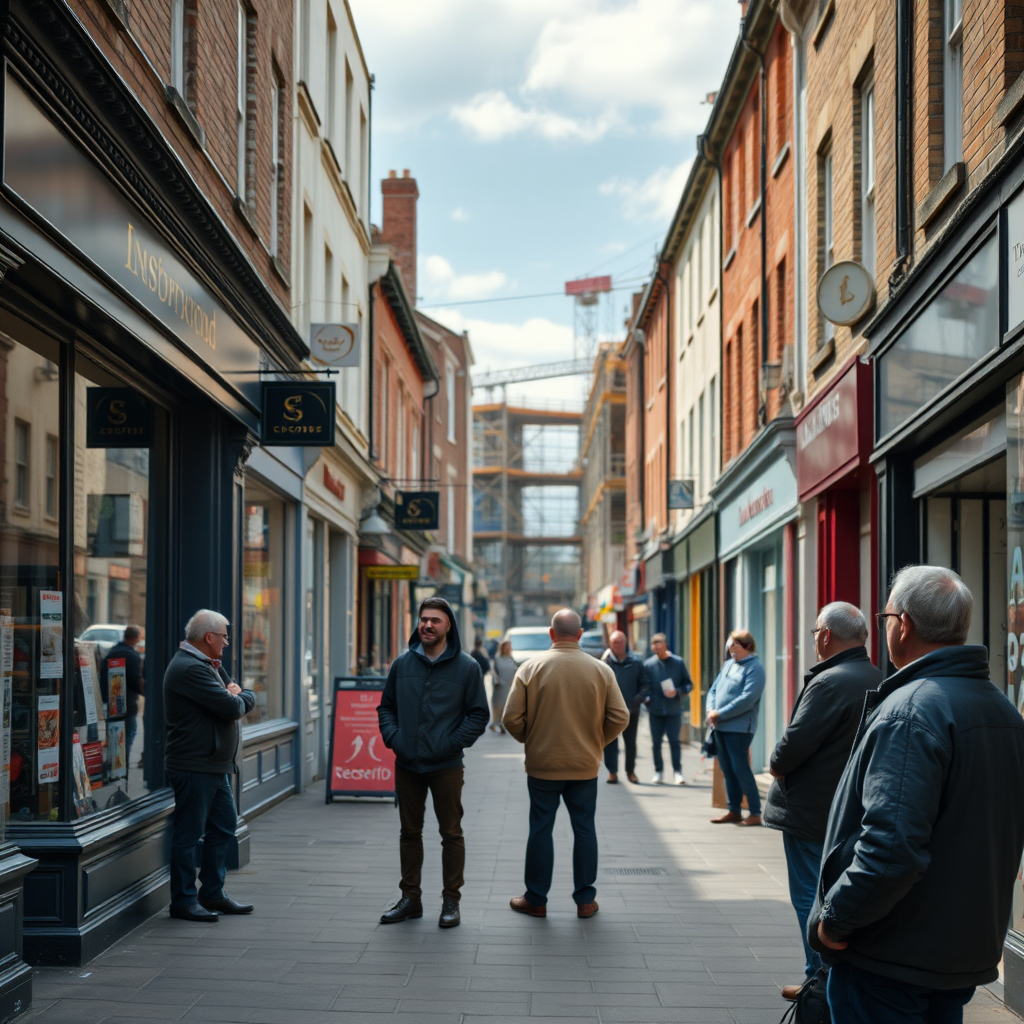

A local trade body in the Oxfordshire town has cast doubt over the merits of a 4.4 million pound high street regeneration scheme as building work looms.
The head of the Witney Chamber of Commerce has declared that the proposal to modernise the town’s retail area delivers no economic benefits on its own, noting that existing businesses are already stretched to capacity.
The concerns arise as Oxfordshire County Council prepares to commence the long-postponed scheme, with building work slated to kick off in mid-May and finish by November 2026.
Andrew Gant, the cabinet member overseeing transport at the county council, outlined the approach. Work will proceed in phases, starting with the western part of the street where traffic will be directed southbound only. The project will then shift to the eastern side where northbound movement along the High Street and Market Square will be permitted between the Corn Street and Welch Way junctions.
A council spokesperson described the changes as those that would boost foot traffic and improve accessibility throughout the High Street.
The completed scheme features new benches and trees, renewal of around 2,000 square metres of existing paths, creation of more than 1,000 square metres of additional pedestrian zones, and a fresh bus stop for community transport.
Yet the chamber’s president Adrian Bullock stated that his group opposes several aspects, from narrower carriageways to fewer taxi ranks.
Mr Bullock explained that the organisation felt a scheme incorporating temporary parking, pavement improvements, keeping the existing taxi rank size, extra disabled bays and some visual upgrades could have been achieved without 2.5 square kilometres of resurfacing and access restrictions.
He added that his group would shift focus to drawing visitors through other means, working with West Oxfordshire District Council on marketing initiatives and better directional signage.
Local councillor Thomas Ashby also flagged worries, specifically about how the construction schedule would impact town centre businesses.
In response, the Liberal Democrat-led county council has appointed a dedicated community liaison officer to work with stakeholders and preserve reasonable access during the project.
Mr Ashby, from the Conservative party, noted that as firms grapple with increased taxation from the Labour government, the summer building work threatens to harm the hospitality trade by eliminating outdoor dining areas.
He also slated the cost rise from an initial 1.98 million pounds to the present 4.4 million figure, describing it as all funded by taxpayers.
The county council stated that the additional funding allows delivery of more priorities raised by local residents alongside covering higher material and labour costs.
However, Mr Bullock remained unconvinced, conceding that the High Street clearly needed upgrading and that the group welcomes that steps are being taken. The frustration, he explained, lies in the cost ballooning to 4.4 million pounds and that even with this expanded budget, certain pavement areas will receive no work or enhancement.