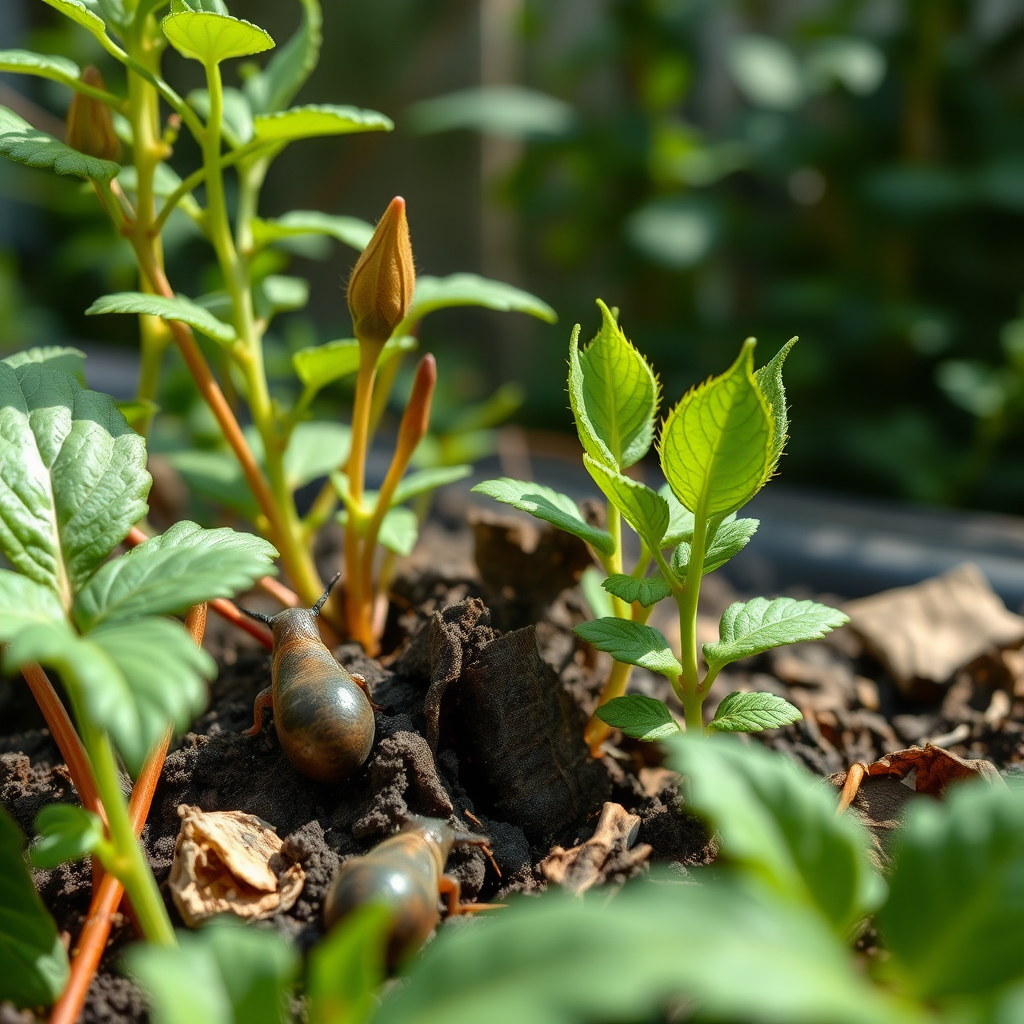

A plant care specialist has revealed an unusual approach to assist UK garden owners in defending their greenery against gastropods, and the solution grows freely across lawns.
These molluscs can devastate outdoor areas and are frequently spotted consuming our foliage.
While completely eradicating them proves challenging, a horticultural practitioner has demonstrated a method to reduce the harm they cause.
This straightforward solution requires just one item and costs nothing, as it can be sourced directly from your own property.
The specialist explained that UK garden enthusiasts can utilise thorny limbs and woody stems to establish a defensive perimeter around their greenery.
In video content shared with his substantial online following, the practitioner roams a densely planted section of his grounds collecting serrated twigs and branches.
He subsequently returns to his growing structure, where he shortens the limbs and positions them to create a guarding border around the specimen he wishes to protect.
By adopting this strategy, he contends that greenery receives superior defence against gastropods since these creatures prefer avoiding pointed spikes.
In his posting, the specialist draws a parallel between this approach and fencing wire, characterising it as essentially fencing wire adapted specifically for molluscs.
Although he admits it may not entirely stop gastropod harm, he insists it will help diminish it.
According to the specialist, the method involves collecting shortened portions of spiny limbs from plants such as roses or berry bushes and arranging these jagged pieces around the edges of vulnerable vegetation.
He noted that molluscs naturally avoid traversing pointed thorns, which decreases the likelihood of gastropods consuming garden plants.
The specialist acknowledged that the technique will not completely prevent gastropod damage in all cases, since some gastropods may already be present in the growing medium or soil, while others may simply ignore any barriers altogether.
Nevertheless, he expressed confidence that the approach should reduce the level of destruction experienced by garden plants.