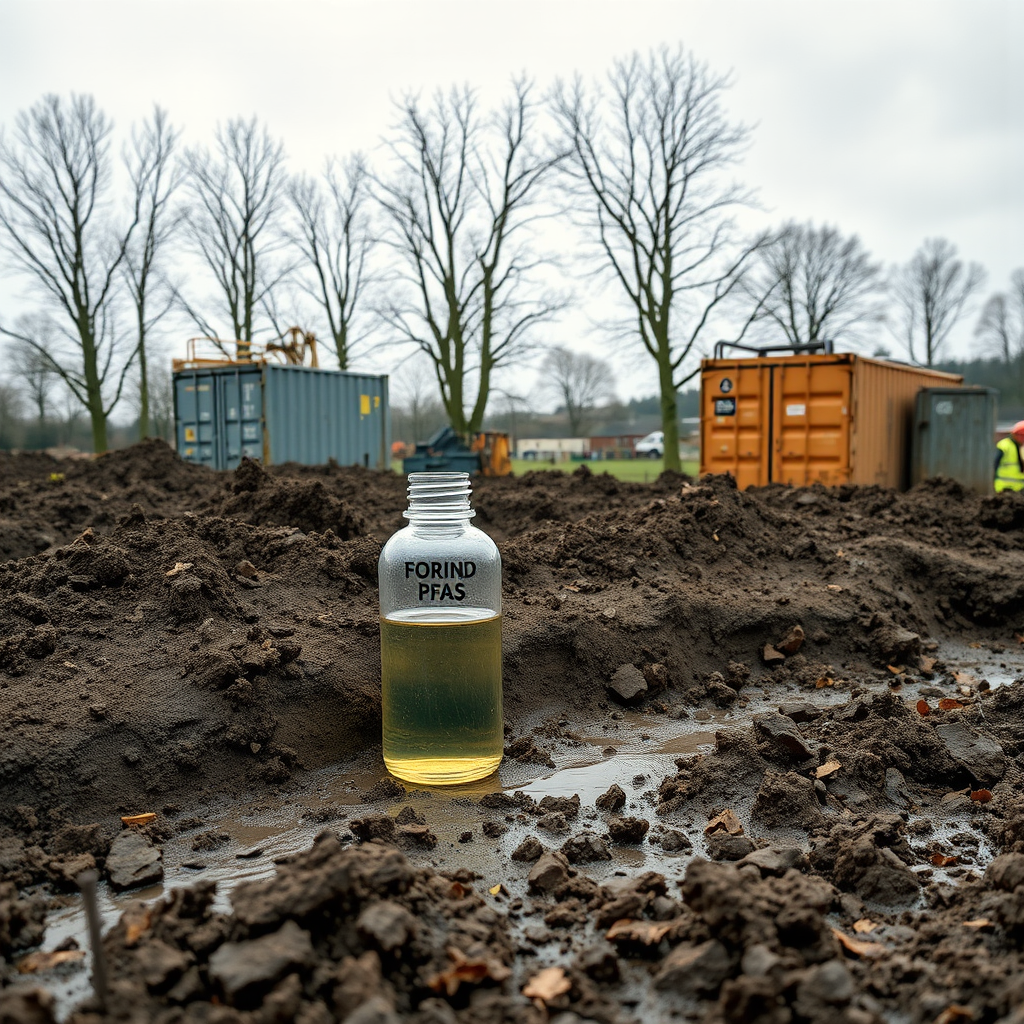

Contamination concerns have been raised regarding groundwater in the vicinity of a planned residential project in Oxfordshire, where thousands of new houses could potentially be constructed.
The former military installation slated for extensive development is drawing attention due to significant concentrations of per-and poly-fluoroalkyl substances, commonly referred to as PFAS or “forever chemicals.”
These substances persist indefinitely in natural environments, build up in human tissue, and have been associated with malignant growths, thyroid disorders, and reproductive health issues.
Research published in the Chemosphere journal reveals heightened concentrations in surface water samples taken from the Leys Farm Ditch testing location, which flows into Gallos Brook approximately 4 kilometres from the former RAF Upper Heyford base.
Surface water testing detected combined PFAS levels reaching 2,021 nanograms per litre.
The primary substances detected included PFOA, classified as a Category 1 carcinogen, along with PFOS, PFHxS, and fluorotelomer sulfonates. These compounds are typically linked to fire suppression foams, which were utilized at the facility during its operational period from 1918 to 1994.
Construction activity has already commenced at the former base, with 1,200 homes out of the proposed 13,000 having been completed over the previous 15 years as part of a £5 billion undertaking managed by Dorchester Living.
Although the development scheme has been scaled back, with 9,000 residences removed from the national new towns initiative, construction could proceed if authorized by the local planning authority.
A strategic environmental assessment conducted by the Ministry of Housing, Communities and Local Government concerning the former New Town expressed reservations about the plans.
The Environment Agency recommended remediation of polluted land in appropriate circumstances, particularly where new town developments are proposed on former airfield locations where PFAS and other emerging contaminants are probably present.
Paul Silver, CEO of Dorchester Living, stated: “The brownfield regeneration site has already had extensive remediation works completed including digging over 70 boreholes on site and testing contamination in ground water, and soils using a methodology agreed with the Environment agency and Cherwell District Council.
“As with many airfields, the historic use of the site means that there is potential for legacy contamination.
“This is not unique to Heyford Park and has already been identified in the site’s environmental assessments and Ground Conditions studies.
“These reports confirm that further targeted investigation is appropriate in specific areas. This is standard practice for the regeneration of brownfield sites.
“The regeneration of Heyford Park, through a controlled and regulated planning process, offers far greater environmental protection than leaving the land unmanaged or undeveloped.”
The Government’s inaugural PFAS strategy, released in February, includes provisions for developing new technical guidance addressing contamination within the planning system.