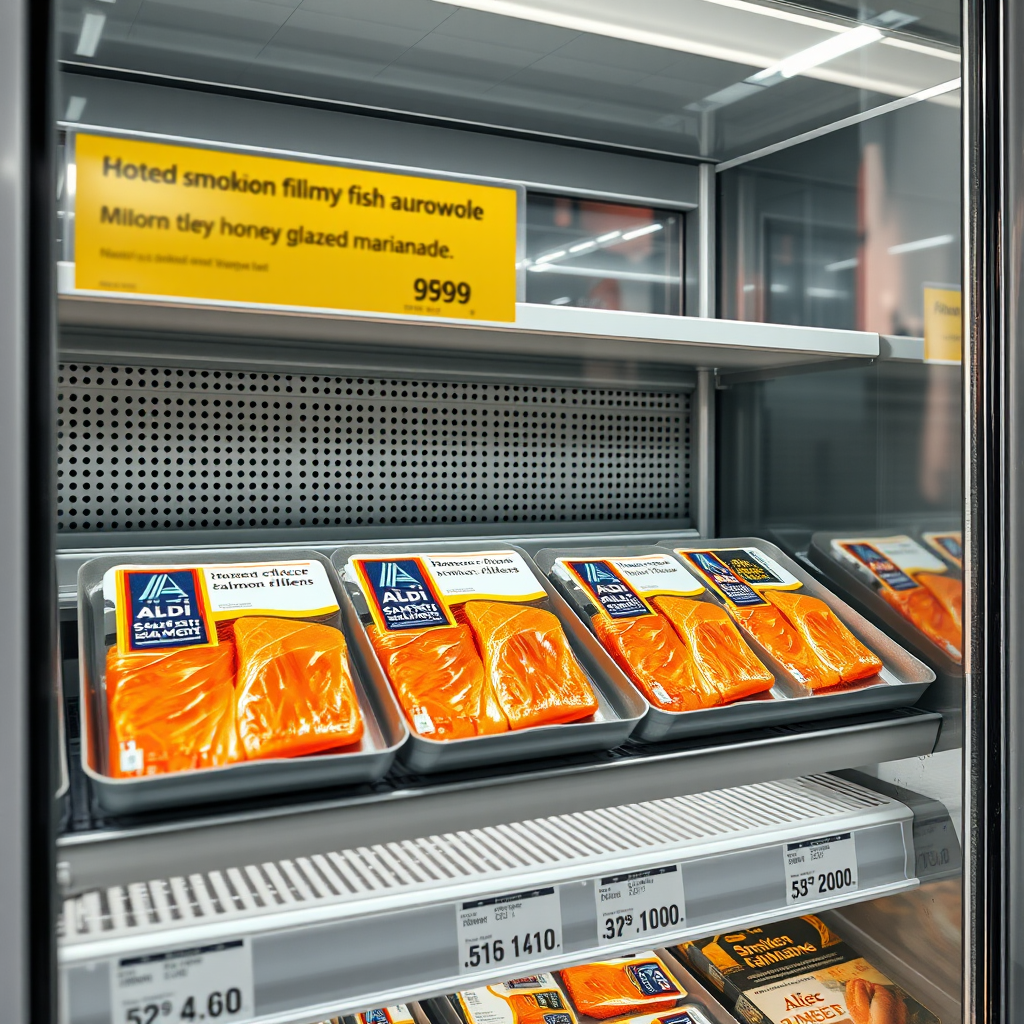

Aldi shoppers have been issued with a “do not eat” warning after a product recall was issued by the supermarket.
Aldi has recalled The Fishmonger Hot Smoked 2 Salmon Fillets – Honey Roasted because of a packaging error.
The fish has been labelled with an incorrect use by date, meaning it is unsafe to eat two months earlier than customers would assume.
The recall affects products with a use by date of June 25, because they should have a use by date of April 25.
Tuesday 14 April 2026 – ALDI recalls The Fishmonger Hot Smoked 2 Salmon Fillets – Honey Roasted because of incorrect use-by date. https://t.co/if8JolSCTO pic.twitter.com/4vjojg9XJC
— Food Standards Agency (@foodgov) April 14, 2026
An Aldi spokesman said: “As a precautionary measure, our supplier is recalling the fish because the incorrect use by date is printed on the pack.
“Customers are asked to return this product to their nearest store, where a full refund will be given.
“We apologise that this product did not meet our normal high standards and thank you for your co-operation.
“For further information, please visit help.aldo.co.uk . Customer services can be contacted on 0800 042 0800.”
A spokesman for the Food Standards Agency (FSA) added: “ALDI is recalling the above product. Point of sale notices will be displayed in all retail stores that are selling the product.
“These notices explain to customers why the product is being recalled and tell them what to do if they have bought the product.
“If you have bought the above product, please do not consume it. Instead, return it to the store from where it was purchased for a full refund.”
Food Recalls Explained
What is a product recall?
If there is a problem with a food product that means it should not be sold, then it might be ‘withdrawn’ (taken off the shelves) or ‘recalled’ (when customers are asked to return the product).
The FSA issues Product Withdrawal Information Notices and Product Recall Information Notices to let consumers and local authorities know about problems associated with food.
In some cases, a ‘Food Alert for Action’ is issued.
This provides local authorities with detail