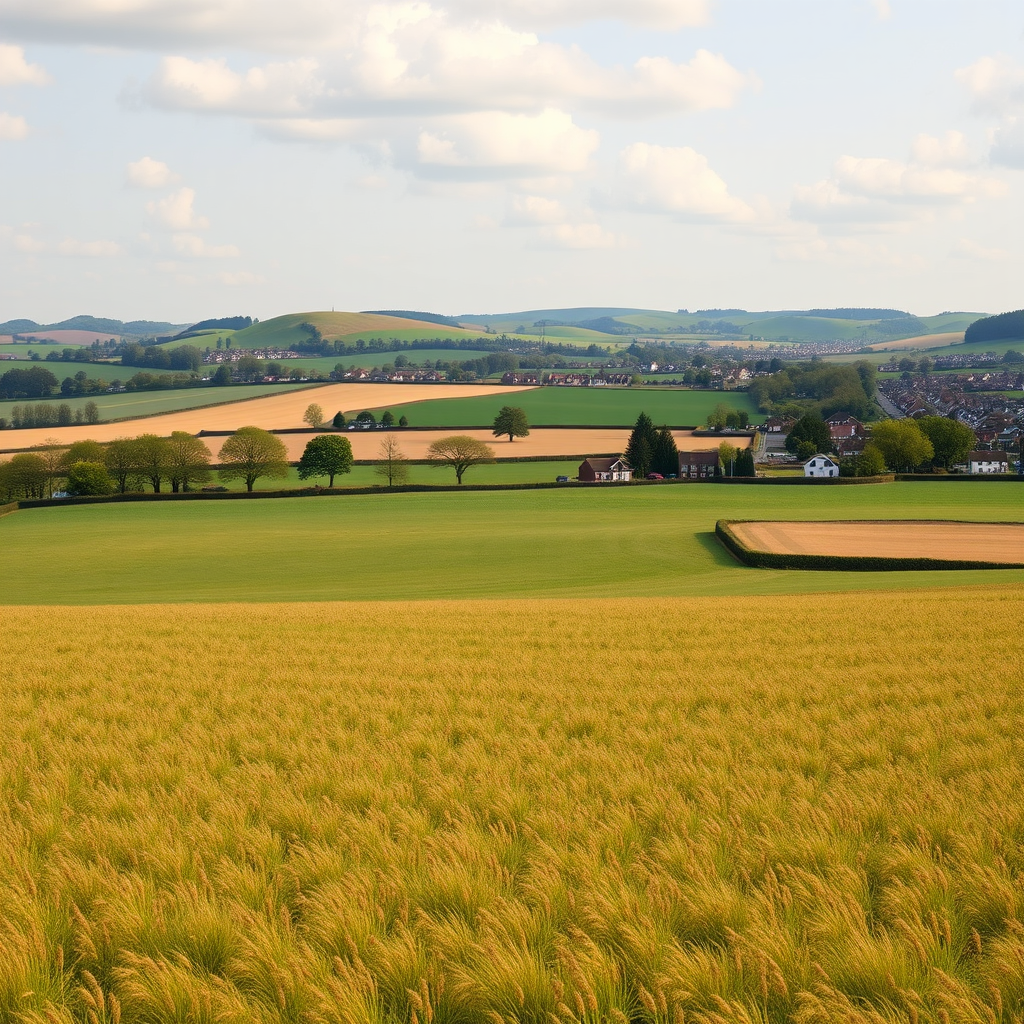

The proposed 3,000-dwelling development on agricultural land near Blackbird Leys along Grenoble Road represents a pivotal development for the region.
And not pivotal in the sense that we require it, because that determination rests with you.
It will be pivotal for the trajectory our elected representatives have charted, positioning Oxford and Oxfordshire as a leading hub for science and research.
Over the previous five-year period, the county has added hundreds of thousands of square feet of new laboratory facilities.
By mid-2024, approximately one million square feet was under construction, with more than 600,000 square feet leased in 2025 alone.
With continued expansion anticipated, the scientists who will relocate to work in our county will require somewhere to live.
As we are aware, Oxford has reached capacity: traffic congestion is excessive, the lack of housing has driven property prices to unsustainable levels, and this could ultimately undermine our leaders’ ambitious plans.
Nevertheless, Oxford and Oxfordshire is where employment opportunities in science and research will continue to exist.
Larry Ellison’s workforce will need to reside in the city or county due to logistical necessity.
The reality is that, whether we approve or not, construction will need to occur on the green spaces situated between communities.
The South Oxford Science Village, despite its environmentally conscious design and operation, will inevitably face opposition.
Residents will understandably be upset that commercial development is encroaching upon our natural surroundings and disrupting badger habitats.
Open spaces are essential for physical and mental health, particularly for those residing in urban centers like Oxford, which justifies community resistance.
The South Oxford Science Village would neighbour Sandford Brake, a protected local wildlife area abundant with fauna.
The Grenoble Road location will likely experience disruption from construction activity and the arrival of thousands of new highly educated residents.
Nevertheless, Oxfordshire stands to benefit from industry expansion, similar to how Cowley gained from the Oxford Plant which provided employment for 30,000 individuals during the 1960s.
Unfortunately, that prosperity declined and current employment there falls below 4,000.
The future appearance of Oxford and Oxfordshire in roughly three decades remains to be seen.
Undoubtedly, our beautiful natural landscape and environment will be permanently altered.