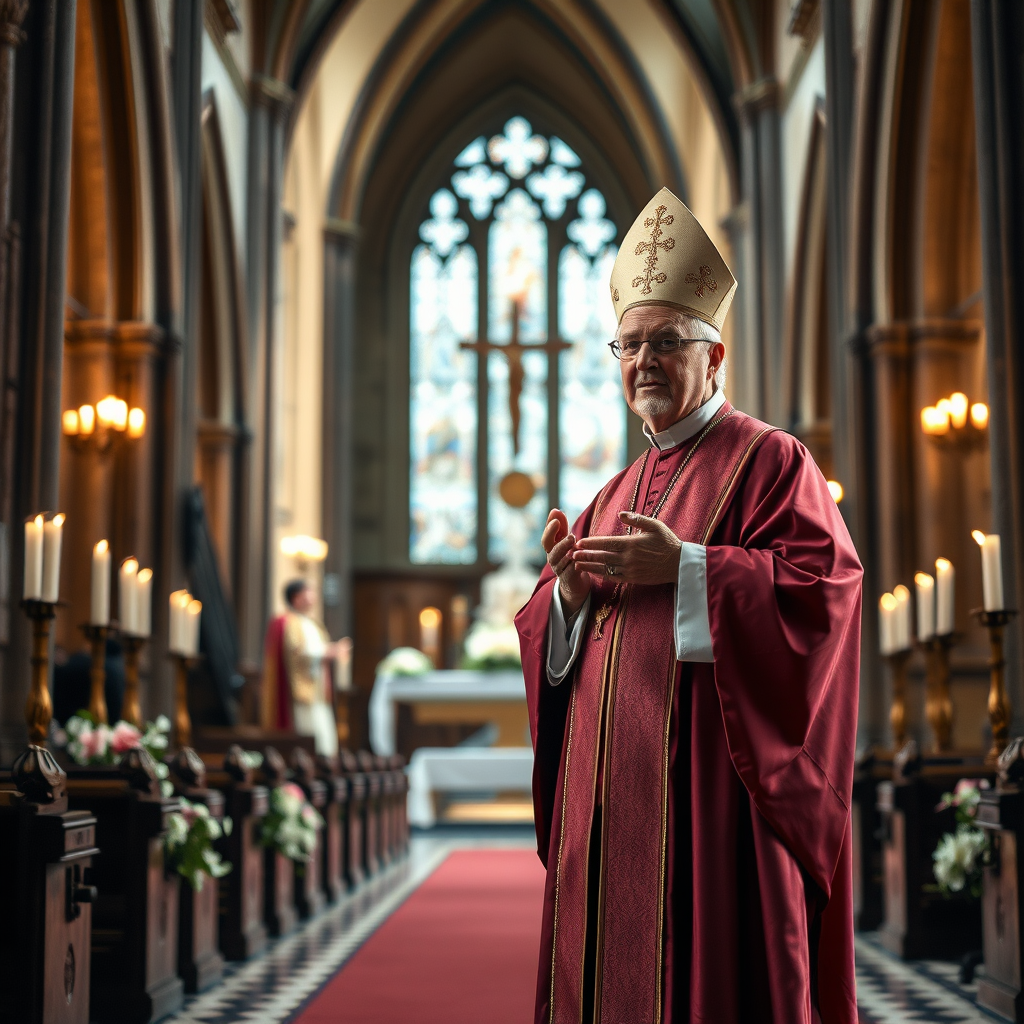

The leader of the Oxford diocese, the Rt Rev Dr Steven Croft, has delivered his Easter greeting.
Throughout the world, people on every continent are experiencing the journey of Holy Week and Easter. We engage with the last days of Jesus of Nazareth through music and performance, through religious ceremonies, through quiet reflection.
ITV’s Saturday evening Big Night of Musicals showcased an impressive debut: Sam Ryder performed the song Gethsemane from Jesus Christ Superstar, and this individual will portray Jesus in the West End production opening this summer.
Each of the Gospel authors examines the specifics of Jesus’s final days: his arrival in Jerusalem on Palm Sunday; the final meal with his disciples; the garden of Gethsemane; the moment of his arrest; Peter’s disownment; and his trial before Pilate.
On Good Friday we hear the multitude demanding his crucifixion; we hear the soldiers ridiculing him; we hear reference to the location of the skull. If the impact of this narrative has faded, one should open a Bible and revisit the concluding sections of the Gospels.
Every aspect of human existence appears within this story. The entire world is depicted through the Romans, the religious leaders and teachers, through the man from Cyrene, through the gathered people, through the soldiers.
The depths of human wickedness appear here. Political maneuvering and plotting. Manipulation, contests for control and deceit. The self-serving nature, hollowness and harshness of Pilate. The jealousy of the masses. The brutal ridicule inflicted by the soldiers as they remove his clothing and throw insults at him.
And the narrative reveals the nature of salvation. The innocent Christ takes the place of a criminal, dying in the place of every individual.
The man from Cyrene helps carry Jesus’s cross, just as each person is invited to participate in Christ’s suffering. The temple curtain separates, dividing the innermost sacred space from the outer area.
The Roman officer in Mark’s account observes all that transpires. This soldier’s powerful declaration represents the climax of the narrative and possibly of the entire Gospel. Each person is invited to repeat this expression of faith and awe within their own hearts. Certainly this man was the Son of God.
This Easter, as in previous years, the world’s focus remains on fruitless political maneuvers, on jealousy and aggression, on struggles for dominance, on unnecessary cruelty, on conflicts between different beliefs and cultures, on the anger of nations.
As we approach and listen, we recognize within the account of Jesus’s death all the pain and brutality present in the world around us.
Yet we can look past the superficiality and violence to identify the individual at the heart of the narrative, who remains mostly quiet, whose goodness and sacrifice give his life for the sins of all humanity.
We discover Jesus within our current circumstances of darkness, and we observe that light continues to emerge through his death and resurrection on Easter Sunday. Happiness breaks through our grief.
And all of humanity discovers in this moment boundless faith and hope and love, enabling them to pursue this salvation and this Savior and to live lives filled with purpose and holiness and truth.
We join with the centurion and with believers everywhere throughout our fragmented world in declaring: certainly this man is the Son of God.