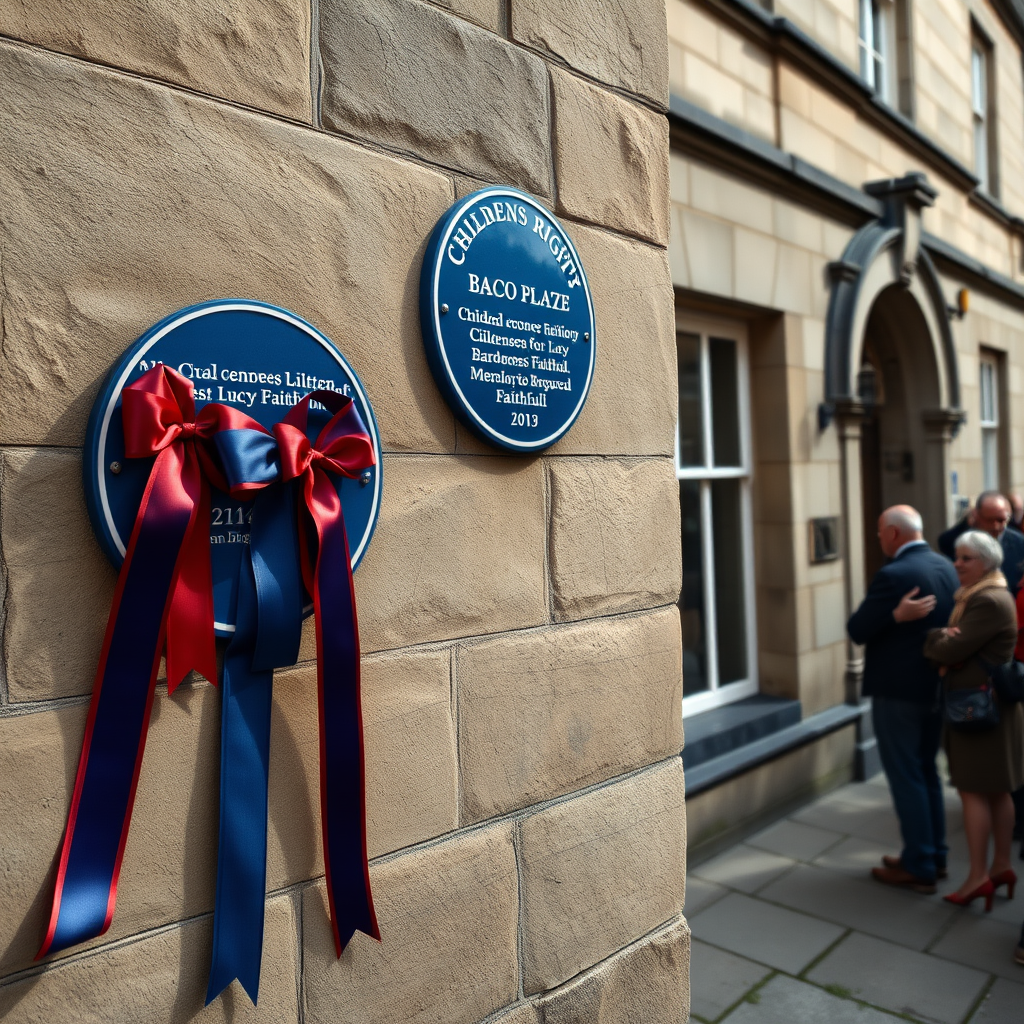

A blue plaque has been unveiled in memory of a leading advocate of children’s rights.
Baroness Lucy Faithfull was honoured with a blue plaque in a ceremony on Saturday, May 9.
Baroness Lucy Faithfull (Image: Oxford Blue Plaques Board)
The campaigner was born in South Africa, and returned to England in 1916 where she was education at Bournemouth and then at the Sorbonne in Paris.
During the Second World War she was appointed a regional welfare officer for the evacuee programme, which involved travelling with the children and troubleshooting, and later became an inspector with the Home Office children’s department.
She was appointed by Oxford City Council in 1958 as one of the first children’s officers created by the Children Act of 1948, a ground-breaking national commitment to children’s welfare.
303 Woodstock Road with the blue plaque (Image: Stephanie Jenkins)
The expectation was that apart from being an administrator she should know all the children in care personally and be in effect a one-woman social service.
After the care system became county based, from 1970 to 1974 she was director of social services in Oxford, receiving an OBE on retirement.
In 1975, former Prime Minister Margaret Thatcher, then leader of the opposition, persuaded her to accept a life peerage and bring her experience to debates in the Lords.
The blue plaque commemorating Baroness Lucy Faithfull (Image: Stephanie Jenkins)
The first social worker to sit there, she became an outstanding, tireless and outspoken advocate of children’s interests and other social causes.
She helped create and chaired the All-Party Parliamentary group for Children and had a seminal influence on the Children Act of 1989.
She held many trusteeships, chairs, and presidencies, including Barnardo’s, the National Children’s Bureau (which she helped found), and the NSPCC, and worked behind the scenes with ministers on the committee grind.
She helped create the Lucy Faithfull Foundation, a UK child protection charity that seeks to prevent child sexual abuse before it happens, through treatment of abusers and other awareness projects.
At the ceremony was Elizabeth Poskitt a councillor, for West Oxfordshire, Katharine Keats-Rohan the chair of South Oxfordshire District Council, Mark Lygo the chair of Oxfordshire County Council, Louise Upton the Lord Mayor of Oxford, and Oliver Forder the chair of the Vale of the White Horse District Council.
From left to right: Elizabeth Poskitt, Katharine Keats-Rohan, Mark Lygo, Louise Upton, and Oliver Forder (Image: Stephanie Jenkins)
She was commemorated by the Oxfordshire Blue Plaques Board with a plaque on 303, Woodstock Road her address from 1958 until her passing in 1996.
Also attending was Adrian McNulty, director of operation at the Lucy Faithfull Foundation.
This marks the first blue plaque unveiled in Oxfordshire in 2026.
The baroness joins C.S. Lewis, author of Alice in Wonderland, poet Robert Graves, and Dame Agatha Christie as one of the many people, inventions and places honoured by the Oxford blue plaques scheme.