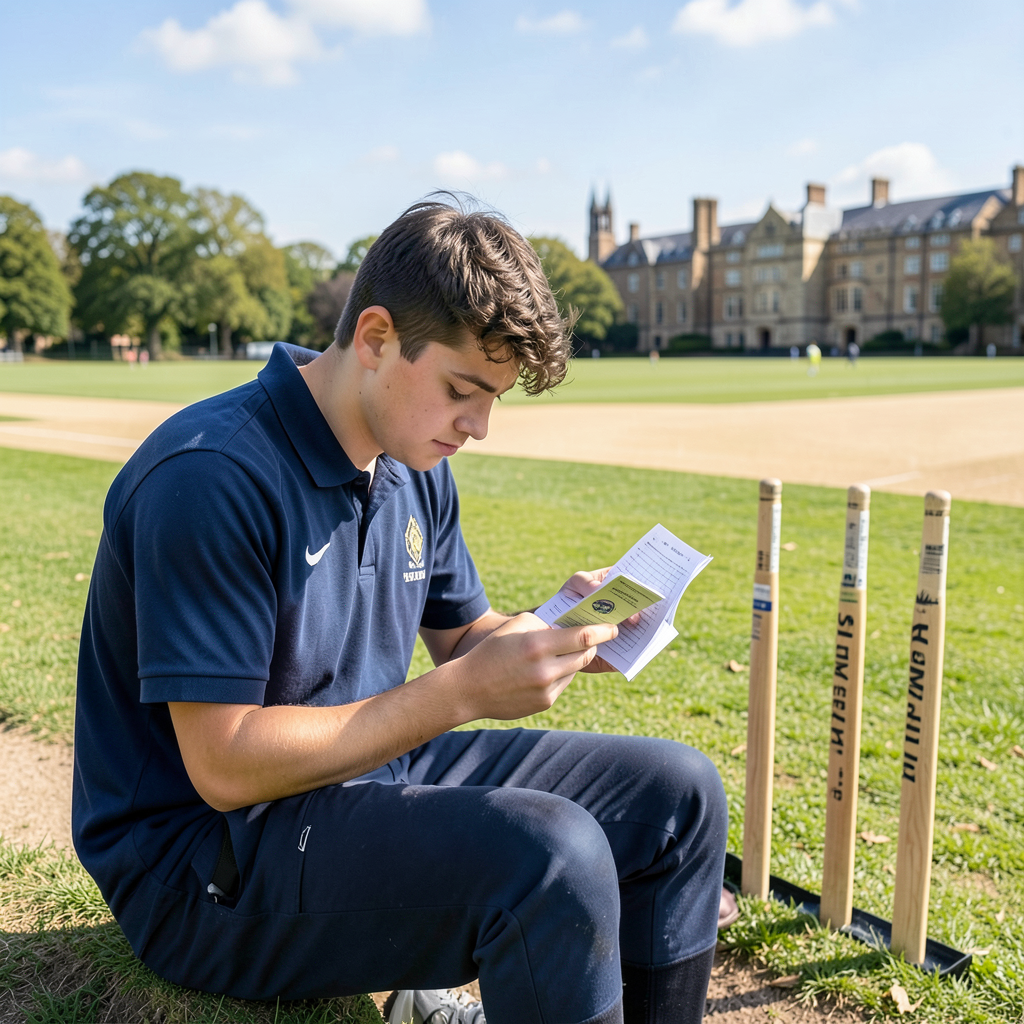

A student sits beside a cricket pitch and reviews revision cards, while a student in the United States runs from the track to an academic centre where he must remain for the next eight hours.
Although Oxford and American universities operate distinct sporting systems, athlete recruitment, academic pressures and campus social lives share several notable similarities.
The writer arrived at Oxford from a private American high school where colleges routinely recruited student-athletes according to their sporting ability.
University discussions for particular sports were common among the writer’s friends and classmates, but responses were generally indifferent.
That approach contrasts sharply with Oxford and the wider United Kingdom, where sports recruitment has a limited role in undergraduate admissions.
Mel Morley, the Blues rugby captain at Oxford University Rugby Football Club and a student at St John’s College, said sporting ability could not strengthen an otherwise weak application.
Applicants first had to demonstrate outstanding academic ability before sporting talent became relevant.
As a result, athletics are frequently omitted from Oxford applications or mentioned only briefly.
Henry Whittaker, a St Edmund Hall student who has played rugby, football, decathlon athletics and golf, included no sporting information in his UCAS application beyond a minor mention in a teacher’s reference.
Whittaker said sporting achievement carried little weight in the Oxford admissions process.
The reverse is generally true in the United States.
Joya Wang, a recruited squash player at Williams College in Massachusetts, said her admission involved numerous discussions with coaches via Zoom.
Coaches assessed her sporting ranking and grades before indicating the likelihood of an offer.
Sport may also determine the university an American recruit selects.
Leed Smoole selected the University of Michigan instead of the University of California, Berkeley, primarily because Michigan offered stronger sporting provision and the appeal of a large institution with prominent academic and sporting programmes.
Once on campus, athletes in both countries face the practical difficulty of finding sufficient time for sport and study.
Student-athletes at Oxford and American colleges reported weekly sporting commitments of between eight and 20 hours.
Jacqui Sanitt, a Blues cricket player from Exeter College, described strict scheduling as essential.
Assignments could be completed before training and matches to preserve time for competition, while revision cards and notes could provide backup during sporting sessions.
During the Trinity examination period, Sanitt sometimes took academic work to the cricket pitch.
Kostya Huba, a law student at Teddy Hall and goalkeeper for the Blues football team, believes he may eventually have to choose between sport and academic study.
He said second- and third-year law students advise younger counterparts to enjoy the first year because subsequent years are more demanding.
Wang also found the combination demanding, noting that sport and academic work at college took considerably more time than they had required in secondary school.
Her schedule was divided between homework and practice.
American students are more likely to reduce their academic demands in favour of sporting success when compromises are required.
Vihaan Batra, a Duke University student, said athlete friends could select a less demanding course for a difficult subject while maintaining the highest standard they could manage.
Huba found an equivalent adjustment harder at Oxford and said tutors could adopt a more flexible approach to sporting commitments.
Smoole maintained that strong grades remained essential despite time spent competing.
Sporting participation also influences life outside competition.
The social calendars of Oxford Blues players and American varsity athletes are often structured around team activities, organised sporting gatherings and other related events.
Friendships formed through sport create strong connections between athletic and social lives.
Wang said university events were frequently arranged around athletes, resulting in substantial time spent with teammates.
Meeting fellow students outside sport still required deliberate effort.
Morley said close friendships often developed within the team, although some college friendships were formed elsewhere.
Extended shared experiences can create especially strong bonds, with teammates offering support because they understand the pressures of combining sport and academic study.
A clearer difference exists in the public standing of athletes.
Some American competitors acquire near-celebrity status among their peers, particularly when they are expected to achieve substantial success in their sport.
Duke has produced 17 NBA draft picks over the past five years, and its basketball players are widely recognised.
Batra said the identities and professional prospects of leading athletes were so widely known that fellow students did not need to ask their names.
He suggested that some athletes could leave university after one year and subsequently earn millions.
Duke’s soccer and rowing teams also perform to a high standard, Batra said, but receive less attention than basketball.
Oxford athletes encounter a different response.
Whittaker said people were either impressed by the amount of time involved or showed little interest.
Beyond differences in recruitment, status and academic flexibility, the lives of Oxford and American student-athletes share several central features: commitment, ambition, community and dedication to sport.
Former NBA player Jonas Valančiūnas observed that competing for teams brings people into contact with new friends.