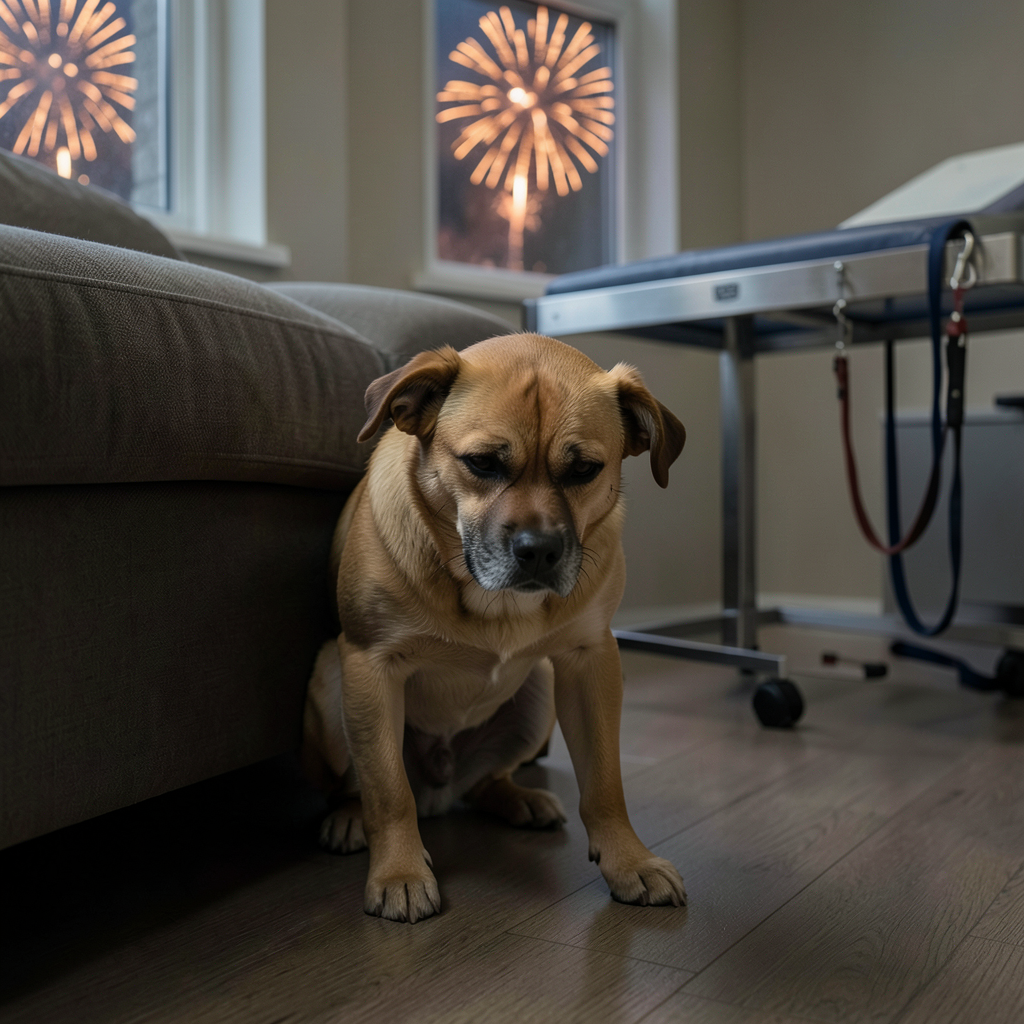

An Oxfordshire veterinary practice is drawing attention to the effects of fireworks on dogs before Bonfire Night.
Stow Veterinary Centre in Burford said that the loud explosions and bright flashes associated with fireworks can cause severe fear and stress.
Unlike people, dogs do not understand the source, timing or lack of danger presented by a firework display, leaving them exposed to sudden, unpredictable noise and light.
Clinical directors Becca Jones and Carrie Collins explained that a dog’s reaction may resemble an attempt to guard itself against danger.
Such behaviour is not misbehaviour or an exaggerated response, but can indicate genuine distress.
Dogs have a considerably different relationship with sound from humans.
They can hear noises from roughly four times farther away and can pick up higher frequencies, which can make fireworks particularly alarming.
Research indicates that firework-sensitive dogs undergo changes in their autonomic nervous system when exposed to firework sounds.
Visible signs of anxiety can include shaking, barking, hiding and trying to get away.
Not every affected dog shows fear in an obvious manner, however.
Less apparent indicators may include walking back and forth, panting, agitation, declining food or trying to obtain additional attention.
Responses vary between individual animals, with several possible influences.
Genetic background, age, health, previous experiences and learning can all affect how a dog copes with fireworks.
Jones and Collins noted that a puppy may be frightened even when an earlier dog in the same household was not, and two dogs in identical surroundings can display very different reactions.
A dog’s sensitivity may also develop or change during its lifetime.
An animal that suddenly becomes distressed by noises despite having been unafraid of them in the past should be discussed with a vet.
Owners can reduce distress by preparing a secure area, drawing curtains, supplying background sound and keeping dogs inside during displays.
Animals should also be allowed some choice over how they respond: some may take reassurance from their owners, while others may be calmer when concealed.
For dogs already known to fear fireworks, sustained desensitisation and counterconditioning may be useful when combined with behavioural support and veterinary assessment.
Stow Veterinary Centre recommends arranging a plan with a vet well in advance of Bonfire Night so that individual needs can be addressed.