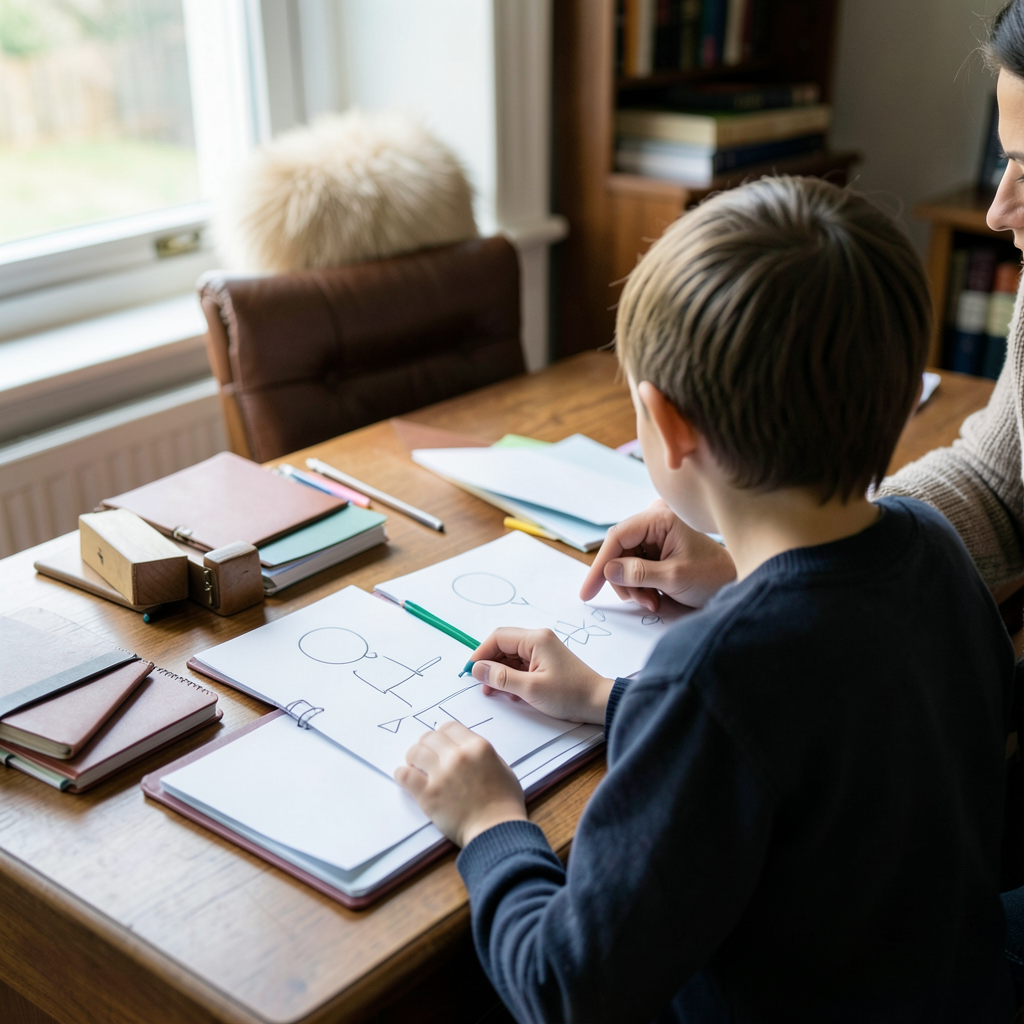

Education specialist Becky Ward of Tutor Doctor has offered five recommendations for parents seeking to support children with dyslexia.
The condition can influence a child’s ability to retain instructions, organise school materials and express ideas in writing, although its effects differ from child to child and have no connection to intelligence.
Rather than searching for a single indicator, parents are advised to note the activities in which their child struggles.
The British Dyslexia Association reported that only one in three young people questioned said they had received a diagnosis while still at primary school.
Maintaining regular communication with teachers may help families identify the difficulties a child encounters in lessons.
Strategies that prove effective at home can also be communicated to the school.
These include presenting instructions visually, allowing additional time to consider a response and dividing a task into manageable stages.
Parents may also consult the school’s special educational needs coordinator, or SENCO, about available support.
Assistance does not always depend on a formal diagnosis.
Possible adjustments include additional processing time, checklists, visual prompts, audiobooks and text-to-speech technology.
Homework should be kept separate from the pressure children may already experience during a demanding school day.
A calm environment, shorter activity periods, regular breaks and the delivery of instructions one at a time may make homework less difficult.
Reading together, using audiobooks and selecting books connected to a child’s interests may provide further benefits.
Confidence-building is regarded as equally important as academic improvement.
According to the British Dyslexia Association, seven in 10 dyslexic young people said the condition had damaged their self-esteem.
Parents are advised to acknowledge effort and progress, highlight personal strengths such as creativity or sporting ability, and involve children in deciding which strategies may assist them.
Patience and consistent cooperation between home and school may help children develop a more positive view of learning.