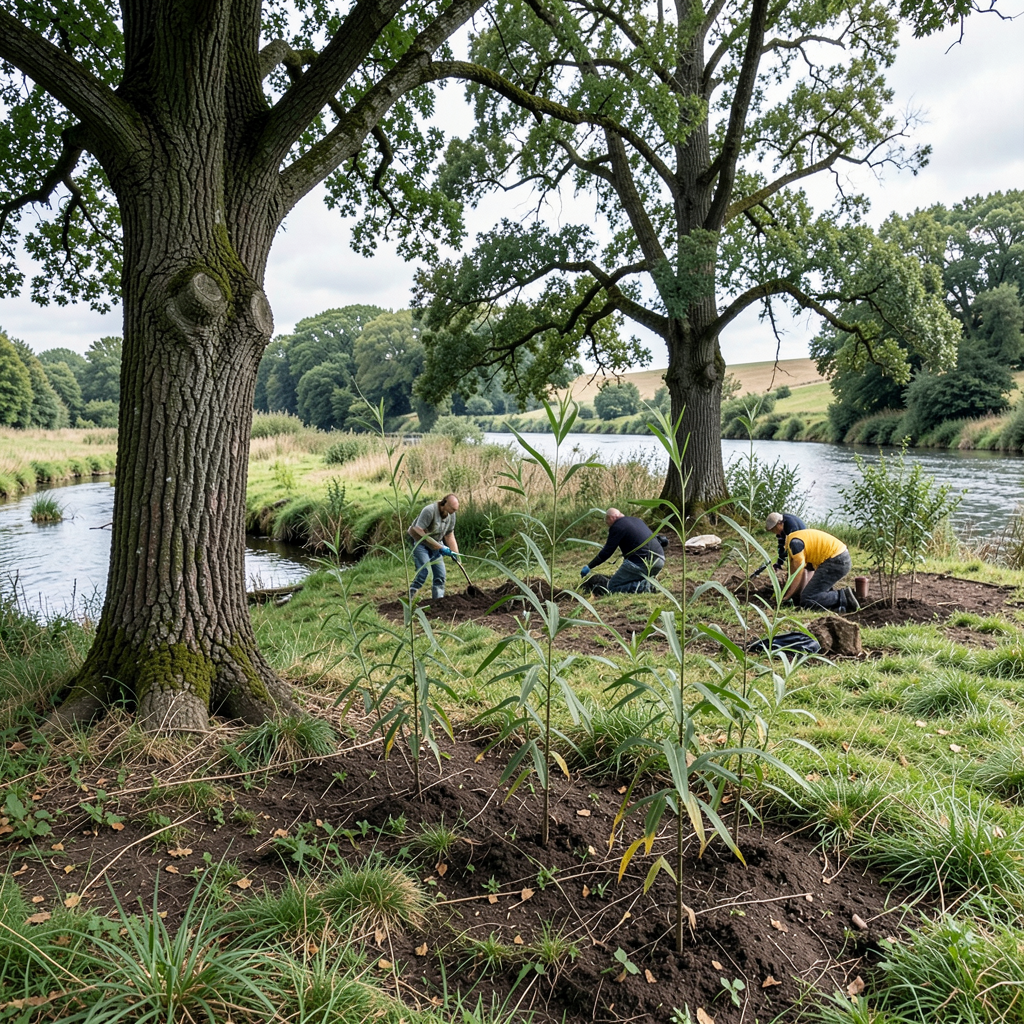

West Oxfordshire District Council has committed support to a conservation programme intended to revive the black poplar, one of Britain’s rarest native tree species.
The tree was historically widespread beside rivers and floodplains, but only an estimated 7,000 examples are thought to remain in Britain, alongside fewer than 50 recorded in Oxfordshire.
Work will be led by the Swindon to Oxford: Regenerating the Thames and Tributaries partnership, known as Sw~Ox.
Its objectives include safeguarding existing specimens and establishing further generations of the species throughout Oxfordshire.
Council executive member for climate action and nature recovery Councillor Andrew Prosser said the project offered a means of protecting the remaining trees while producing young trees suited to local rivers and wetlands.
He also described collaboration with conservation organisations and landowners as an important part of nature recovery.
The council has provided £11,000 to the Cotswolds Rivers Trust for activity within the River Windrush catchment.
Planned work includes surveying areas for existing black poplars, conducting DNA analysis to verify the native status of trees, and growing and planting saplings in suitable locations.
Organisers intend to place 15 trees during the project’s opening year, with further planting envisaged in later years.
A crowdfunding initiative has also been established to raise £20,000 so the work can be extended across Oxfordshire.
Oxfordshire County Council is backing the campaign through its Local Nature Recovery Strategy, with match funding of up to £10,000.
Cotswolds Rivers Trust manager Jack Knott said urgent action was needed to locate surviving native specimens and rebuild the population along local rivers and floodplains.
He added that the council’s contribution had enabled the programme to begin.
Natural reproduction depends on male and female black poplars growing within a few hundred metres of one another, leaving isolated groups particularly exposed.
The species also provides habitat for numerous birds, insects and moths.
The project team is seeking assistance from landowners, community groups and volunteers to locate existing trees, identify suitable planting locations and help cultivate new saplings.