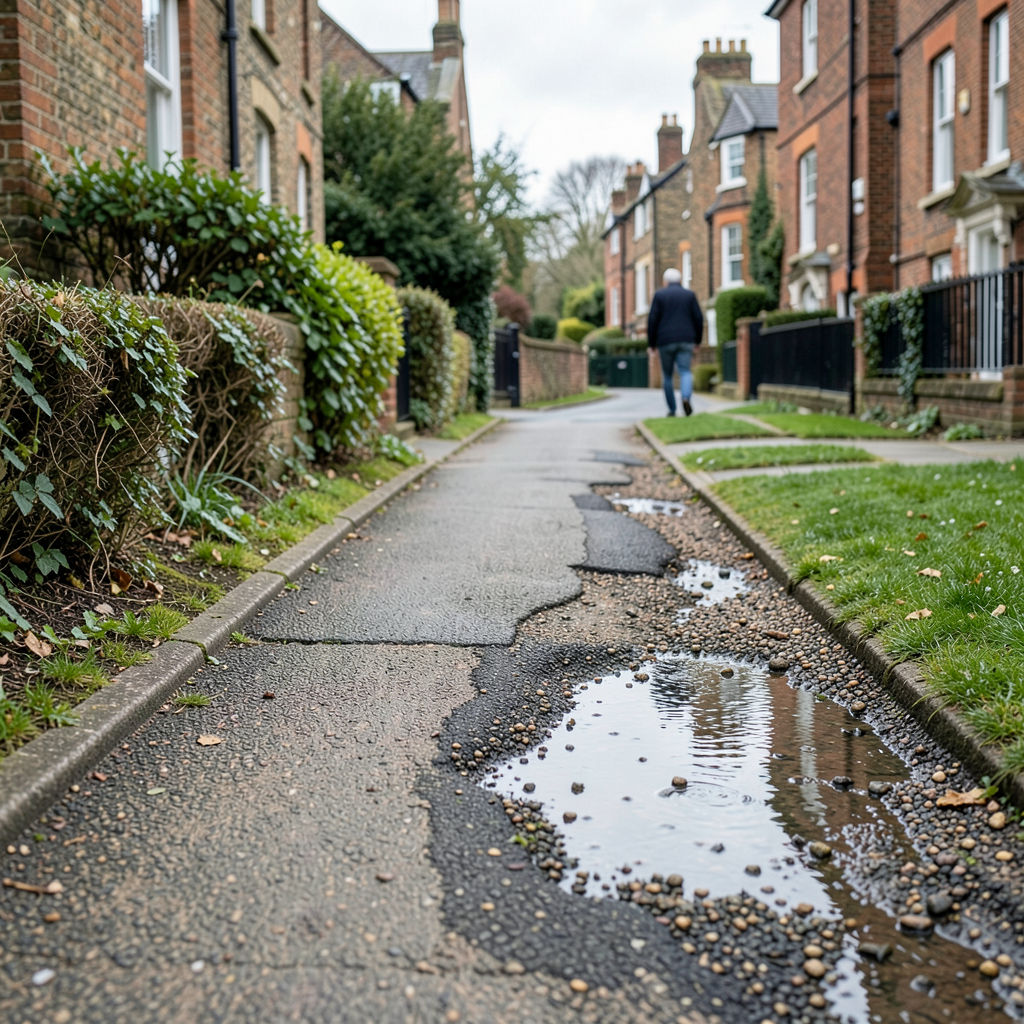

Older residents on an Oxford estate have raised safety concerns after resurfaced footways were left with a coarse, uneven finish.
Loose gravel, surface water and potentially icy conditions during colder months have increased fears of slips and falls.
The concerns relate to pavement work in Rose Hill, including sections of Thames View Road, Clinton Close, Nowell Road, Rivermead Road and Mortimer Road.
Residents said some treated areas remain uneven, with standing water gathering after the work.
Gilbert Innes, 80, is particularly worried because recent knee surgery has reduced his mobility.
He now walks more slowly and uses mobility aids.
Innes has lived on the estate for 45 years and has been living alone since his wife died eight years ago.
He said the risk of slipping on water collected on the new surface could become greater if it freezes.
Innes also recalled that pavement work had previously taken place on the estate when new housing was being constructed.
He described the latest condition as unacceptable and said he was frightened of falling.
He added that Rose Hill appeared to have been neglected, with no follow-up visit to inspect the finished works.
Fellow resident Pam Horwood, 81, has lived in the area for almost 60 years.
She has sustained serious injuries in falls, including a fractured hip in her garden that required surgery and a wrist injury that also needed an operation.
Horwood and Innes said worries about falling have affected their independence, with travelling by car remaining important for getting around safely.
Their difficulties have increased because the nearby Cottsemore footbridge has closed, making access to Sainsbury’s more difficult.
Both residents said they had not been informed about the pavement works and raised questions over the standard of the completed surface.
Oxford Direct Services said local technicians identified the work as part of Oxford’s footway maintenance programme.
Oxfordshire County Council funded it through the city and county agreement.
ODS explained that footway slurry seal is intended to protect the existing structural surface of a pedestrian route.
The treatment uses a cold-applied liquid mixture containing bitumen, fine crushed aggregate, water and a setting agent.
Workers pour the material over the existing footway before spreading it by hand with a squeegee and completing the finish with a brush.
According to ODS, the surface’s appearance immediately after treatment is expected and should alter as pedestrians use it.
The newly treated area may initially have a gritty texture or look untidy, but these characteristics are expected to settle after several weeks of pedestrian use.