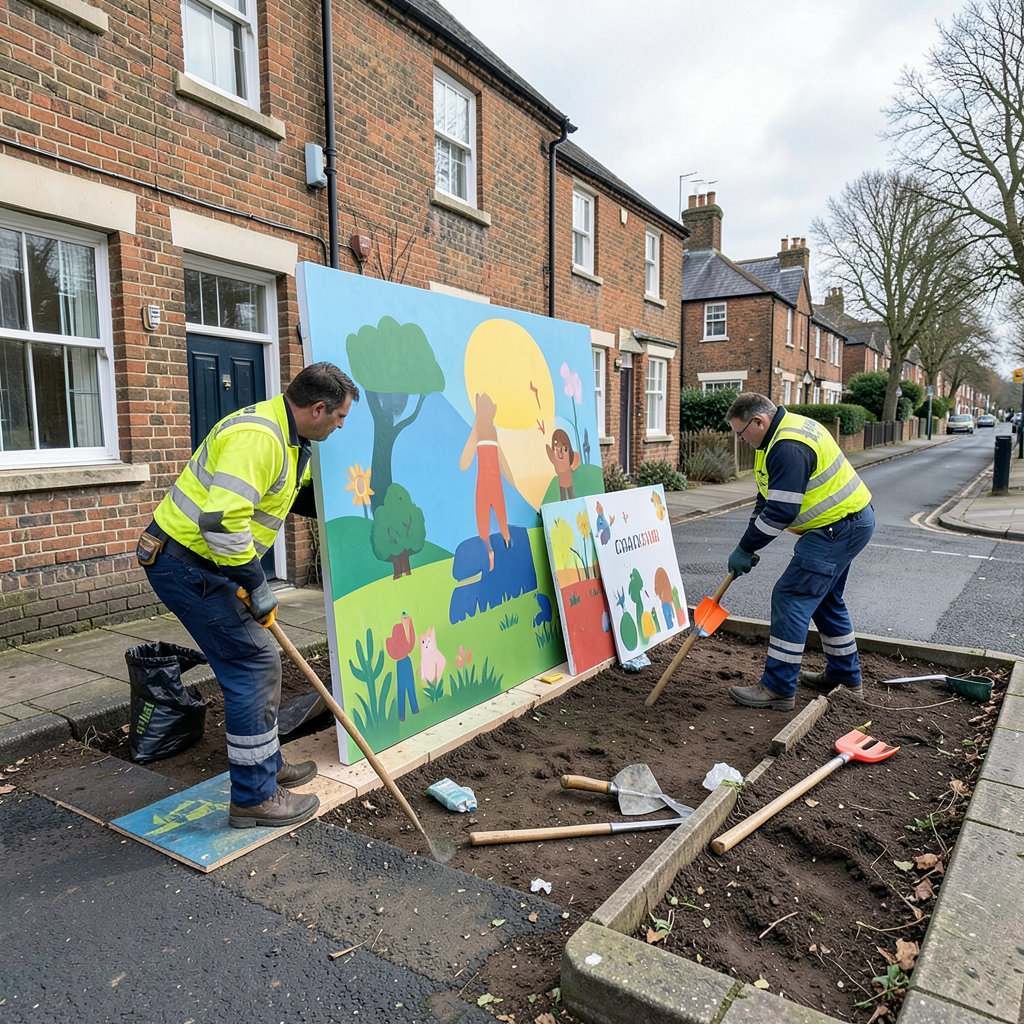

An Oxford community memorial to those affected by Covid-19 has been dismantled after the city council identified a potential safety risk.
The memorial was erected in 2020 at Manzil Way Gardens on Cowley Road as part of the Stay Safe Mural Project.
Local artists produced street art across Oxford to encourage people to care for their communities and convey a message of hope.
Situated opposite the East Oxford Health Centre, the memorial was developed in several stages before becoming a site where key workers, particularly NHS staff, were thanked for their work.
Following inspections last week, the city council determined that the structure had deteriorated significantly.
It was considered capable of becoming unstable and potentially collapsing, which could endanger residents and visitors.
Deputy council leader Anna Railton said the memorial had deep importance across the community as a place for reflection and remembrance in relation to the Covid-19 pandemic.
Its condition had reached a level that created a safety risk, particularly with the winter storm season approaching.
Although public safety remained the council’s priority, Railton said the organisation was committed to preserving the memorial’s underlying significance and spirit.
St Clement’s ward councillor Alex Powell, of the Green Party, said he hoped panels from the structure could be retained and that residents would be able to contribute to a future permanent monument in the area.
Weather damage over 6 years had left the memorial in a potentially dangerous condition, Powell said.
During its removal, ODS succeeded in preserving several panels, while discussions continued about establishing a more permanent memorial near Manzil Way.
Ward councillors, local groups and other interested parties were said to share a mutual desire for a new memorial, with talks under way and community participation planned.
Powell described the removal as sad but said he was pleased to discover that the structure had sheltered a young walnut tree.
An assessment found that the tree could remain in place, and the council would protect it.
Railton compared the memorial’s role with the protective function of thorny hedgerows, which shelter young oak saplings while they become established.
On one of Oxford’s busiest roads, the community structure had similarly safeguarded the walnut tree.
Options were also being considered for a smaller, more durable memorial at the former site.