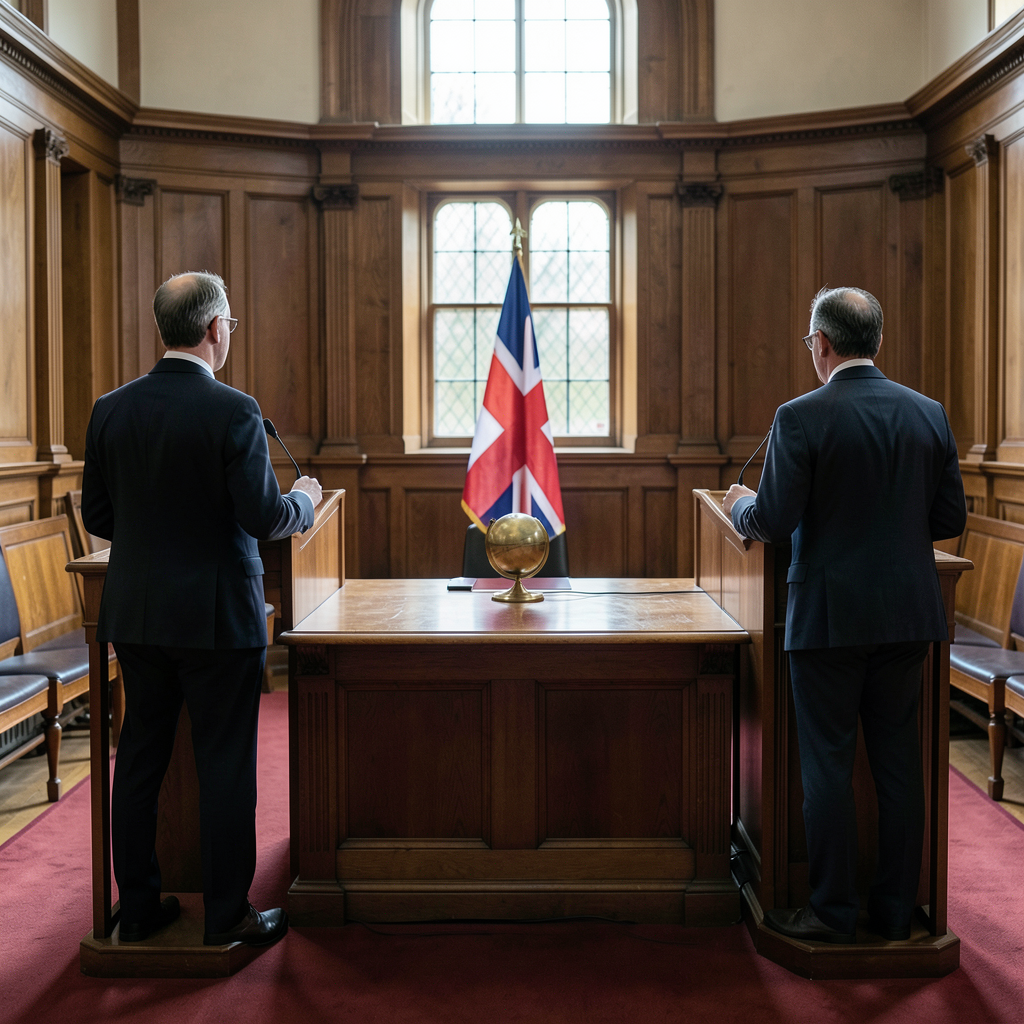

A claim that Britain is an unrecognised global superpower has circulated widely in recent political commentary.
In an article published by The Times four months before the debate examined here, Matthew Syed described the country as a sleeping giant with influence yet to be released.
Such a portrayal presents the nation’s culture, laws and institutions as sources of soft power capable of securing a prominent place in international affairs.
An examination of Oxford, however, suggests that the country’s overseas influence is considerably more limited than this national narrative implies.
The 2026 Soft Power Index published by HEPI ranked Oxford as the world’s second-most politically influential university.
Eleven serving world leaders had attended the institution.
Although those figures appear to demonstrate substantial reach, the political backgrounds of several graduates reveal a narrower pattern of influence.
Alexander Stubb, Mark Carney and Jakov Milatović are all associated with established political groupings.
Haitham bin Tariq Al Said, another Oxford alumnus and a monarchical figure, has pursued reforms that have remained moderate within his own national setting.
Oxford’s graduates also have limited connections to the more extremist political movements that have gained ground internationally.
The pattern can be observed among candidates standing in the US Senate midterms, where the Oxford-linked candidates are affiliated with the Democratic Party rather than the MAGA movement.
In Detroit, Democrat Abdul El-Sayed has built a policy-focused campaign aimed at an educated and liberal electorate.
His Republican opponent, Mike Rogers, has instead relied on unsupported allegations that El-Sayed belongs to the Muslim Brotherhood and has sought support by invoking Donald Trump.
Oxford alumni are well placed to obtain senior positions because of the status conferred by the university.
Yet, like much of the UK student population, they generally emerge from higher education with sympathies for the established political order.
Research by Elizabeth Simon indicates that these political predispositions often exist before university and are shaped by family backgrounds consistent with the same values.
International students attending institutions such as Oxford also tend to come from households able to meet the associated costs, making similar upbringing-based political alignment likely.
The established order to which many of these graduates belong has become increasingly unstable.
This creates uncertainty over the role Oxford might play within the expanding politics of populism.
Even if fewer graduates subsequently enter positions of power, the university’s influence is unlikely to decline sharply.
The more significant reason is that this supposed influence was never especially substantial in the first place.
The Blair years represented the strongest government commitment to treating higher education as an instrument of soft power.
The government’s PMI initiative was designed explicitly to project British influence through universities by attracting international students in the expectation that they would return home, assume positions of authority and retain favourable attitudes towards the UK.
That strategy did not produce the intended results.
Professor Sylvie Lomer’s research on these policy initiatives traces their central assumptions to ideas developed during the US-led Cold War.
Universities were regarded as means of ideologically converting foreign students.
More troubling still, some of the thinking behind the policies originated in the colonial period, when British universities were viewed as mechanisms for shaping the attitudes of colonial subjects.
Globalisation has since weakened one of the foundations of this approach.
There is now much less difference between the views international students bring to Britain and those they hold when they leave, leaving the country fewer opportunities to leave a distinctive impression.
Moreover, attendance at a British university does not guarantee that international students will engage meaningfully with British culture or even find it enjoyable.
Foreign politicians, business leaders and other officials are likewise under no obvious obligation to accommodate the country where they once studied.
The election campaigns of Wes Moore and Seth Bodnar illustrate the distinction.
Their attention remains directed towards domestic concerns, military service and national pride, with little attempt to associate themselves with the foreign elitism associated with an Oxford education.
Such institutions can help ambitious individuals advance their careers, but the resulting responsibilities remain focused on their own countries.
The limited effectiveness of this approach appears to have become increasingly apparent to British politicians.
Shabana Mahmood’s criticism of the length of graduate visas and the planned introduction of an international student levy are not obviously intended to advance the UK’s soft power.
Beyond higher education, the country’s reliance on cultural and institutional influence as a diplomatic instrument has also proved fragile in recent years.
Government efforts to accommodate Trump by appealing to his supposed Anglophilia did not prevent tariffs against the UK, his pressure over the Chagos Islands or his objections to Britain’s lack of participation in the Iran War.
An attempt in the previous year to establish a UK Soft Power Council failed to provide a new policy direction.
Wes Streeting’s proposal that Britain could serve as a diplomatic bridge between the US and Ukraine was similarly described as lacking realistic prospects.
Institutional influence alone cannot alter the balance of the special relationship when the other party possesses far greater hard power.
The broader lesson is that Britain would need to adopt a more modest understanding of its international standing.
Oxford and other UK universities remain important institutions, but the suggestion that they provide the country with substantial diplomatic influence resembles a nationalist fantasy drawn from the past.
That attitude shares something with the pride associated with Brexit.
The country’s position in the Global Soft Power Index fell from third to fourth this year, with economic dissatisfaction identified as the reason for the decline.
The change indicates that any British soft power depends on a more tangible economic foundation.
Such influence is not without value, but expectations that it could resolve relations with Trump, preserve international credibility or turn Britain into a superpower are likely to meet with a severe reality.