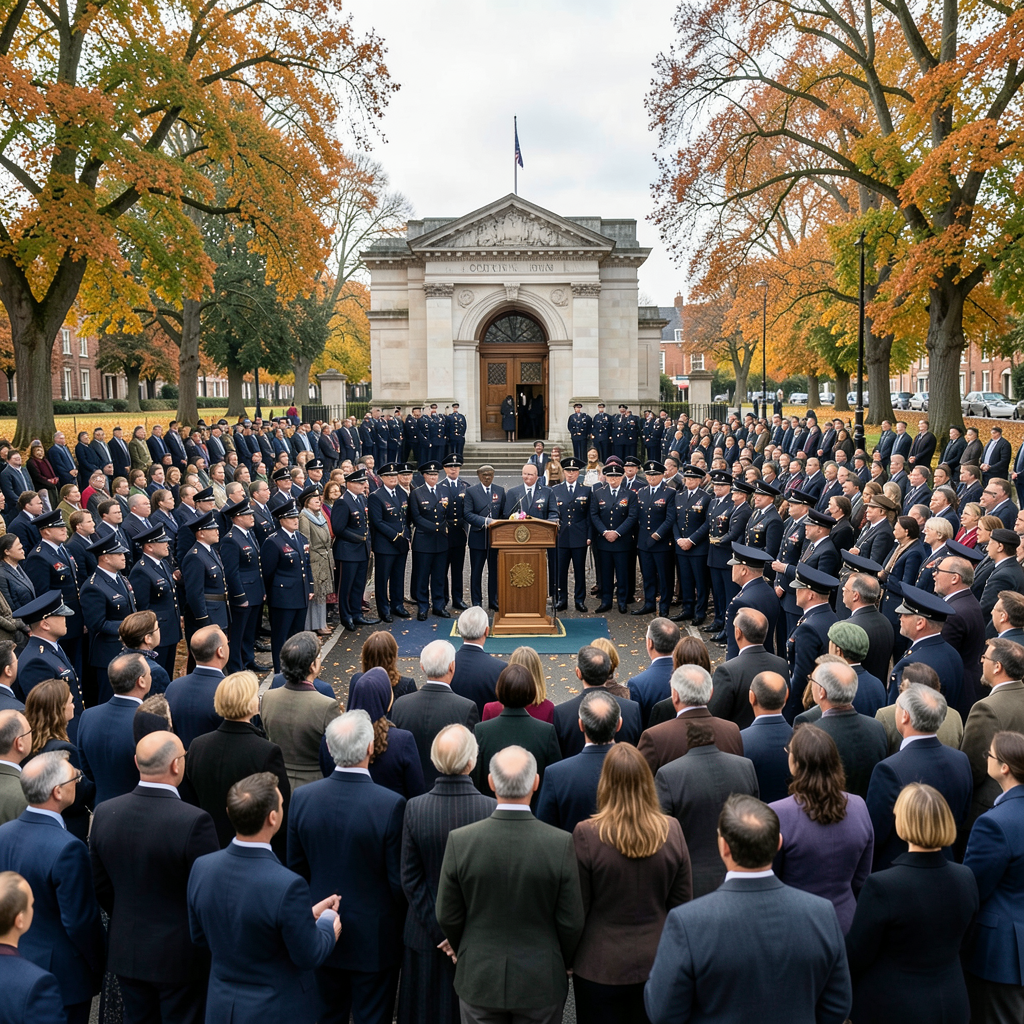

Hundreds of Oxford residents attended the Remembrance Sunday 2026 gathering, with attendance reportedly exceeding 1,000.
The ceremony took place at the Oxford War Memorial on Woodstock Road shortly before 10.45am on Sunday, November 8.
Attendees included armed-forces representatives, members of faith communities and local politicians.
Oxford Lord Mayor Councillor Chewe Munkonge delivered an address and expressed appreciation for the gathering’s attendance.
Munkonge called on the community to defend peace and resist hatred and division.
He also called for remembrance of the bereaved families of service personnel who had died.
The event recalled the first Armistice Day ceremony, held on November 11, 1919, within the grounds of Buckingham Palace after the First World War.
Around one million British soldiers died during that conflict.
Munkonge paid tribute to the courage and sacrifice of service personnel, particularly those who never returned to their homes.
Brief contributions were made by several Oxford faith leaders.
City Rector Reverend Anthony Buckley organised a moment of unity, during which participants greeted those standing nearby.
John Dunston, president of the Oxford Jewish Congregation, advocated compromise and reconciliation, with respect, trust and friendship benefiting humanity.
Sadat Khan of the Oxford Muslim Community stressed compassion, unity and justice and expressed solidarity with those affected by conflict and war.
Neil Mukherjee of the Oxford Hindu Community called for changes in prevailing attitudes, expressing hope that desires for political and religious supremacy would give way to peace, freedom, justice, tolerance and reconciliation.
Diana Naumann of Oxford Humanists expressed sorrow over the waste of life in conflicts, regardless of whether those killed were friends or opponents, and described every individual as irreplaceable.
A choir from Wroclaw in Poland also performed a hymn for peace.
Its appearance followed a shooting in Poland that killed six people, and the tragedy was recognised during the Oxford ceremony.
More than 7,000 members of Britain’s armed forces have been killed in conflicts since the Second World War.
Those conflicts included the 1982 Falklands War and the Iraq War of 2003–2011.
The national anthem was performed before a period of silence and the playing of The Last Post.
Mr S Weston then played a lament on the bagpipes.