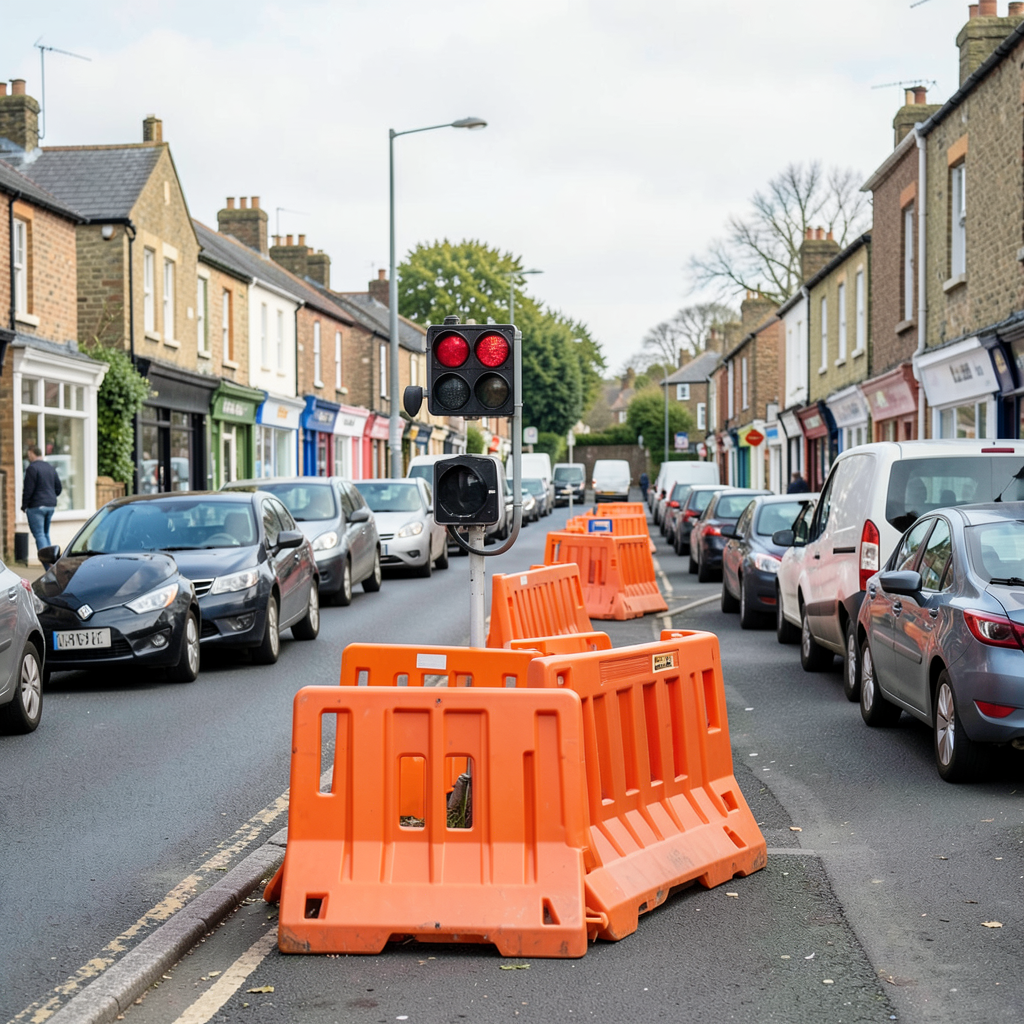

Drivers travelling to their workplaces along a road in Cowley have encountered significant delays following the start of roadworks last month.
Construction activity commenced on Watlington Road with the installation of temporary signals, which are scheduled to stay in place until February.
Local residents have expressed frustration over the impact of these temporary lights on their daily routines.
One trader operating in the area, who requested anonymity, reported that the works have already created substantial congestion and expressed concern that the situation would deteriorate further once the new school term began.
The business owner typically navigates through Stadhampton and Aylesbury before making the journey toward Headington.
According to this individual, the current works have diverted additional vehicles onto the A40 and surrounding busy routes.
The primary issue stems from the temporary traffic signals operating without coordination.
Vehicles are permitted to proceed through one set of lights while simultaneously being stopped at another near the Tesco roundabout, preventing smooth traffic flow along the single-lane section.
The ongoing works are being conducted by Scottish Hydro Electric Power Distribution, which operates as a subsidiary of SSEN.
The project involves laying an underground high-voltage electricity cable as part of the infrastructure needed for the proposed Burcot Solar Farm.
This connection will link the solar development to the electricity network at the Cowley substation.
The work necessitates excavation within and adjacent to the road, followed by resurfacing of both the carriageway and footpath.
According to the businessman, when traffic proceeds through one end of the roadworks, the signals at the opposite end display red, leaving vehicles stranded.
Vehicles emerging on a green phase occupy the single lane, preventing subsequent traffic from advancing until those vehicles clear the area.
This situation has reportedly prompted some drivers to disregard the red light signals, raising safety concerns.
Several vehicles were observed bypassing the temporary lights, with the anonymous source warning that such behaviour could result in collisions.
Questions were raised regarding health and safety protocols, particularly given that the lights are attended by personnel.
Peak congestion reportedly occurs around 10:30 each morning, with queues forming within minutes whenever drivers miss a green-light cycle.
The businessman noted that missing a single green phase creates a backlog of two sets of waiting vehicles.
Some motorists have reportedly been using the Lidl car park as a shortcut to circumvent the delays.
Access to Sandy Lane and neighbouring streets has become challenging, forcing drivers to perform U-turns and contributing to the overall congestion.
The delays have affected both commuters and local businesses, with some individuals adjusting their schedules by arriving at work earlier or departing later to steer clear of the queues.
Oxford Cheetahs previously informed supporters that the roadworks would likely prevent a direct right-hand turn from Watlington Road into Sandy Lane, though alternative routes remained available for accessing the venue and parking facilities.
SSEN was contacted for additional information regarding the project.