
Jamaican ministers have escalated their campaign for slavery reparations by submitting a formal request to Buckingham Palace.
Government representatives from the Caribbean nation are pushing for financial redress related to the historical transatlantic slave trade.
A response from the royal household has yet to be issued.
However, Prime Minister Andy Burnham has publicly dismissed the Jamaican petition, maintaining that Britain will not provide reparations payments.
One potential avenue for addressing historical injustices linked to the slave trade may exist within higher education institutions.
The University of Oxford has implemented admissions practices that consider an applicant’s socioeconomic circumstances and educational background.
While direct positive discrimination remains unlawful in Britain, Oxford evaluates candidates within the context of their personal situations.
This approach aims to create pathways for economically disadvantaged students who have faced systemic barriers to higher education.
The university has developed several initiatives targeting underrepresented groups.
The Target Oxbridge programme offers mentorship and application support specifically designed for students of Black African, Black Caribbean, and mixed Black heritage.
Statistics indicate that Black students comprise less than ten percent of the overall student population at British universities, highlighting persistent disparities in access to higher education.
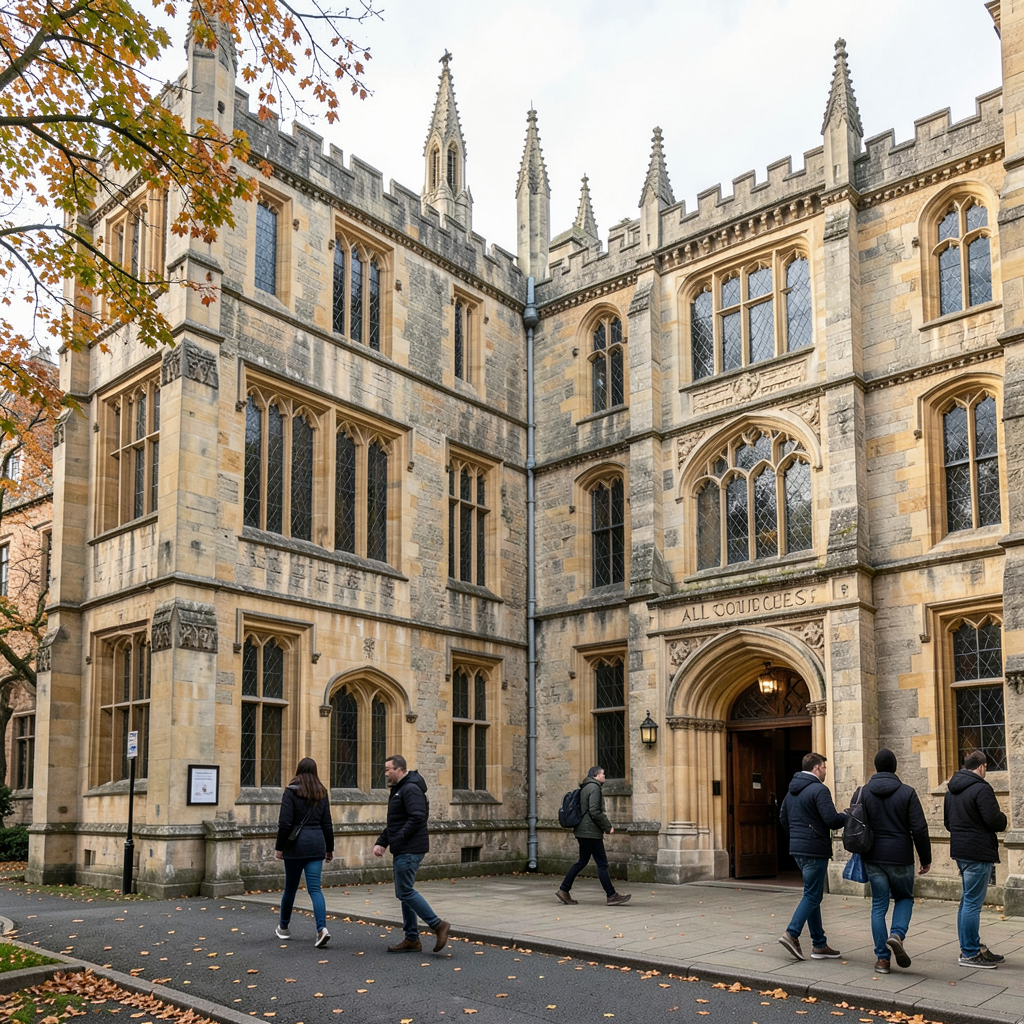
All Souls College has established a reparative justice framework addressing its historical connections to slavery.
The college’s association with Christopher Codrington, who held enslaved people on plantations in Antigua and Barbados, prompted institutional acknowledgment of complicity.
Codrington’s endowment of £10,000 to the college, now worth several million pounds in contemporary value, formed the basis of this response.
The college removed Codrington’s name from its library and inscribed the names of enslaved labourers on his memorial.
Additionally, the institution funds a fully supported graduate scholarship open to nationals of Caribbean nations who identify as Black or mixed Black.
Beyond direct scholarship provision, All Souls contributes financial resources to Oxford’s Black Academic Futures initiative.
Approximately one million pounds has been distributed over the past ten years to support Black and mixed Black postgraduate students pursuing their studies at the university.
The broader landscape of racial representation at Oxford remains concerning despite incremental progress.
Official figures covering the period from 2021 to 2025 show the proportion of students identifying as Black and Minority Ethnic increased from 24.6 percent to 30 percent among undergraduates.
However, these aggregate figures obscure specific disparities.
Detailed independent analysis revealed that only 3.3 percent of undergraduate admissions in 2024 were from students of Black African or Black Caribbean heritage.
A decade has passed since a Labour parliamentarian labelled Oxford’s admissions practices as akin to social segregation, pointing to colleges that had not accepted any Black British students with A-level qualifications.
While aggregate diversity figures have improved, the proportion of Black students specifically remains minimal at an institution that historically benefited from wealth accumulated through colonial enterprises and slave labour.
Heightened scrutiny of how elite institutions treat Black scholars has emerged following recent events.
A Black Cambridge professor who faced accusations regarding his doctoral work by a critic promoting controversial views on intelligence died unexpectedly after sustained media attention.
Reports indicated that seventeen Oxford academics endorsed a public statement defending this critic against disciplinary measures, despite views characterised as hereditarian.
An opinion piece published in a major publication by a Black Oxford graduate argued that institutional practices contributed to the circumstances leading to this academic’s death.
Several Oxford colleges possess financial endowments connected to individuals who profited from the slave trade.
Balliol, Christ Church, Exeter, and Oriel colleges have been identified as beneficiaries of wealth derived from Caribbean plantations worked by enslaved Africans.
Education advocates maintain that these institutions should establish scholarship programmes mirroring All Souls’ model, providing both undergraduate and postgraduate opportunities funded by dedicated endowments.
Political developments have intensified debates around migration and reparations.
populist political figures have proposed restricting entry to nationals of nations pursuing compensation claims.
Higher education institutions may counter such rhetoric by investing directly in Caribbean communities through educational partnerships.
Expanding existing pipeline programmes to include structured preparation for students attending state-funded schools in Caribbean nations would broaden access.
Mental health resources specifically designed to address experiences of racial isolation and psychological harm resulting from systemic disadvantages should form part of institutional support structures.
Counsellors with expertise in issues including imposter syndrome and racial trauma could provide essential services, supplementing financial reparations with psychological support.
The prospects for official government reparations remain uncertain.
Legal ambiguity surrounding slavery’s historical status in British jurisprudence, combined with public opinion largely opposed to financial redress, creates significant obstacles.
Parliamentary records indicate that British taxpayers continued funding compensation payments to slaveholding families until 2015, covering a government loan established to reimburse owners for loss of human property following emancipation.
The Slave Compensation Act of 1837 authorised payments totalling £20 million to former enslavers, representing approximately £17 billion in current monetary terms.
This historical precedent demonstrates that the British state has previously undertaken substantial financial obligations in relation to the slave trade.
The question shifts from whether such mechanisms are possible to determining which populations deserve consideration.
As executive leadership maintains positions of non-accountability, higher education institutions possess both the resources and the moral imperative to lead reparative efforts.
Oxford’s accumulated wealth, derived partly from benefactors who profited from colonial exploitation, positions the university to demonstrate that elite institutions can pursue restorative justice where political leadership has refused to act.
By implementing comprehensive scholarship programmes, mental health initiatives, and pipeline schemes, Oxford could establish a framework for national reparations while honouring obligations to descendants of enslaved Africans in the Caribbean.