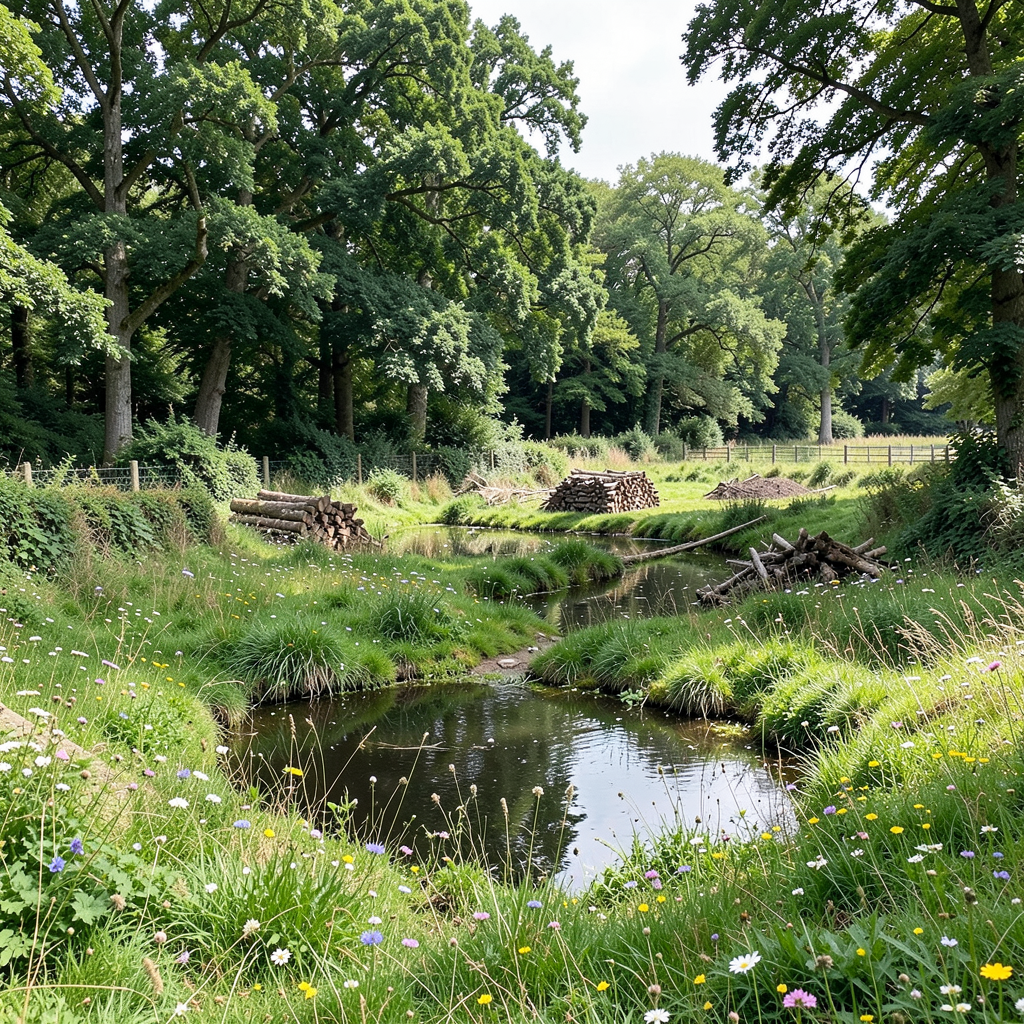

An ecological survey conducted by the Home Office acknowledged that the former military installation proposed for conversion contains environments capable of supporting protected creatures, though the assessment stopped short of confirming actual presence of specific species.
The evaluation documented conditions suitable for various bat populations, badgers, great crested newts, and nesting birds, while also noting observable signs of barn owls inhabiting the location.
The Berks, Bucks and Oxon Wildlife Trust expressed apprehension regarding potential consequences for local ecosystems should the development proceed.
Trust representatives indicated that the surrounding landscape supports substantial biodiversity and has been the focus of multiple initiatives aimed at linking isolated natural areas through restored habitats.
Conversations with former Ministry of Defence personnel who served at the installation for approximately 15 years revealed accounts of regular badger activity across the grounds.
According to those familiar with the site, dedicated apertures were incorporated into boundary fencing specifically to preserve established mammal movement corridors.
Environmental campaigner Claire Brenner contended that official ecological documentation substantially underestimated the variety of species present within the development area.
Independent records reportedly document twelve protected bat species, otters, breeding populations of great crested newts, badgers, nightingales, and a cumulative total of 66 avian species.
The official Home Office assessment reportedly identified no documentation for numerous species categories within a two-kilometre radius of the location.
Neighbouring residents have observed illumination equipment activated at the vacant installation in recent weeks, despite the property typically remaining unlit.
Community members speculated that artificial lighting might be employed to displace resident wildlife prior to construction, thereby potentially lowering development expenses associated with ecological mitigation requirements.
The Trust emphasised that the designated timeframe allocated for reviewing consultation materials and submitting representations proved inadequate given the magnitude of potential environmental consequences.
Observers also noted that official surveys relied upon biodiversity records sourced from Buckinghamshire and national repositories rather than localised Oxfordshire data.