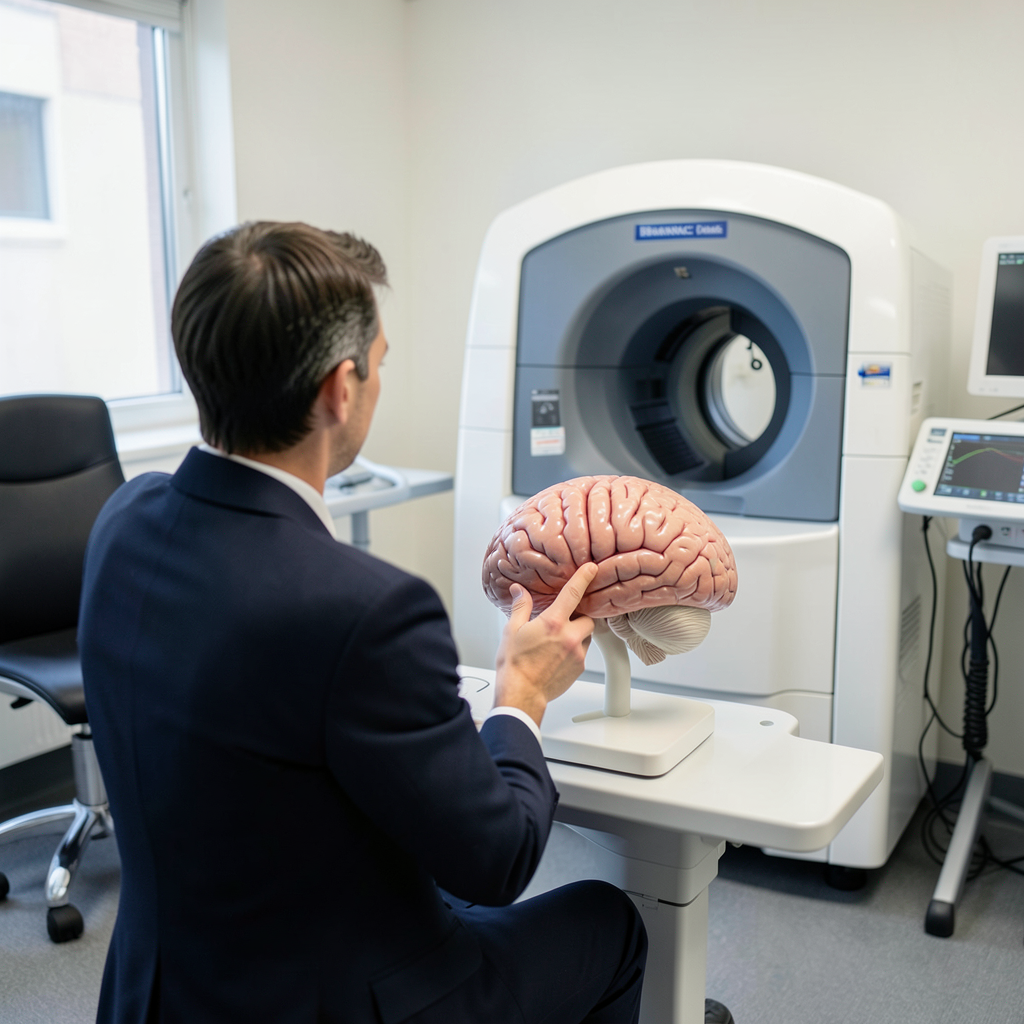

A £20 million research programme led by the University of Exeter is seeking to reshape dementia care through artificial intelligence and advanced data systems.
The University of Oxford and Dementias Platform UK are also involved in the BRAINIAC Hub, which will focus on improving the prediction, prevention and diagnosis of dementia.
The six-year initiative has received £10 million from the Engineering and Physical Sciences Research Council, with a further £10 million coming from industry, charity and NHS partners.
Funding will enable the establishment of ten brain health clinics across the UK, where emerging diagnostic technologies will be assessed and tested.
Professor Vanessa Raymont, director of Dementias Platform UK and R&D director at Oxford Health NHS, said earlier and more precise diagnosis was essential for improving outcomes for people with dementia.
The READ-OUT study has already begun gathering evidence on the potential role of blood-based biomarkers in NHS memory services.
According to Raymont, BRAINIAC offered an opportunity to combine expertise in data, technology and dementia research and translate it into approaches suitable for NHS use.
Researchers will create and evaluate AI tools that draw on clinical information, including blood biomarkers, medical imaging, genetic data, patient histories and computer-based cognitive testing.
The new clinics will pilot those systems with more than 1,700 patients.
The BRAINIAC team expects the technology to shorten assessment and diagnosis times by between 30 and 50 per cent while enabling earlier identification of people at greater risk.
The first of the clinics are due to open from 2029.