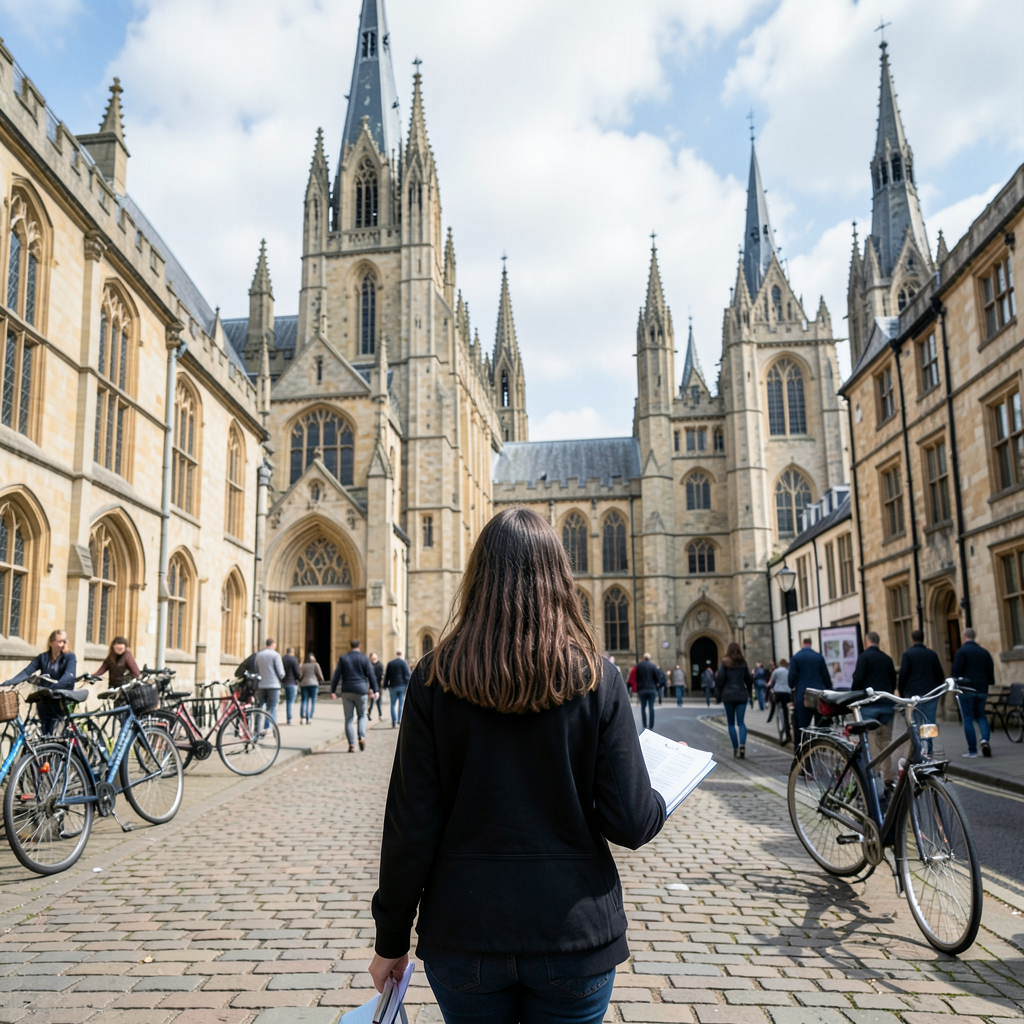

After arriving in Oxford one month ago, the writer found that university life left little spare time.
A schedule filled with lectures, formal dinners, society meetings and social activities demonstrated that each day contained only twenty-four hours, yet there still seemed to be more opportunities to experience than time allowed.
As an American who had previously visited neither Europe nor many destinations beyond the United States, the writer has found Oxford both full of possibilities and occasionally lacking the familiarity of home.
The adjustment initially proved difficult in practical terms, particularly when traffic began driving on the opposite side of the road and journeys on foot took around twenty minutes.
Differences in vocabulary caused amusement rather than serious difficulty, including the British preference for the word toilet over bathroom and bill over check.
Some aspects of everyday life took longer to understand.
A search across four local supermarkets failed to locate pancake mix, while the frozen toaster waffles remembered from home remained unavailable.
These experiences highlighted how heavily convenience shapes consumer culture in the United States, whereas access to certain food products is less dependable in Oxford.
Cornmarket Street has become the writer’s preferred area because its fast-food restaurants and chain supermarkets recall the large-scale commercial environment familiar from suburban Chicago.
Adapting to another country has also given the writer a new perspective on the family’s immigration to the United States.
The move from America to England has brought advantages not shared by many international students, including the writer’s father.
There has been virtually no language barrier, parents can be called at any hour, and reminders of home are readily available in public spaces.
Examples include Taylor Swift songs broadcast during Uber journeys and fast-food outlets on Cornmarket Street.
The father moved from India to the United States as a graduate student when he was only a little older than the writer.
According to his account, he arrived with several hundred dollars in savings and had to manage unfamiliar customs and speech patterns while arranging a weekly call to the writer’s grandparents, who waited for the telephone to ring on Sunday mornings.
The writer believes these experiences are common among immigrants who sacrifice much in pursuit of better opportunities for their families.
The father’s stories have revealed, although he never directly expressed it, a deep longing for home.
He had to forgo family weddings, important Indian traditions and potentially time with his parents during their later years.
Despite those losses, he completed his PhD, became a professor at a major research university and raised the writer and the writer’s sisters with the writer’s mother as well-adjusted Indian-American women.
The writer’s attachment to Oxford is continuing to grow.
One feature is the queue system, while the London Tube announcement advising passengers to mind the gap also provides a familiar sense of satisfaction.
Oxford’s walkability, the university’s emphasis on environmental sustainability and the United Kingdom’s universal healthcare system are all valued by the writer.
Nevertheless, the writer remains uncertain about possessing the determination required to remain in Oxford and establish a life thousands of miles from home.
Considerable admiration is reserved for international students who have already made that move and for fellow students intending to do so.