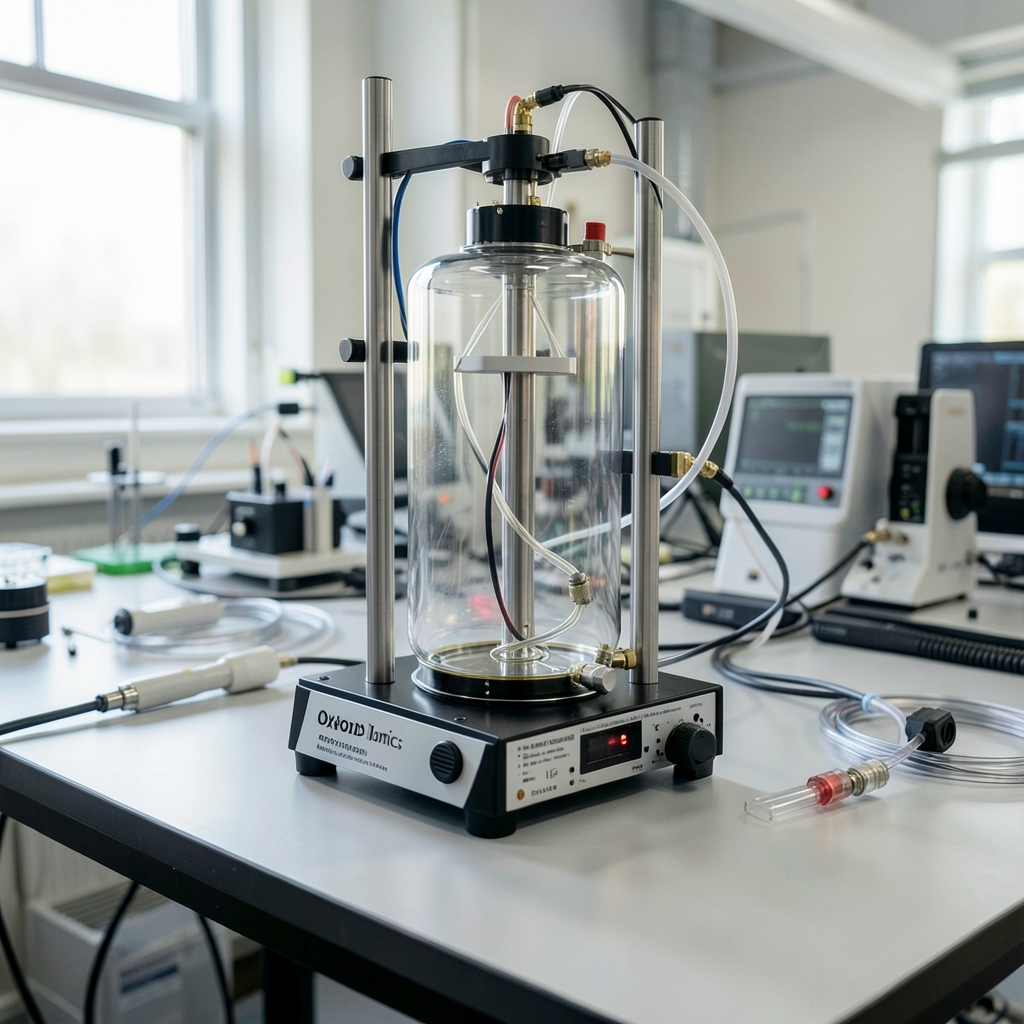

A theoretical machine outlined by Oxford physicist David Deutsch in a 1985 paper provided an early model for applying quantum mechanics to computation.
His proposed universal quantum computer preceded the construction of such a device by four decades.
Deutsch also helped establish quantum computing as an academic research field.
American firm IonQ later acquired Oxford Ionics in a transaction worth approximately $1.075 billion.
Oxford Ionics was founded by researchers Chris Ballance and Tom Harty, who had worked together on trapped-ion technology at Oxford.
Quantum error correction was another significant area of Oxford’s research.
During the 1990s, physicist Andrew Steane helped develop techniques for dealing with the errors that undermine the reliability of quantum calculations.
That challenge remains an active research topic.
Ballance and Harty co-authored a 2016 paper showing that high-fidelity quantum logic gates could be created using trapped ions.
According to Scopus, the study has attracted more than 700 citations.
Three years after the paper, they established Oxford Ionics to develop electronic approaches for controlling quantum processors.
The Oxford-derived companies pursue different forms of quantum technology.
Oxford Quantum Circuits focuses on superconducting systems, ORCA Computing uses light, and QuantrolOx creates software intended to automate the complex calibration of quantum hardware.
No computing architecture has yet been identified as the most practical option at scale.
Several Oxford businesses are targeting applications that can generate demand before advanced quantum computers become available.
PQShield develops post-quantum cryptography intended to defend conventional computing systems against potential future quantum attacks.
Security organisations can therefore begin making preparations while hardware developers continue pursuing more reliable machines.
Oxford’s broader international research output also demonstrates its standing in the field.
A review of Scopus data covering publications from 2015 to 2025 found 560 quantum-computing documents affiliated with Oxford, with 34,586 citations recorded by October 2026.
Under the same selected search, MIT generated 782 documents and received 71,609 citations.
Oxford is consequently an important contributor to quantum-computing research, although these publication and citation totals cannot show which university has been most successful at converting research into businesses.
Its research legacy extends beyond processors to the supporting technologies required by the sector.
Companies originating from Oxford are developing control software and security products as well as quantum hardware.
Some have already entered commercial markets, while others continue seeking wider adoption of their technologies.