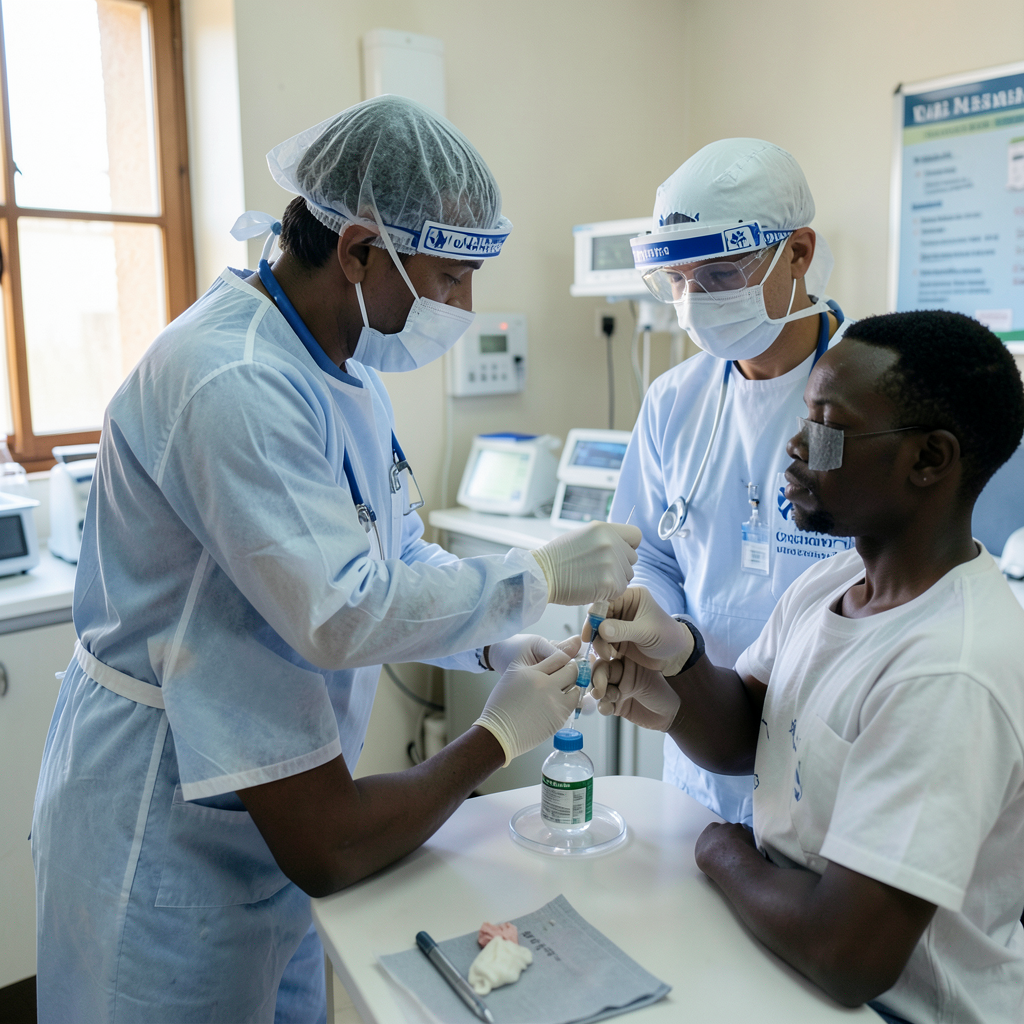

A clinical safety study conducted in Uganda has seen participants receive an Ebola vaccine developed by Oxford University.
The initial inoculations took place on 6th October in Masaka, Uganda.
The vaccine administered was a ChAdOx-based formulation targeting the Bundibugyo strain of Ebola virus, created through collaboration between the Oxford Vaccine Group and the Pandemic Sciences Institute at the University of Oxford.
Work on this vaccine commenced in May in response to the Ebola outbreak then unfolding in the Democratic Republic of Congo.
The investigation was supervised by Professor Teresa Lambe and Professor Simon Drysdale from the Oxford Vaccine Group, with funding provided by the Coalition for Epidemic Preparedness Innovations.
Currently, no authorised vaccine exists for the Bundibugyo strain of Ebola virus.
The study represents a joint effort involving the Medical Research Council and the Uganda Virus Research Institute, in partnership with the London School of Hygiene and Tropical Medicine.
The outbreak caused by the Bundibugyo strain has exceeded 8,600 recorded cases, with approximately fifty percent of those infected dying from the disease.
The World Health Organisation declared the situation a Public Health Emergency of International Concern in May.
The vaccine platform employed in this study leverages adenovirus vector technology previously deployed globally as part of the Oxford-AstraZeneca COVID-19 immunisation programme.
The Oxford Vaccine Group has noted that the university has conducted numerous clinical trials involving viral-vectored vaccine candidates over more than ten years, with particularly promising results achieved using a modified chimpanzee adenovirus derived from a common cold virus.
Additional financial resources are required to advance the Ebola vaccine through development and secure regulatory approval.
According to CEPI’s Executive Director for Emergency Preparedness and Response, Dr Nicole Lurie, the current outbreak represents the most rapidly expanding and second-largest Ebola epidemic in recorded history, with no licensed vaccine or therapeutic currently available.
She indicated that without adequate supplementary funding, promising vaccine candidates may not progress through development.
The organisation requires immediate access to 128 million US dollars to maintain momentum in responding to the Bundibugyo emergency research and development needs.